Students who want to plan their chocolate breaks
You might want to pop a portion in your bag or keep one in your room. Check its net weight and how many pieces are in the pack: ‘mini’ on its own doesn’t tell you how much you’re getting.


For a pre-portioned amount to take with you when moving in, choose a mini bar or an individually wrapped piece. A full-size bar works well if you’d rather divide it up yourself for several breaks. Either way, the format alone won’t tell you how much sugar it contains or which allergens are present.
You might want to pop a portion in your bag or keep one in your room. Check its net weight and how many pieces are in the pack: ‘mini’ on its own doesn’t tell you how much you’re getting.
You’re doing the shopping for your new place and want to know how much you’re buying in total. You can divide a full-size bar yourself, while a pack of individually wrapped pieces lets you portion them out without opening the whole bar.
Compare the ‘of which sugars’ figure per 100 g, the ingredients and the allergen information for the specific product. These details are useful even when there’s no Nutri-Score on the pack.
For your first student cupboard, start by thinking about what you want to take with you for each break. Then check the pack’s total weight and the label for the recipe you’ve chosen.
| What to consider | What to check | Who might prioritise it? |
|---|---|---|
| Portion to take with you | Weight of each piece and individual wrapping; the Lindt Excellence Dark 70% mini bar is a 35 g portion. | If I’m out all day getting settled, I want to be able to take a pre-portioned amount with me. Around 42% of shoppers put an easy-to-carry portion first. |
| Enough for several breaks | The pack’s net weight and number of pieces, or whether you can divide a full-size bar. | When stocking my cupboard, I’d rather plan several breaks from one purchase. Around 33% of shoppers would prioritise this overall quantity. |
| Sugar and allergens | The ‘of which sugars’ figure per 100 g, ingredients and ‘may contain’ statements for the exact product. | Before choosing a recipe, I need to check its ingredients and allergen information. Around 25% of shoppers would make this their first priority. |
The format tells you about the quantity or packaging, not the ingredients. Lindt France states that its 35 g Excellence Dark 70% mini bar contains 30 g of sugars per 100 g; the Joybuy listing for a 200 g Milka milk chocolate bar gives 58.5 g per 100 g. These figures relate to two specific recipes.
Compare the ‘of which sugars’ figures on the same per-100 g basis, then check the weight of the portion you’re thinking of eating.
Santé publique France explains that displaying the Nutri-Score is voluntary. Its absence doesn’t allow you to rank one bar against another.
If it appears on the pack, read it alongside the nutrition information, ingredients list and allergen statements.
The French Ministry of the Economy describes this levy as applying to sugary drinks, not chocolate bars.
When comparing chocolate bars, focus on the format and the label for each recipe.
These examples give you an idea of different formats and labels. A chocolate bar, a mini bar and a full-size bar aren’t the same type of product.
The 35 g Excellence Dark 70% mini bar is a specific example of an individually portioned option.
Carrefour stocks Milka ‘Mini Bars’ as well as the brand’s full-size bars.
Carrefour stocks a 30 g milk chocolate and puffed rice bar among its individually portioned options.
The Carrefour range viewed includes 30 g and 45 g bars, as well as a milk chocolate and hazelnut bar.
Its range includes Milka Mini Bars and Carrefour Classic’ or Sensation bars.
The EQUADOR and TABLETTE D’OR ranges offer examples of full-size bars; some EQUADOR dark chocolate bars are sold in 100 g packs.
These products suit the idea of having individually portioned treats for your breaks: a mini dark chocolate bar, a bag of mini chocolate bars and individually wrapped KitKat pieces. They’re not a substitute for comparing full-size bars if you’d rather divide one up yourself.
 Image unavailable
A 35 g portion to take with you instead of a bar to divide up. For this product, Lindt France states that it contains at least 70% cocoa and 30 g of sugars per 100 g. Also check the packaging for statements about possible traces of milk, nuts and soya.
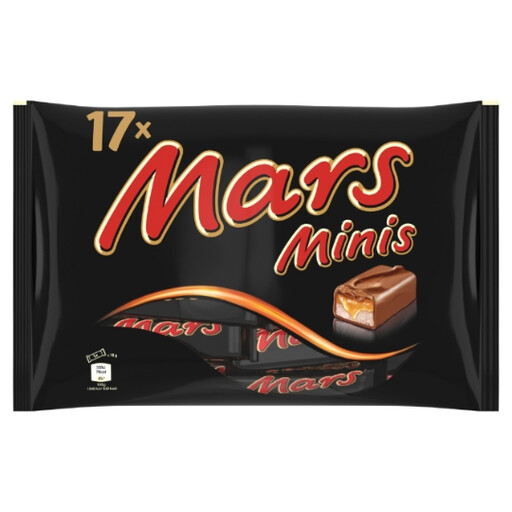 Image unavailable
A bag of mini chocolate bars for several breaks, rather than a chocolate bar. The total weight is 333 g. Check the weight of each piece and the label if portion size or ingredients are important to you.
 Image unavailable
Nine pieces to spread across several breaks, in a different format from a classic chocolate bar. The pack weighs 104.4 g. Check its nutrition information and allergen statements before choosing this recipe.
No. Santé publique France says producers can choose whether to display the logo. Whether it’s there or not, check the nutrition information, ingredients and allergens for the specific bar.
No. The French Ministry of the Economy describes this levy as applying to sugary drinks. For a chocolate bar, the ‘of which sugars’ figure is still worth checking on the label, regardless of the tax.
Read the packaging for the specific product and batch you’ve bought, and distinguish between ingredients and ‘may contain’ statements. The Lindt Excellence Dark 70% mini bar cited by Lindt France may contain milk, almonds, hazelnuts, other nuts and soya. This list doesn’t apply to every Lindt recipe.
Follow the storage instructions for the product you’ve bought rather than automatically putting it in the fridge. For its Excellence Dark 70% mini bar, Lindt advises keeping it in a cool, dry place, away from heat.