Parents preparing snacks in advance
If you want to hand out portions that are already separated, look for multipacks of mini bags. With a large bag of small sweets, you’ll still need to decide how much to serve each time.


If you want portions that are ready to hand out, choose a multipack of mini bags. If you’d rather serve them yourself, a sharing bag of small sweets may be a better fit. The word ‘mini’ on its own tells you nothing about the ingredients: compare the nutritional information per 100 g and check the ingredients and allergen information for the specific product. Nutri-Score can be a useful extra guide when it appears on the packaging, but its use is voluntary in France, as the Ministry of the Economy explains.
If you want to hand out portions that are already separated, look for multipacks of mini bags. With a large bag of small sweets, you’ll still need to decide how much to serve each time.
Whether a product contains gelatine, wheat or milk varies by product. If you have a dietary requirement, check the ingredients list and allergen information on the exact pack you’re buying, including for assortments.
Soft marshmallows, gummy sweets and sour flavours each suit a different craving. Choose the texture or flavour separately from the size of the sweets and how they’re packaged.
For snack time, first distinguish the size of the sweets from how they’re packaged: only an individually wrapped bag gives you a portion that’s already separate.
| What to consider | What to check | Who is it for? |
|---|---|---|
| Portions prepared | Look for a mention of individual bags and check how many there are; ‘mini’ may only refer to the size of the sweets. | If I’m preparing several snacks in advance, I want to hand out a portion that’s already separate rather than serve from a sharing bag. Around 40% of consumers put this kind of portion planning first. |
| Ingredients and allergens | Read the ingredients and any ‘may contain’ statements for the exact product, particularly for gelatine, wheat and milk. | If an ingredient needs to be avoided, the recipe matters more than the brand name or shape of the sweet. For around 30% of consumers, this is their main requirement. |
| Texture and sourness | Check whether the product is made up of marshmallows, gummy sweets or sour sweets. | If I’m choosing between a soft texture and a sour taste, I look at the recipe before the format. This is the main deciding factor for around 30% of consumers. |
Small sweets in one bag aren’t pre-portioned.
If you want to hand out portions without serving from a sharing bag, check how many mini bags are listed on the packaging.
A mini format doesn’t change the nutritional values of the recipe. How you serve them and what they contain are two separate things.
Compare the ‘of which sugars’ figure on the same basis, per 100 g, then decide how much to serve. Manger Bouger recommends limiting sugary products in children’s diets.
The Carrefour Classic’ Pocket assortment includes recipes with pork gelatine and wheat starch, while the Lutti Scoubifizz featured by Auchan is labelled as gelatine-free but contains wheat flour.
Check the ingredients and allergens for the specific product you’re buying, even if you’re already familiar with another product from the same brand.
In France, the DGCCRF distinguishes between the nutrition declaration required for relevant prepacked foods and Nutri-Score, which the Ministry of the Economy says is voluntary.
If the logo isn’t there, use the nutritional information per 100 g, ingredients list and allergen information to compare products.
Depending on the product, the range includes mini bags for handing out individually, mini sour sweets or mini marshmallows.
The range includes fruity and sour sweets; check the ingredients and packaging for each individual product.
The Pocket assortment brings together several small shapes in one 500 g sharing bag, so you can serve them yourself.
These products suit two ways of organising snack time: handing out mini bags that are already separate, or serving mini sweets from a sharing bag.
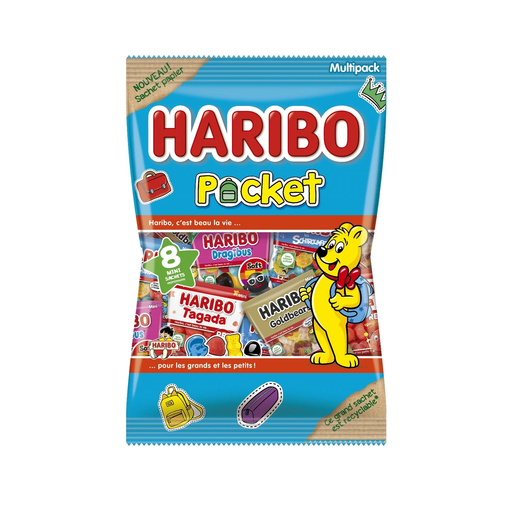 Image unavailable
Worth considering if you want portions that are ready to hand out. The pack contains eight mini bags, weighing 340 g in total. This product lists 55 g of sugars per 100 g, contains wheat flour and may contain milk. Individual packaging doesn’t change its ingredients.
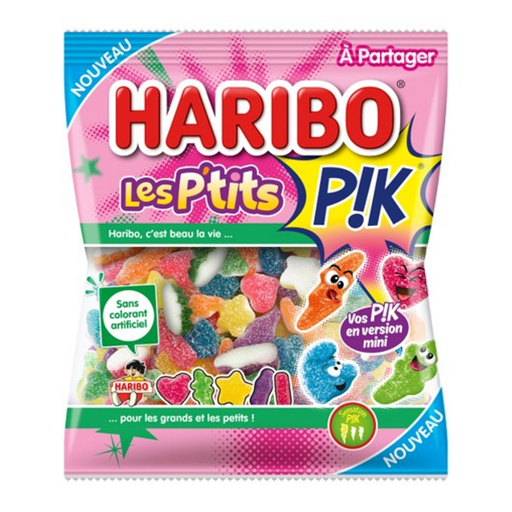 Image unavailable
If you want to serve small sweets yourself, this 180 g bag lets you decide how much to serve at snack time. Don’t mistake it for a multipack of pre-portioned sweets; check the ingredients on the packaging if there are any ingredients you need to avoid.
No. According to the Ministry of the Economy, displaying it is voluntary. The DGCCRF explains that a nutrition declaration is required for relevant prepacked foods and gives values per 100 g or 100 ml. So, the absence of the Nutri-Score logo doesn’t, by itself, mean that the pack is non-compliant.
Compare their nutritional information on the same per 100 g basis, particularly the ‘of which sugars’ figure, then read the ingredients and allergen information. The number of sweets isn’t a like-for-like comparison if their size or weight differs.
A smaller format can help you organise what you serve, but it doesn’t change the ingredients in the sweets. For children’s diets, Manger Bouger recommends offering sugary products in limited quantities.
Read the ingredients list and allergen information for the specific assortment, as its recipes may vary. For example, the Carrefour Classic’ Pocket assortment described by Carrefour includes recipes with pork gelatine and wheat starch; you shouldn’t assume this applies to all assortments.