Parents who want to control how much their child takes
If you pack the lunchbox, a mini bag gives you a ready-portioned unit. If you buy small sweets in a large bag, you’ll need a container to put your chosen amount in.


For a secondary school lunchbox, mini bags give you a pre-portioned amount; a large bag of mini sweets is a good choice if you prefer to portion them out yourself. Either way, compare the sugars per 100 g and check the ingredients and allergens for the specific product you choose: ‘mini’ tells you neither the total quantity nor the recipe.
If you pack the lunchbox, a mini bag gives you a ready-portioned unit. If you buy small sweets in a large bag, you’ll need a container to put your chosen amount in.
The size of a sweet isn’t enough to compare recipes. The ‘of which sugars’ figure per 100 g gives you a consistent basis for comparison. The Croco Baby and La P’tite Tagada product information published by Haribo France lists 35 g and 73 g of sugars per 100 g respectively.
If wheat, milk, gelatine or an allergen is a concern, check the specific product, especially when a pack contains several recipes. For prepacked foods, the French Ministry of the Economy states that allergenic ingredients must be listed and highlighted.
First decide whether you need a ready-portioned amount or can portion it out into a container yourself. Then compare the labels of products that suit your needs.
Choose these if : you want a separate portion without having to portion out a large bag before you leave.
Bear in mind : an individual bag doesn’t tell you how much sugar it contains.
Choose these if : you have a small container and can portion out the amount for the lunchbox yourself.
Bear in mind : the small size of the sweets doesn’t determine how much you take overall.
| What to consider | What to check | Who is it for? |
|---|---|---|
| Amount to take | Check whether the pack really contains individual bags. If not, note the stated weight and portion out the amount into a container. | When I pack a lunchbox, I want to know how much I’m putting in rather than pour it in at random; around 42% of consumers prioritise this practical way of controlling portions. |
| Sugars and nutritional information | Compare the ‘of which sugars’ figure per 100 g across products, then consider how much you’ll actually take. | When choosing between two mini recipes, I want to compare their sugar content on the same basis rather than judge by the size of the sweets; around 33% of consumers prioritise this comparison. |
| Ingredients and allergens | Read the ingredients list and allergen information for the specific product. For an assortment, check every variety. | If some recipes aren’t suitable for my household, I need to be able to identify them before buying; around 25% of consumers put this suitability first. |
A large bag can contain small sweets without being divided into portions. Auchan, for example, says its 400 g Mini Pocket isn’t sold in individual bags.
If you want a portion that’s ready to go, check the packaging. Otherwise, fill a small container before you leave.
The French Ministry of the Economy states that displaying the Nutri-Score is optional. The DGCCRF distinguishes this logo from the nutritional declaration, which is compulsory for the prepacked foods concerned.
If a Nutri-Score is shown, use it as an additional guide; also read the nutrition information and ingredients.
Haribo France lists 35 g of sugars per 100 g for Croco Baby and 73 g per 100 g for La P’tite Tagada. These figures apply to these two products, not to every mini sweet from the brand.
Compare the ‘of which sugars’ figure per 100 g, then consider how much you’ll put in the lunchbox.
A pack can contain several different recipes. Sweet product information checked with Auchan and E.Leclerc lists wheat or gelatine in some products, for example.
Check the full ingredients list and allergen information on the packaging of the product you buy, including any ‘may contain’ warnings.
Croco Baby and La P’tite Tagada are examples of recipes made in small pieces, but their characteristics shouldn’t be assumed to apply to the whole brand.
Mini Pocket is an assortment of sweets in a 400 g bag that you portion out yourself.
E.Leclerc sells its Copains Copines assortment in separate mini bags.
Carrefour’s product information for Mini Friends Chupa Chups and Carambar minis mix gives you two small-format products from other brands to compare.
These products offer two ways to pack small sweets in a lunchbox: count out mints or portion mini sweets from a bag. Prepare the amount you want to take according to the packaging you choose.
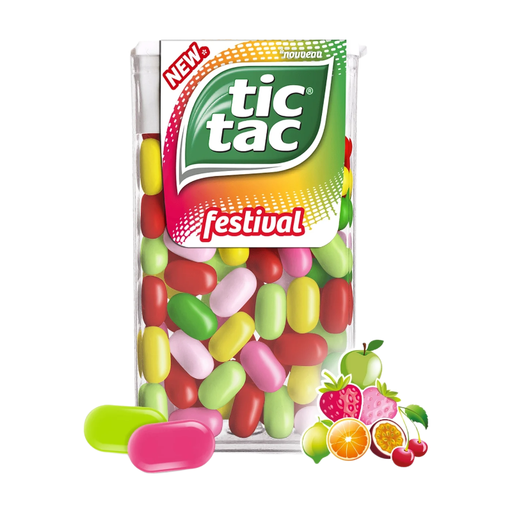 Image unavailable
A handy option if you’d rather count out mints than pour sweets from a bag. If anyone in your household has dietary restrictions, check the ingredients and any ‘may contain’ warnings on the packaging.
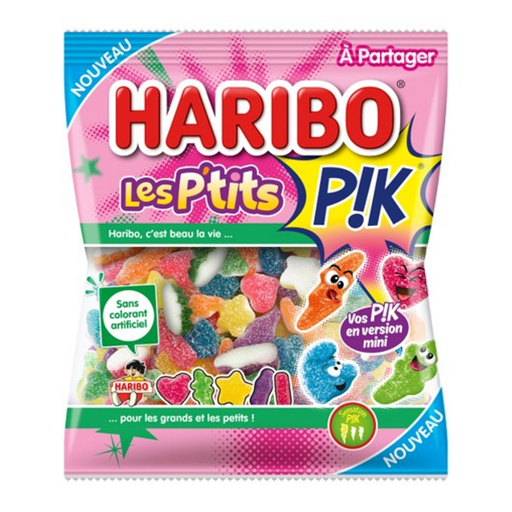 Image unavailable
For a lunchbox where you portion out the mini sweets yourself, perhaps into a small container. The 180 g weight refers to the whole bag, so choose how much to take separately and check the ingredients for this product.
No. According to the French Ministry of the Economy, the Nutri-Score is optional. The DGCCRF explains that a nutritional declaration is compulsory for the prepacked foods concerned, so the absence of the logo doesn’t mean you can skip the nutrition information.
Check whether the portions are already separated into mini bags or whether you’ll need to take some from a larger bag. To compare recipes, then check the sugars per 100 g, followed by the ingredients and allergens for the product you’ve chosen.
No: ‘mini’ describes the size or packaging, not the sugar content. To compare specific products, Haribo France lists 35 g of sugars per 100 g for Croco Baby and 73 g per 100 g for La P’tite Tagada.
Read the ingredients and allergen information for every recipe in the pack, along with any ‘may contain’ warnings. For prepacked foods, the French Ministry of the Economy says allergenic ingredients must be listed and highlighted on the label.