Hosts preparing a bowl
If you’d like to decide how much to put on the table before your friends arrive, mini sweets are ideal for serving in a small bowl. However, the format alone doesn’t determine how much you serve.


For a small bowl to share with coffee, choose mini sweets you can pour out and decide in advance how much to serve. If you’d rather hand out sweets to each guest, a multipack of mini packets makes sharing them easier, but means more packaging. Either way, ‘mini’ tells you nothing about the nutritional values: check the ingredients and allergens of the product you buy, too.
If you’d like to decide how much to put on the table before your friends arrive, mini sweets are ideal for serving in a small bowl. However, the format alone doesn’t determine how much you serve.
A multipack lets you hand out sweets without opening a shared packet. Check that the number of mini packets is right for the number of guests.
If an ingredient such as gelatine, an allergen or a ‘may contain’ warning matters to a guest, check the label on the specific product before serving it. A feature listed for one sweet doesn’t apply to the whole brand.
First decide whether you’ll serve a shared bowl or hand out individual portions, then check the ingredients and quantity to suit your guests.
| Criteria | What to check | Who is it for? |
|---|---|---|
| Amount served | Check the pack weight, then set aside the amount you’d like to put in a bowl. | For a coffee with friends, I’d rather decide what goes on the table than leave the packet open. Around 36% of consumers would make the amount served their top priority. |
| Ingredients and allergens | Read the ingredients list, highlighted allergens and any ‘may contain’ warnings on the relevant packaging. | If a guest has dietary restrictions, I need to be able to check the ingredients before serving. Ingredient suitability would be the top criterion for around 29% of consumers. |
| Portioning | Compare the number of mini packets or individual sweets with the number of guests. | When everyone needs their own sweets, I look for packaging that’s easy to hand out. Portioning would be the main consideration for around 21% of consumers. |
| Flavours and textures | Choose between a single product and an assortment. If you choose an assortment, check each variety if the ingredients matter. | To offer a choice of flavours with coffee, I prioritise the selection of sweets. Around 14% of consumers would put variety at the top of their list. |
‘Mini’ describes the size of the sweets, not their nutritional values. For the products reviewed, Haribo France lists 68 g of sugars per 100 g for Les P’tits Chamallows and 73 g per 100 g for La P’tite Tagada; Joybuy’s product listing for HARIBO Pocket 340 g gives 55 g per 100 g.
Decide how much to serve and compare the nutritional information per 100 g for similar products. If the packaging displays a Nutri-Score, you can check that too, but don’t use it as your only criterion.
Ingredients can vary from one variety to another. E.Leclerc’s listing for the Copains Copines assortment mentions pork gelatine in several varieties, while Haribo France states that Les P’tits Chamallows may contain traces of milk and soya.
Check the ingredients and allergen information for each product intended for guests with dietary requirements. The vegetarian information listed for Dragibus Original on its Auchan product page doesn’t apply to other Haribo sweets.
A multipack of mini packets makes it easier to hand out sweets, but it may contain more than you want to serve with a small coffee.
Work out how many portions you’ll need before buying, and follow the packet’s storage instructions for the rest.
Each mini packet means more packaging to deal with after serving.
Haribo France offers mini versions of Les P’tits Chamallows and La P’tite Tagada; its Pocket range also includes multipacks of mini packets.
Carrefour France’s listings include Bubblizz Mini Surf among Lutti’s smaller sweets.
E.Leclerc’s listing features a 500 g Copains Copines assortment of mini packets.
These products include mini packets to hand out, a bag of mini sweets to pour into a bowl, and individually wrapped sweets to count out. For the latter, check that they’re suitable for your planned coffee break: an individually wrapped sweet isn’t necessarily a mini sweet.
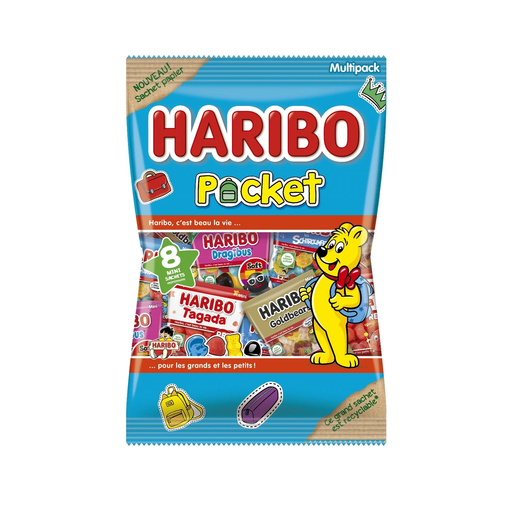 Image unavailable
For handing out individual packets among friends: this multipack contains 8 mini packets, weighing 340 g in total. Match the number of packets you serve to the number of guests. Joybuy’s product listing states 55 g of sugars per 100 g; check the multipack label for ingredients and allergens.
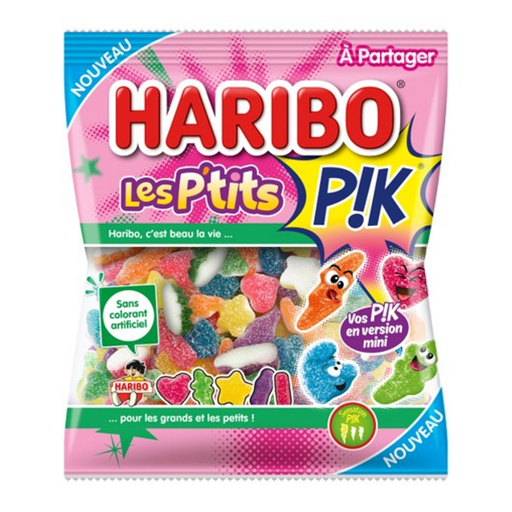 Image unavailable
For putting together your own bowl of mini sweets to share. The bag weighs 180 g; choose how much to put on the table, and check the packaging for ingredients, allergens and nutritional information.
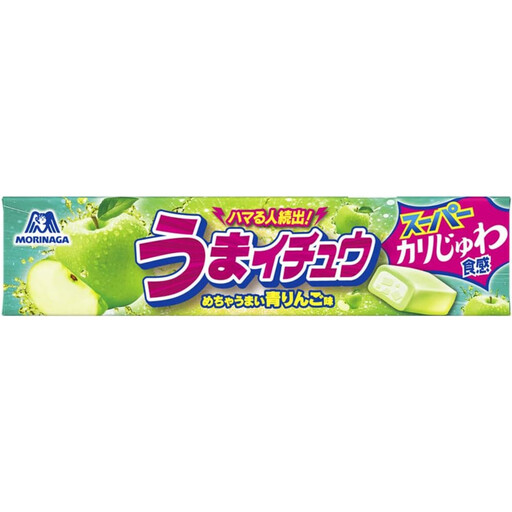 Image unavailable
For counting out individual sweets for your guests rather than filling a bowl. The pack contains 12 sweets and weighs 55,2 g; they’re chewy sweets, with no indication of a mini size in the product name. Check the label before serving to anyone with dietary restrictions.
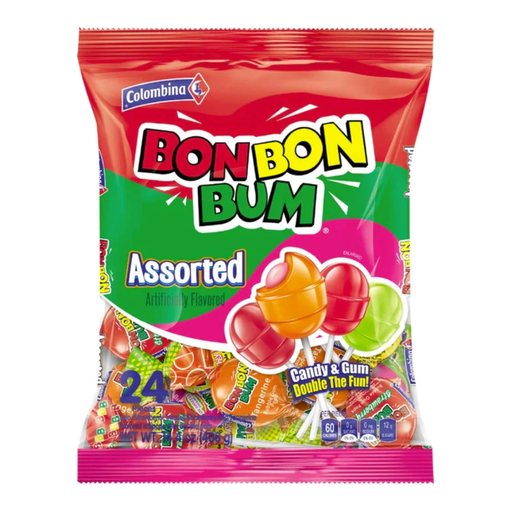 Image unavailable
For planning an exact number of sweets to hand out: the pack is listed as 15 g × 24. Check that their shape and size suit the way you want to serve them, and look at the packaging for ingredients, allergens and nutritional information.
No. Santé publique France explains that producers display Nutri-Score voluntarily; it supplements the mandatory food information required under EU regulations. So its absence alone doesn’t mean that a product is non-compliant or has a particular nutritional quality.
Read the ingredients list, highlighted allergens and any ‘may contain’ warnings on the packaging of the product you bought. EU labelling rules require allergen information for prepacked foods, so don’t rely on the brand name or a vegetarian label instead of checking the packaging.
Follow the instructions on the packaging of the product you bought. For the products mentioned, Haribo France recommends keeping them away from heat and moisture; Joybuy’s listing for HARIBO Pocket says to store it in a cool, dry place, away from direct sunlight.