
Livraison le jour même ou le lendemain

Qualité garantie

Débloquez vos offres de bienvenue: Livraison GRATUITE | Jusqu'à -80 % | 30 jours d'essai gratuits à JoyPlus
Téléchargez l'application
The idea of turning your living room or garden into a private cinema has never been more accessible. The mini projector is at the heart of this quiet revolution, promising a giant screen for movie nights, major sports events, or video game sessions. However, the market is a jungle of options and technical terms that can be confusing. To help you see things more clearly, we're breaking down the mistakes to avoid and the essential criteria to check before you buy.
Navigating the world of portable projectors can quickly become a headache. Many product pages highlight flattering features that sometimes mask significant limitations. Here are three key points to keep in mind.
The most common trap concerns brightness. You'll often see impressive numbers like 8000 or 9000 lumens, but without any mention of the standard unit of measurement. The only reliable reference value is the ANSI lumen. A projector advertised with "8000 lumens" might in reality only offer 150 ANSI lumens, making it unusable anywhere but in a completely dark room.
Another major point of confusion is resolution. A device may be "4K compatible" or support "4K decoding," which simply means it can receive a signal of that quality. However, the projected image will be at its native resolution, which is often much lower (720p, or even 480p). The result is an image that is significantly less sharp than the marketing suggested.
A Wi-Fi and Bluetooth projector is the standard today, but not all connections are created equal. A model with an old Wi-Fi standard or unstable Bluetooth will lead to incessant buffering during streaming and frustrating disconnections from your speakers. Likewise, an outdated operating system can limit access to the latest apps.
To make an informed choice, focus on a few technical specifications that don't lie and determine the true quality of your portable home cinema experience.
As we've seen, the ANSI lumen is the standardised and comparable measurement of a projector's brightness. For practical use:
Ignore mentions of "4K compatible" and look for the native resolution. This is the actual number of pixels the projector can display.
For a smooth experience, check these points:
To move from theory to practice, here are a few models that perfectly illustrate these criteria, each meeting a specific need.
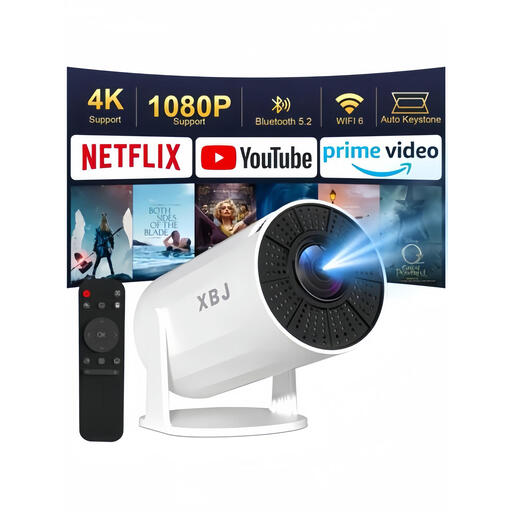
Why it's a match: Ideal for those who want a simple and effective solution for movie nights in a bedroom or living room. Its rotating base makes it easy to project onto a wall or ceiling.
It's upfront about its specs with 300 ANSI lumens and a native 720p resolution (with 4K decoding), preventing any unpleasant surprises. The built-in Wi-Fi 6 and Android 11 system ensure modern and efficient connectivity.
Its integrated Android 11 system and 180° rotating base offer great flexibility without needing an external device.
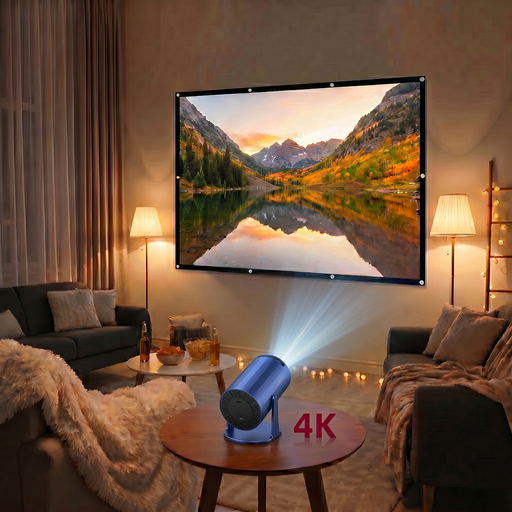
Why it's a match: For those who want an all-in-one, ready-to-go solution. This bundle includes a high-performance projector and a large 100-inch screen, perfect for gatherings with friends, both indoors and outdoors.
This projector and screen bundle avoids the pitfall of a poor projection surface. The included screen is designed to optimise image quality. The projector (XBJ Blue) offers clear and reliable specs: 1080p FHD output, 300 ANSI lumens of brightness, and Wi-Fi 6.
A complete solution that guarantees perfect compatibility between the projector and the screen for a quick setup and optimal image quality.
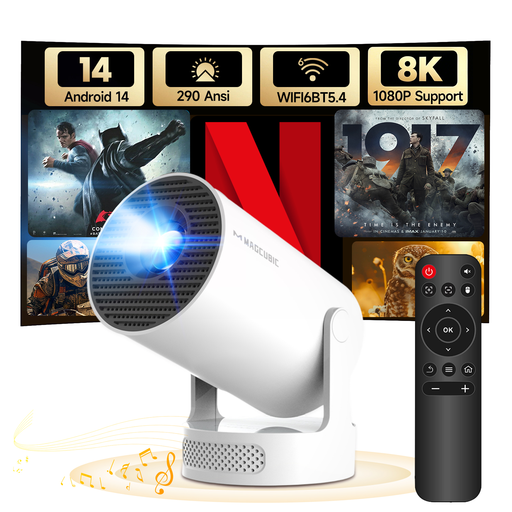
Why it's a match: For those seeking the latest technology in an ultra-compact format. It's perfect for streaming, gaming, and even presentations thanks to its advanced adjustment options.
It features the latest standards with Android 14, Wi-Fi 6, and Bluetooth 5.4, guaranteeing future-proof performance and compatibility. The brightness is clearly stated at 290 ANSI lumens.
The combination of Android 14, cutting-edge connectivity, and advanced image adjustments (4-point manual keystone correction, zoom) offers enhanced control and superior image quality.
For the best viewing experience, don't underestimate the importance of the screen. A good surface can literally transform your projection.
A good projector only reveals its full potential with the right surface. Discover our selection of screens designed to enhance image contrast and sharpness.
Most modern mini projectors use an LED light source. Unlike traditional lamps, their lifespan is very long, typically estimated between 20,000 and 30,000 hours. This represents more than 10 years of use at 5 hours per day, making it a particularly durable investment.
A smooth, white wall can suffice for occasional use. However, a projector screen is highly recommended to get the best possible image quality. Screens are made with specific materials that improve reflectivity, contrast, and colour fidelity. For outdoor use, a well-tensioned outdoor projector screen is almost essential to avoid wrinkles and wind-induced distortions that would ruin the image.
It's more of a flexible alternative than a direct replacement. A projector offers an unbeatable screen size for its price and a portability that no TV can match. On the other hand, it requires a dark or dimly lit room for optimal performance. Additionally, the built-in sound, while often decent, will benefit from an external speaker for true immersion. It's an excellent choice for big-screen entertainment, but a TV will still have the advantage in a bright living room for everyday use.