
Livraison le jour même ou le lendemain

Qualité garantie

Débloquez vos offres de bienvenue: Livraison GRATUITE | Jusqu'à -80 % | 30 jours d'essai gratuits à JoyPlus
Téléchargez l'application
Here at the editorial desk, our mission is simple: to decipher spec sheets and brand claims to help you make the right choice. Mini LED TV technology promises the deepest blacks and spectacular brightness, but the market is flooded with often confusing technical jargon. Before you pull out your credit card, it's crucial to know how to distinguish true innovation from a mere marketing ploy.
The world of high-end televisions is a jungle. To avoid getting lost and regretting your purchase, here are the three most common traps to watch out for.
To avoid making a mistake, focus on these objective characteristics. They have a direct impact on image quality and user experience.
Mini LED technology uses thousands of tiny diodes to illuminate the screen. These are grouped into "dimming zones" that can be turned on or off independently.
The refresh rate, measured in Hertz (Hz), indicates the number of frames the television can display per second.
The processor is the engine of your television. It handles everything from upscaling 4K TV content to image processing and the smoothness of the Smart TV interface.
There's an ideal TV for every profile. Here is our selection, based on the objective criteria we've just reviewed.
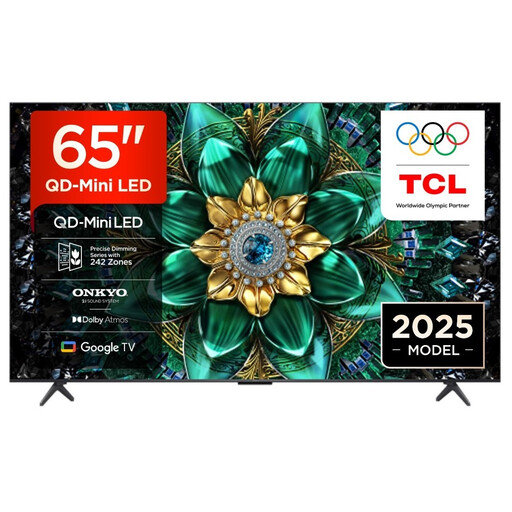
Why we recommend it: This TV is built for gaming. It combines a QD-Mini LED panel with a native 144 Hz refresh rate and all the expected HDMI 2.1 features (VRR, ALLM) for an optimal experience on PS5 or PC.
It doesn't settle for software optimisation. Its native 144 Hz panel guarantees real, measurable fluidity, which is essential for competitive gaming.
The "Game Master" ecosystem and AMD FreeSync compatibility offer a complete arsenal for TV gaming, with minimal latency and a tear-free picture.
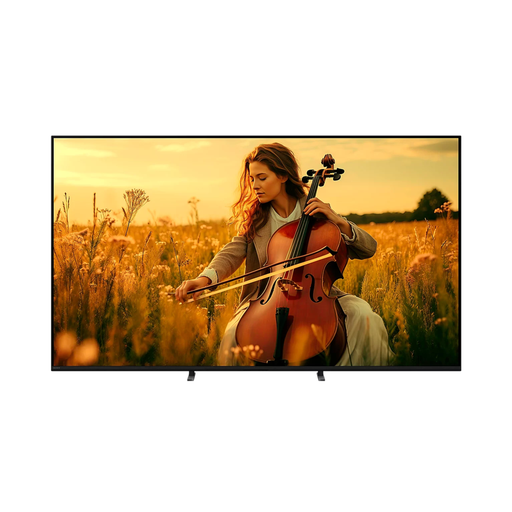
Why we recommend it: Sony bets everything on image fidelity with a "cinema" calibration and XR Backlight Master Drive technology for surgical control of the backlighting. Its large 75-inch screen and Acoustic Multi-Audio system create an immersive home cinema experience.
Rather than boasting about abstract contrast ratios, Sony highlights its backlight control technology—a much more tangible criterion for judging black level quality.
The sound-image synchronisation (Acoustic Multi-Audio) and support for Dolby Vision and Dolby Atmos deliver a complete audiovisual immersion, true to the director's vision.
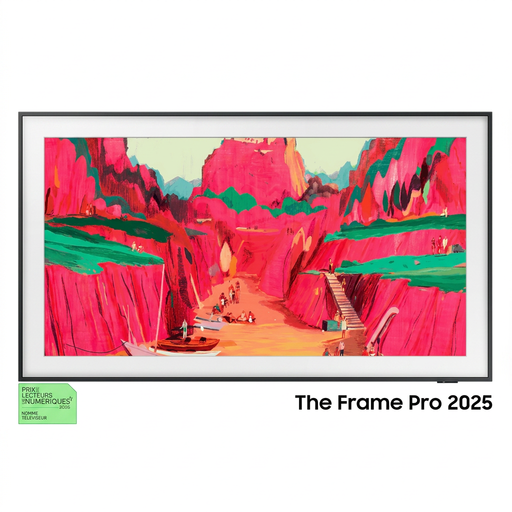
Why we recommend it: The Frame is unique. It transforms into a work of art when idle, thanks to its matte, anti-glare screen and customisable bezels. The separate One Connect box ensures an ultra-clean installation with just a single thin cable running to the screen.
It doesn't sacrifice performance for the sake of design. This model incorporates Neo QLED technology (Samsung's version of Mini LED) and a powerful AI processor, delivering top-tier image quality.
Its aesthetic integration is unparalleled. The Art Mode and matte display make it a decorative piece in its own right, far beyond a simple television.
Explore our complete selection of televisions that meet our quality charter and industry standards.
The lifespan of Mini LED diodes is comparable to that of conventional LEDs, generally estimated at between 40,000 and 60,000 hours. This represents many years of use, even with intensive viewing. Ultimately, its longevity will depend mainly on your usage (brightness level, hours of use per day).
At maximum brightness, a Mini LED TV can consume slightly more power than a conventional LED model due to the larger number of diodes. However, thanks to local dimming, which turns off LEDs in dark areas, its overall consumption is often better controlled, especially during films with many night scenes. Most models also feature power-saving modes.
Absolutely. For a 4K at 144 Hz display, the winning trio is as follows: