People who count carbohydrates
You want to know how many carbohydrates are in the frozen dessert you actually eat. When comparing two ice lollies, the amount per lolly is more useful than a figure per 100 g when the weight of each lolly isn’t given.


A mini ice lolly gives you a handy guide to portion size, but its size alone won’t tell you how many carbohydrates you’ll consume. When choosing ice lollies as part of managing diabetes, compare the carbohydrates in the lolly you plan to eat, then check the sugars, saturated fat and allergens in that specific recipe. French Health Insurance reminds us that suitable quantities depend on each person’s circumstances.
You want to know how many carbohydrates are in the frozen dessert you actually eat. When comparing two ice lollies, the amount per lolly is more useful than a figure per 100 g when the weight of each lolly isn’t given.
You’d rather choose an ice lolly than serve an unpredictable amount from a tub. The number of lollies and their weight help you work out what each portion represents.
You’re buying for several people and need to check the ingredients and any ‘may contain’ warnings for each flavour. In an assortment, the ingredients may vary from one ice lolly to another.
First, check the size of the ice lolly and its carbohydrates per lolly. Then compare the other nutritional information and the ingredients of the product you plan to buy.
| Criteria | What to check | Who it matters to |
|---|---|---|
| Carbohydrates per ice lolly | Check the carbohydrates per lolly, or calculate the amount for one lolly using the value per 100 g and the weight of a lolly from the same recipe. | If I count carbohydrates, I want to know what the lolly I’m going to eat contains, not just what the table says per 100 g. Around 36% of shoppers would put this calculation at the top of their list of concerns. |
| Portion size | Compare the number of lollies and their stated weight, or calculate their weight from the net weight of the box. | To avoid serving an unpredictable amount, I prefer a lolly whose size I know before opening the box. This individual portion would be the main concern for around 29% of shoppers. |
| Other nutritional values | After carbohydrates, check the sugars, saturated fat and energy for the portion you actually plan to eat. | I want to compare recipes without relying on the word ‘mini’, as their nutritional values can differ. Around 21% of shoppers would prioritise this broader nutritional profile. |
| Ingredients and allergens | Read the ingredients and any ‘may contain’ warnings on the box of your chosen flavour, especially in an assortment. | If someone in my household needs to avoid certain ingredients or traces, I need to check each relevant recipe. Ingredient suitability would come first for around 14% of shoppers. |
Magnum lists 14 g of carbohydrates for a 41.5 g Mini Classic. For the Auchan fruit mini ice lollies documented, the values per 100 g and the box weight work out at around 9.8 to 10.1 g per 37.5 g lolly, depending on the recipe. Both size and ingredients matter.
Compare the carbohydrates in the lolly you plan to eat, rather than choosing based on its size alone.
Carrefour Extra lists 32 g per lolly in the assortment reviewed, compared with 41.5 g for a Magnum Mini Classic. So the same format for presenting nutritional information per 100 g doesn’t necessarily describe the same portion.
Check the weight of one lolly on the box or, if all the lollies weigh the same, divide the total net weight by their number before comparing.
According to Magnum’s product information, a Mini Classic also contains 6.1 g of saturated fat per lolly. Monitoring carbohydrates doesn’t replace checking the other nutritional values.
Compare saturated fat for the portion you plan to eat, as well as carbohydrates and sugars.
Ingredients in assortments can vary between recipes. The products reviewed list milk, soya and almonds, or possible traces of other allergens.
Check the ingredients and ‘may contain’ warnings on the box you buy, even if you already know the brand.
The Mini Classic product reviewed comes in a box of six ice lollies; Magnum lists a serving as 55 ml, or 41.5 g.
The products reviewed include eight Carrefour Extra ice lollies weighing 32 g each and a box of eight Simpl lollies weighing 284 g.
The products reviewed include a chocolate assortment of eight lollies weighing 258 g and a fruit assortment of eight lollies weighing 300 g.
The vanilla and chocolate product listed by E.Leclerc contains six mini ice lollies, with a net weight of 234 g.
ALDI France offers a box of 12 chocolate MUCCI® mini ice lollies weighing 429 g, with several flavours in the assortment.
This selection includes small ice lollies and larger individual sorbets. If you’re looking specifically for a mini ice lolly, check the size of each one before comparing the nutritional information for each recipe.
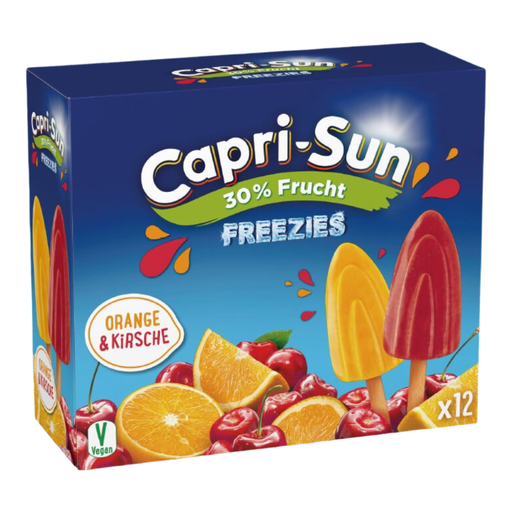 Image unavailable
The box of 12 makes it easy to plan an individual portion.
Its net weight is 444 g. Check the carbohydrates per lolly, as well as the ingredients and any ‘may contain’ warnings on the box you buy.
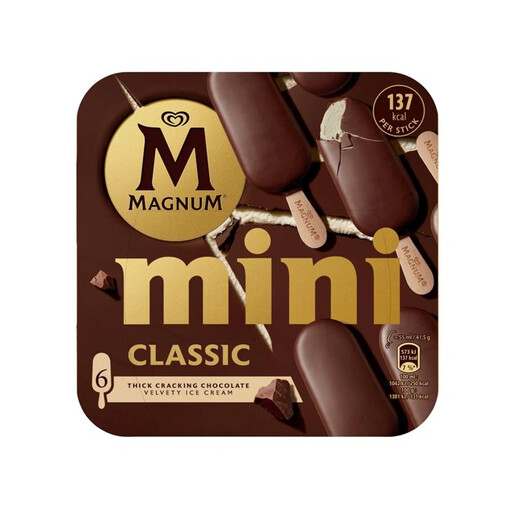 Image unavailable
This product is useful for comparing values per lolly if you want to know the carbohydrates in your portion in advance.
Magnum lists each lolly as 41.5 g, with 14 g of carbohydrates, including 12 g of sugars, and 6.1 g of saturated fat. Check the ingredients and allergens on the box you buy.
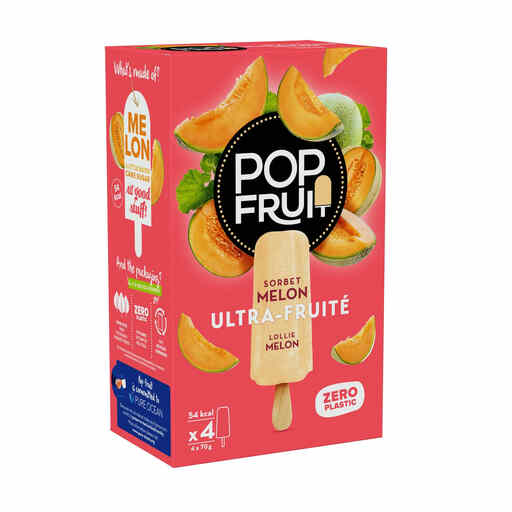 Image unavailable
These individual sorbets give you a different size of ice lolly to consider, but aren’t described as a mini format.
The box contains four lollies weighing 280 g in total. Check the weight, carbohydrates and allergen information for the lolly you choose.
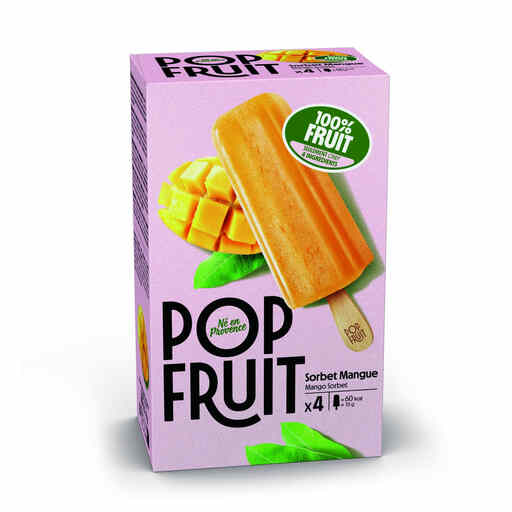 Image unavailable
This sorbet on a stick lets you choose an individual portion, but it isn’t described as a mini format.
The box contains four lollies weighing 280 g in total. Check the nutritional information per portion and the allergen information on the packaging.
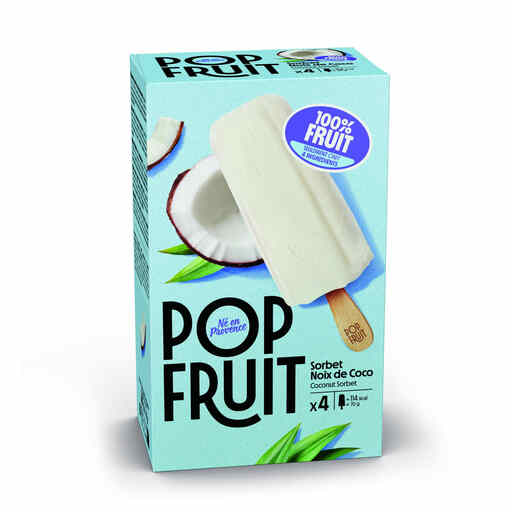 Image unavailable
This product is best compared as an individual portion of sorbet, not as a mini ice lolly.
The box contains four lollies weighing 280 g in total. For this specific recipe, check the carbohydrates and saturated fat per lolly, as well as the allergen information.
No. ‘Mini’ describes the format, not the amount of carbohydrates or whether it fits your meal plan. For example, Magnum lists 14 g of carbohydrates for a 41.5 g Mini Classic; compare this with the portion you actually plan to eat.
Start with the carbohydrates in the ice lolly you plan to eat. If the table gives values per 100 g, use the weight of one lolly from the same product to work out a comparable figure, then check the sugars, saturated fat and energy.
No. A score alone doesn’t tell you how many carbohydrates are in the lolly you’ll eat. Compare the nutritional values for each portion and check its size before choosing.
Read the ingredients and any ‘may contain’ warnings on the specific box, checking each flavour if the recipes differ. The products reviewed list milk, soya or almonds, depending on the recipe; don’t assume the ingredients in one flavour are the same as another.
Pick up frozen products towards the end of your shop, as recommended by Anses to maintain the cold chain. Plan how you’ll transport them and follow the storage instructions on the box.