For everyday food storage in a studio flat, first choose a fridge with enough fresh-food capacity for your shopping and that fits your space. A very compact mini fridge is better suited to occasional extra storage. If you want to keep frozen food, check the type of freezer compartment, bearing in mind how much room it takes up inside, how it needs to be defrosted and how noisy it is in the room.
Which option suits your needs?
Someone living in a studio flat and shopping for several days at a time
If this is your main food-storage space, check the net capacity for fresh food rather than just the fridge’s external dimensions. For perishable foods, Anses recommends keeping them between 0 °C and +4 °C in the coldest part of the fridge.
Someone who sleeps or works near the fridge
In a bedroom or living area, compare the stated noise level and check that the location allows you to install the fridge securely, with the ventilation clearances required for that model.
Someone who wants to keep a few frozen foods
A freezer compartment may suit your needs, depending on its specifications. Check its capacity, star rating and defrosting method, bearing in mind that it takes up some of the interior space.
How do the models compare?
First decide whether you need the appliance as your main fridge, for occasional extra storage or to keep frozen food as well. Then compare fresh-food capacity, the space needed for installation and noise levels using the specifications for the exact model.
Under-counter fridge without a freezer
Consider this if: fresh food for everyday use is your priority and you don’t need to freeze anything.
The trade-off: all the interior space is for fresh food, with no room for frozen food.
Mini fridge for occasional extra storage
Consider this if: you need space for drinks and small amounts of fresh food in a bedroom or office.
The trade-off: its limited storage space is less suited to shopping for several days at a time.
Small fridge with a freezer compartment
Consider this if: keeping frozen food is one of your needs and the compartment in your chosen model is suitable for it.
The trade-off: the freezer takes up space that could be used for fresh food and may need to be defrosted manually.
| What to consider |
What to check before buying |
Who is it for? |
| Fresh-food capacity and storage |
Compare the fridge’s net capacity separately from the freezer’s. Check the temperature settings; Anses recommends checking that the coldest part is between 0 °C and +4 °C. |
If I plan to store my shopping and perishable foods for several days, space for drinks alone isn’t enough to guide my choice; around 40% of consumers prioritise everyday food storage. |
| Space, ventilation and noise |
Measure the space and check that the door can open fully, then consult the model’s ventilation clearances. Compare the stated noise emissions in dB on the label or product information sheet. |
In the room where I sleep or work, I want to install the appliance without squeezing it into an unsuitable alcove or overlooking how noisy it is; almost 30% of consumers put this kind of fit at the top of their needs. |
| Freezer and defrosting |
Check the compartment’s capacity and star rating, as well as the defrosting method for both the fridge and freezer. |
If I want to keep frozen food, I need to know what the compartment can actually store and what maintenance it requires; around 30% of consumers make this their priority. |
Mistakes to avoid
-
Choosing based only on the appliance’s dimensions
A freestanding fridge needs space around it to release heat, so its dimensions don’t always show how much room you’ll need for installation.
Measure the whole space. Whirlpool recommends leaving 5 cm above and 10 cm behind its freestanding models; for a built-in model, follow the installation diagram for that specific model.
-
Assuming all small freezers are the same
Having a compartment doesn’t tell you how much frozen food it can hold, its star rating or what maintenance it requires.
Compare the fresh-food and freezer capacities separately, along with the star rating and defrosting methods, before choosing a model.
-
Relying on how cold it feels to judge whether food is safe
A chilled drink won’t tell you the temperature in the food-storage area. Anses recommends keeping food between 0 °C and +4 °C in the coldest part of the fridge.
Once the fridge is installed, check this area with a thermometer and avoid overfilling the appliance so that cold air can circulate.
-
Forgetting installation conditions when comparing noise levels
The stated noise level helps you compare models, but vibrations caused by an unstable installation can also be disruptive when the appliance is near your bed or desk.
Check the stated dB level for your chosen model, make sure it is level and follow its ventilation instructions.
Brands to consider for different installations
These ranges help you compare freestanding and under-counter installation options, as well as models with a freezer compartment. The specifications mentioned apply only to the named models.
Whirlpool
Whirlpool France lists small fridges for compact spaces, as well as built-in models with a freezer compartment.
- Its freestanding installation guidance recommends leaving 5 cm above and 10 cm behind the appliance.
- The specifications for the Whirlpool ARG7342FR, including its 171 L fridge capacity and 4-star freezer compartment, don’t apply to the whole range; check the product information for the model you’re considering.
Electrolux
Electrolux France features under-counter integrated fridges, which are worth considering if you have a suitable space for one.
- The Electrolux EXB3AE82R is listed with 134 L of net capacity and a stated noise level of 38 dB.
- This fridge-only model has no freezer, so it won’t meet your needs if you want to store frozen food.
Fridges to consider on Joybuy
These models offer different capacities for smaller rooms, and each has a freezer compartment. Before choosing, compare their size, noise level and compartment specifications with the way you plan to use the appliance.
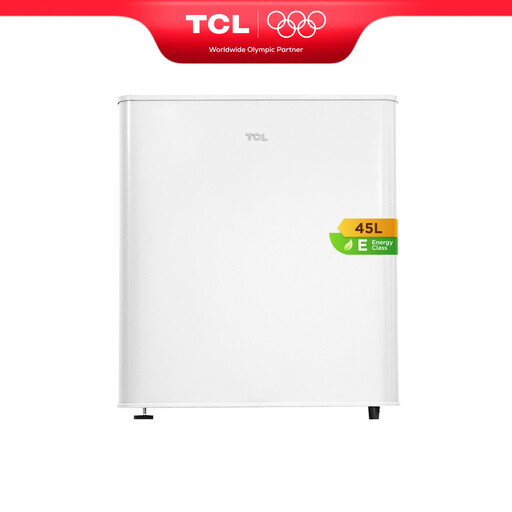 Image unavailable
TCL RF60DWE0FR, 45 L mini fridge
Its table-top design is worth considering if you need extra chilled storage in a small space, rather than a fridge for several days’ worth of shopping.
The product name mentions adjustable feet, a tempered-glass shelf and an E energy rating. Before storing perishable food or frozen food in it, check the temperature it reaches and the freezer compartment’s specifications.
View on Joybuy
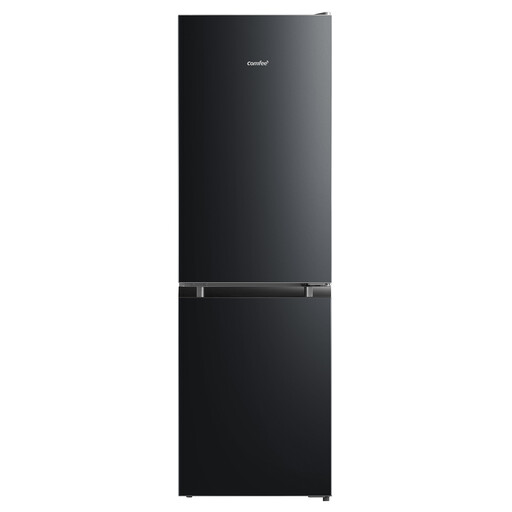 Image unavailable
Comfee' by Midea RCB230BL2EU(E), 174 L fridge freezer
This freestanding model is suited to someone with a kitchen area tall enough to accommodate it who wants more storage than a table-top appliance offers.
Its name mentions Low Frost, an adjustable thermostat and a reversible door. Check the dimensions and required clearances, as well as the stated noise level if the appliance will be in the room where you sleep.
View on Joybuy
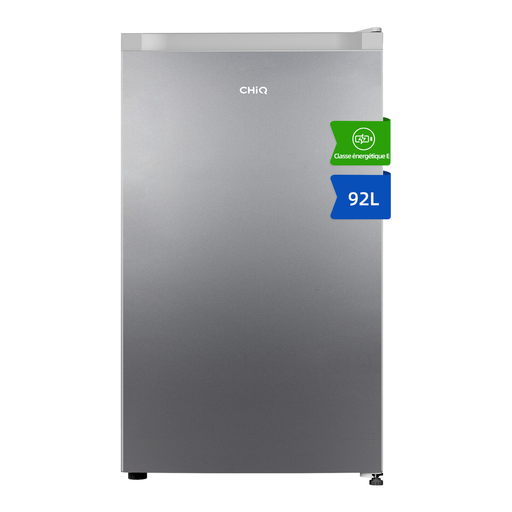 Image unavailable
CHiQ JR92DSE, 92 L fridge with freezer compartment
This mid-sized option is worth considering if a table-top appliance seems too small, but don’t assume its freezer compartment is suitable for the frozen food you want to store.
The product name lists a footprint of 0,22 m² and an E energy rating. Check the full dimensions, clearances, stated noise level and compartment specifications before installing it in a bedroom or studio flat.
View on Joybuy
Frequently asked questions
What temperature should I keep fresh food at in a mini fridge?
Anses recommends keeping food between 0 °C and +4 °C in the coldest part of the fridge. Check the temperature regularly with a thermometer, especially if you’re storing perishable foods.
How much space should I leave around a small fridge?
For a freestanding fridge, Whirlpool recommends leaving 5 cm above and 10 cm behind it. A built-in model must be fitted in accordance with the recess dimensions and ventilation instructions in its own manual; don’t apply the clearances for freestanding models.
Can a mini fridge with a freezer compartment store frozen food?
It depends on the compartment’s specifications. Check its star rating and capacity before buying. For example, Whirlpool lists a 4-star freezer compartment for the ARG7342FR; this feature isn’t available across all mini fridges.
What should I compare on the energy label of two small fridges?
The European Commission says the label includes information such as the energy rating, energy consumption, storage capacities, whether there is a freezer compartment and noise emissions. Compare these details for appliances suited to the same purpose. Don’t assume that capacity or energy rating alone means a model will meet all your installation requirements.


