
Livraison le jour même ou le lendemain

Qualité garantie

Débloquez vos offres de bienvenue: Livraison GRATUITE | Jusqu'à -80 % | 30 jours d'essai gratuits à JoyPlus
Téléchargez l'application
Whether you're outfitting a student dorm, setting up a home office, heading out on a road trip, or just want to keep drinks cool on the patio, a mini-fridge is the perfect solution. However, faced with an overwhelming number of options and often misleading claims, it's easy to fall for the common traps and end up regretting your purchase.
As a Product Expert at Joybuy, my role is to help you decode the spec sheets to make an informed choice. Let's review the red flags and the criteria to examine to find the model that will truly meet your expectations.
Before diving into specific models, let's identify the most common mistakes that turn a seemingly practical purchase into a source of frustration.
To avoid making a mistake, focus on these three technical parameters that determine the performance and real-world usability of your appliance.
This is the number one criterion. It dictates the power and stability of the cooling.
A mini-fridge worthy of the name must be able to adapt to any situation.
Check that the model you're considering offers this dual compatibility, with the corresponding cables included.
Volume in litres isn't everything. A poorly laid-out 40-litre small refrigerator can be less practical than a well-optimised 30-litre model. Check if the shelves are removable or adjustable to configure the space according to your needs.
For passive models like a camping cooler, the quality of the insulation is the secret to its effectiveness. High-density polyurethane (PU) foam is a guarantee of performance, as it minimises thermal bridging and retains cold (or heat) for much longer.
Rather than an impersonal list, here are options designed for specific user profiles, taking into account the traps and criteria we've just discussed.

Why this model? More than just a mini-fridge, this is a well-designed small refrigerator. At 55 cm wide, it fits even in a studio kitchenette while offering a generous 206L capacity, including a true separate freezer compartment. The perfect solution for those who need more than just a simple backup fridge.
It uses compressor technology, ensuring stable cold and effective freezing, even in summer. Its adjustable shelves allow you to optimise storage space, avoiding the trap of wasted volume.
It offers the performance of a standard model (fast cooling, freezing) in a compact format suitable for tight spaces. Its Class E energy rating complies with new European standards.

Why this model? Built for adventure, this compressor refrigerator is the ideal companion for long journeys. It's perfect for van and RV owners, truck drivers, or boaters who need to keep food fresh or frozen for several days.
It avoids the "pseudo-portable" trap thanks to its dual 12V/24V DC and 100-240V AC power supply. Its compressor technology allows for true freezing down to -18°C, preventing the disappointment of thermoelectric coolers that struggle in hot weather.
Absolute versatility with an adjustable temperature range from +15°C to -18°C and compatibility with all common power sources (home, car, truck).
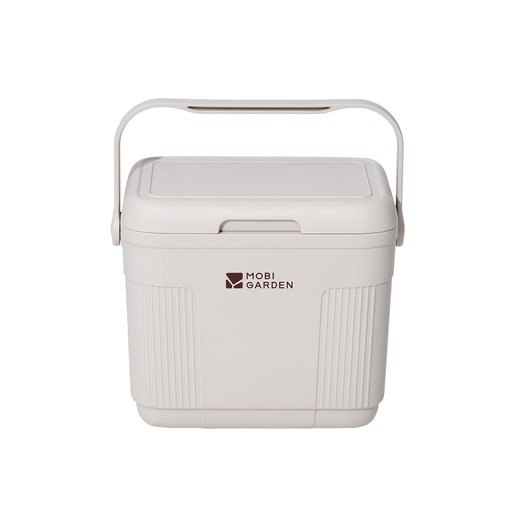
Why this model? For those heading out for the day or a weekend without access to electricity. This passive camping cooler is designed for optimal cold retention. Its 22L capacity is ideal for a family picnic or a fishing trip.
This model doesn't promise to produce cold, it preserves it. It thus avoids the disappointment of underpowered electric coolers. Zero noise, zero energy consumption. Its rugged design is built for outdoor use.
Its full high-density PU foam insulation and silicone seal ensure prolonged cold retention (up to 36-48 hours with ice packs). Its food-grade shell guarantees perfect hygiene.
We have compiled a complete selection of products that meet our selection criteria and current safety standards.
Consumption varies enormously depending on the technology. A 10L thermoelectric model consumes about 40-60W but runs continuously. A 40L compressor refrigerator will consume 60-80W, but its compressor will only turn on intermittently to maintain the temperature, often making it more economical over a 24-hour period. For stationary use, rely on the energy label (like the Class E rating of the Sonlu model).
Yes, this is a risk if the fridge runs for long hours with the engine off. However, most modern compressor models, like the BINGI, include a multi-level battery protection system. This feature automatically cuts power to the fridge if the vehicle's battery voltage drops below a certain threshold, ensuring you can restart your engine without a hitch.
The difference is fundamental. An electric cooler (thermoelectric) acts as a simple chiller: it lowers the temperature by 15-20°C below the ambient temperature. A portable compressor refrigerator is a true refrigerator: it reaches and maintains the temperature you set (e.g., 4°C), whether it's 15°C or 35°C outside, and can even freeze. For safely storing food, compressor technology is the only truly reliable option.