Anyone counting biscuits for each compartment
If you want to put a consistent number in each compartment, check the number of biscuits per packet or the weight of each biscuit. A packet may contain several biscuits.


To fill the compartments with a consistent number of biscuits, choose a format that makes them easy to count, based on the number per packet or the weight of each biscuit. A larger packet is suitable if you plan to portion and package the biscuits yourself. Compare the nutritional values per 100 g with the amount you plan to put in each compartment, then check the allergens and storage instructions. The Nutri-Score may not always be displayed.
If you want to put a consistent number in each compartment, check the number of biscuits per packet or the weight of each biscuit. A packet may contain several biscuits.
When comparing two products, start with the values per 100 g, particularly energy, sugars, saturates and salt. Then relate them to the amount you plan to put in each compartment.
If the calendar is for someone else or you’re preparing it in advance, check the ingredients, any ‘may contain’ information and the storage instructions for each product.
First decide how many biscuits you want in each compartment: a small biscuit, a packet and a portion don’t necessarily mean the same amount.
| Criteria | What to check | Who is it for? |
|---|---|---|
| How to portion each compartment | Number of biscuits per packet or weight of each biscuit; total amount needed for the compartments. | When filling the compartments, I want to be able to count the biscuits without assuming that one packet equals one portion. Around 40% of consumers put counting biscuits for each compartment first. |
| Nutritional comparison | Energy, sugars, saturates and salt per 100 g; the actual weight placed in each compartment. | To compare what goes in each compartment, I want to start with the values per 100 g before calculating the amount I’ll give out. This nutritional comparison is the priority for around 40% of consumers. |
| Allergens and storage | Ingredients and ‘may contain’ information; packaging and storage instructions. | If I’m preparing the calendar for someone else or in advance, I need to check for allergens and protect the biscuits. Around 20% of consumers prioritise these precautions. |
Size alone doesn’t tell you how nutritious a biscuit is. The E.Leclerc product listing for Mini goûters ronds fourrés chocolat P’tit Déli gives it a Nutri-Score E and lists 485 kcal per 100 g.
Compare the values per 100 g, then take into account how many biscuits you plan to put in each compartment.
According to the DGCCRF, displaying the Nutri-Score is voluntary in France. For most prepacked foods, however, a nutrition declaration is still required.
If the logo isn’t shown, compare energy, sugars, saturates and salt in the nutrition table.
Auchan’s product listing for its mini chocolate-filled biscuits specifies four packets of six biscuits, so one packet could fill several compartments.
Before buying, decide how many biscuits you want in each compartment and check whether the pack makes them easy to portion out.
Depending on the product, listings from Carrefour, Auchan and Pomona EpiSaveurs mention wheat, milk or soya, as well as various possible traces.
Read the label on the exact product, including any ‘may contain’ information, before putting together a calendar for someone else.
Carrefour lists LU Mini Rollos Pepito in a box of six packets, weighing 225 g in total.
Auchan’s listing for BN mini chocolate-filled biscuits gives nutritional values for one 7 g biscuit.
Pomona EpiSaveurs offers Mini Oreo in a 400 g packet, which you can count and portion out yourself.
Auchan’s mini chocolate-filled biscuits come in four packets of six, with a total weight of 168 g.
E.Leclerc’s listing for Mini goûters ronds fourrés chocolat, in a 168 g pack, gives it a Nutri-Score E.
These two Meiji Hello Panda formats can be portioned out between the compartments: one contains several 47 g packets, while the other is a 50 g pack. To keep the amount consistent, count the biscuits as you fill the calendar rather than treating a whole packet as one portion.
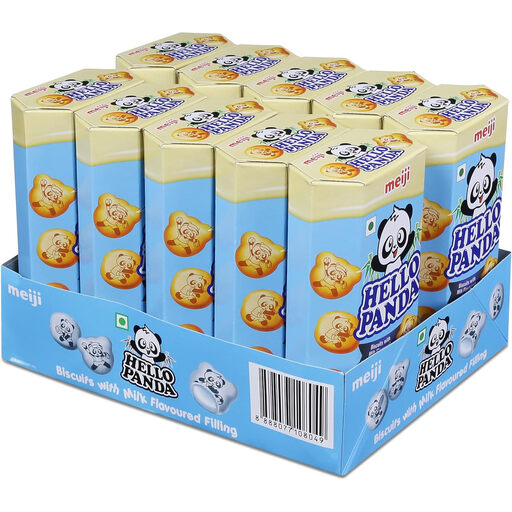 Image unavailable
The ten packets can help you organise the calendar filling over several days, but one 47 g packet won’t necessarily fit in a single compartment. Count the biscuits to get the amount you want. The description mentions wheat, milk and soya. If allergens are a factor in your choice, check the label on the exact product.
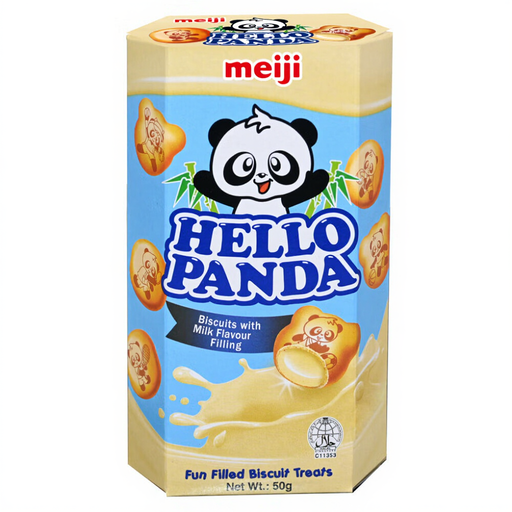 Image unavailable
This 50 g packet is a good choice if you want to count the little biscuits yourself before putting them in the compartments. After opening, the description recommends resealing the packet and eating the contents soon. It mentions wheat, milk and soya, as well as possible traces of oats, hazelnuts and sesame. Check the label on the exact product.
No. According to the DGCCRF, displaying it is voluntary in France, while a nutrition declaration is required for most prepacked foods. You can therefore compare the values per 100 g even if there’s no Nutri-Score.
Compare their nutritional values per 100 g, then consider the weight or values per biscuit where these are given. This lets you relate energy, sugars, saturates and salt to the amount you plan to put in each compartment.
No. A packet may contain several biscuits: Auchan’s listing for its mini chocolate-filled biscuits specifies six biscuits per packet. Decide how many biscuits you want in each compartment before portioning them out.
Check the ingredients and any ‘may contain’ information on every packet before choosing the biscuits. The allergens listed vary by product, so don’t rely on the brand alone or on another flavour in the range.
Follow the instructions on the product you’ve bought and protect the biscuits while portioning them out. Auchan’s listing for its mini biscuits recommends keeping them away from heat and moisture. For the 50 g Meiji Hello Panda packet, the description recommends resealing it after opening and eating the contents soon.