Which set-up is right for you?
Start by checking your access to water: even without a fixed connection, you still need to plan how to drain the wastewater.
Tenant without a dedicated water supply
If your everyday dishes fit into a small load, a tank-fed appliance means you won’t need to install a water supply. You’ll still need a stable surface to put it on, a way to fill the tank and somewhere suitable to position the drain hose, as set out in the instructions.
Couple or housemates with a fitted kitchenette
If you already have access to a water supply, a drain and a suitable socket, compare the capacity of a connected compact dishwasher with that of a mini model. Boulanger, for example, features 6-place-setting compact models for smaller homes. Check their dimensions too, and make sure the installation is suitable for your property.
Living in temporary accommodation
A countertop model with a tank, or one that connects to the tap if compatible, could be an option if you want to avoid permanent alterations. The position of the drain hose, the space needed and the amount of washing-up you have all matter in everyday use.
What should you check before choosing?
First, choose a water-supply option that works in your kitchen. Then compare the stated capacity with your washing-up and the space you actually have available.
Tank-fed
Consider this if: you don’t have a dedicated water supply and can manage filling and draining the appliance near a sink.
The trade-off: with no fixed connection, you’ll need to handle the water for every cycle, and check that the capacity suits your meals.
Connected to the tap
Consider this if: your tap is compatible and you’d like to avoid filling a countertop appliance by hand.
The trade-off: the tap and sink need to remain available to the appliance during the cycle. Check the connectors and the instructions.
Connected freestanding compact model
Consider this if: you already have suitable connections and need more capacity than a 3-place-setting mini model offers.
The trade-off: you’ll need to make room for it and check whether any planned alterations are permitted in a rented home.
| Priority | What to check | What I need |
|---|
| Water management |
Check how the appliance is filled, what connections it needs and where the drain hose should go. If it connects to the tap, check that it’s compatible and that the right connectors are included. |
I can’t install a dedicated water supply. I can fill a tank, but I also need a practical way to drain the wastewater. |
| Capacity and space |
Compare the stated place settings with the diameter of your plates, your bowls and the layout of the basket. Measure your worktop, the space needed to open the door and the clearance beneath cupboards. |
My plates and the dishes I use between cycles need to fit, without getting in the way of using the kitchenette. |
| Noise, drying and energy use |
Check the model’s drying features and ventilation instructions. On the energy label, compare noise, litres of water per reference cycle and kWh per 100 cycles on the same basis, as explained by ADEME. |
In a room where I also live, noise and dishes still being damp after a cycle matter just as much as the choice of programme. |
| Installation in your home |
Check the socket, water supply and drain required in the instructions. For rented accommodation in France, ANIL says that alterations to the property or its fittings require the landlord’s written consent. |
I want to position the appliance without improvised connections or alterations to the rented property’s fittings before getting the necessary consent. |
Brands to help you compare your options
These examples show different types of installation; they don’t mean that every model from each brand works in the same way.
Daan Tech
Daan Tech says its Bob mini dishwasher can be supplied with water from its built-in tank or a standard water supply.
- The manufacturer’s product details state that it has a 3,9 L tank, holds 3 place settings and drains through a hose into a sink or container.
- When using the tank, you’ll need to plan how to drain the water and check that its small capacity suits your washing-up.
HAVA
HAVA describes the R09 as a countertop model with a tank, designed for use without fixed plumbing.
- HAVA states that the R09 has a 5 L tank, holds 3 place settings and measures 43 × 43 × 46 cm.
- Check that its capacity suits your plates, and consult the instructions for how to position the drain and the clearance needed.
Klarstein
Klarstein describes the Aquatica and Oceana, among others, as mini dishwashers that connect to the tap.
- Klarstein’s Oceana product details state that it holds 3 place settings and accommodates plates up to 26 cm in diameter.
- These models need a compatible tap and a practical way to drain the water during use.
Bosch
Bosch’s installation instructions give you an idea of what’s required for a dishwasher connected to the water supply, drain and electricity.
- For the installation described, Bosch recommends connecting directly to a mains socket.
- These instructions don’t replace the manual for your chosen model. Bosch’s product information says the SKS62E32EU compact model is no longer available.
Mini dishwashers available on Joybuy
Consider these countertop appliances if you want to avoid permanent plumbing in a studio flat. Check how each model is supplied with water and, especially, how it drains before deciding where to put it.
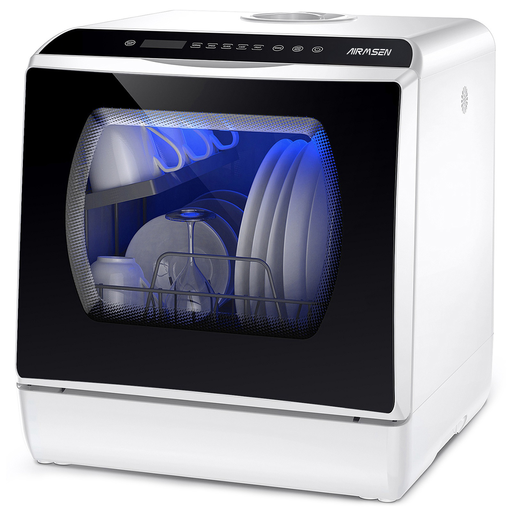 Image unavailable
AIRMSEN, mini dishwasher with 5 L tank, 5+1 cycles
For a kitchen without a dedicated water supply, this model is listed as filling from a tank and draining through a hose into a container. Its product details state that it holds 4 place settings and accommodates plates up to 26 cm. Check the space it needs, including for ventilation, and make sure your dishes will fit.
View on Joybuy
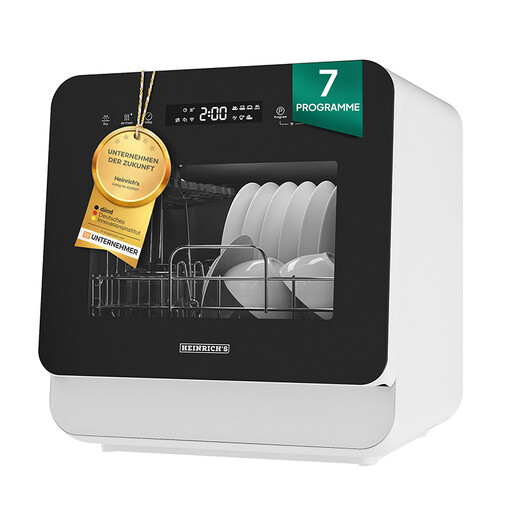 Image unavailable
Heinrich's HTG 8855, 3-place-setting mini dishwasher
Its stated 5 L tank offers a way to supply water without a permanent connection; it can also connect to a tap. The product details list 3 place settings and 7 programmes. Before installing it, check the instructions for where to position the drain hose when using the tank, along with the dimensions and the space available for your plates.
View on Joybuy
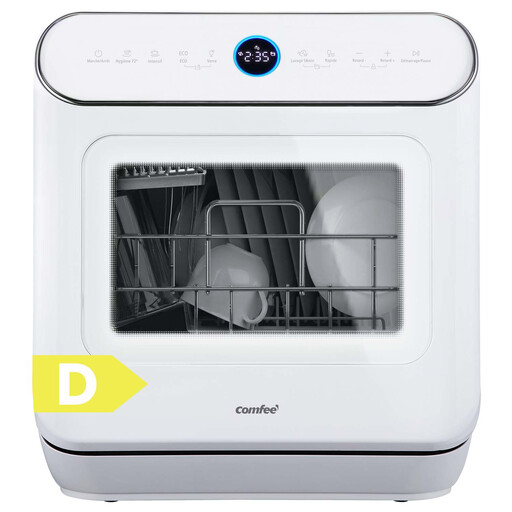 Image unavailable
COMFEE CDWMT305WD, white 3-place-setting mini dishwasher
Its stated manual-fill option means you could use this model without installing a permanent water supply. The product details list 3 place settings, plates up to 270 mm and automatic door opening at the end of the cycle. Check the instructions for the drainage set-up, and make sure the basket suits the utensils you use regularly.
View on Joybuy
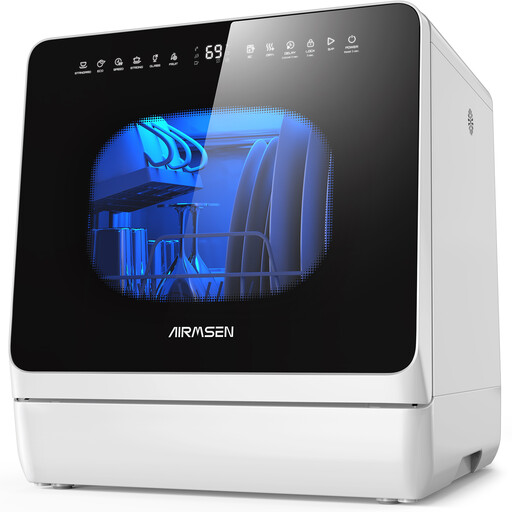 Image unavailable
AIRMSEN, mini dishwasher with 8 programmes
This countertop model is listed for use without a permanent connection. Its product details state that it holds 4 place settings, accommodates plates up to 26 cm and has a drying programme. Check the instructions to find out exactly how it’s supplied with water and drains the wastewater, then measure the space it will occupy.
View on Joybuy
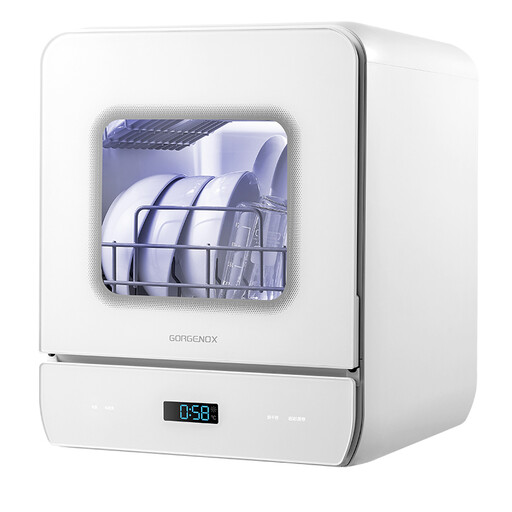 Image unavailable
GORGENOX DW5-D40A, 3-place-setting mini dishwasher
This countertop model is listed for installation without permanent plumbing and holds 3 place settings. Before choosing it for a studio flat, check the instructions for its water supply, drainage route, dimensions and maximum plate size.
View on Joybuy
Frequently asked questions
Will a mini dishwasher with a tank work without a fixed water supply?
Yes, if the model is designed to be supplied with water from its tank, but you’ll still need to fill it and drain the wastewater. Daan Tech lists a 3,9 L tank and a drain hose for Bob; HAVA states that the R09 has a 5 L tank. Follow the instructions for your chosen model when filling and draining it.
Does a tank-fed model need a fixed drain?
Not if the model is designed to drain through a hose into a sink or suitable container, as Daan Tech describes for Bob. You’ll still need to position the hose securely and follow the drainage instructions for the version you buy to prevent spills.
Can a model connected to the tap replace one with a tank?
It avoids manual filling, but relies on having a compatible tap that’s accessible during the cycle. Klarstein describes the Aquatica and Oceana as appliances that connect to the tap. Check the connectors, drainage and model instructions before choosing this option.
Do I need my landlord’s permission to install a connected dishwasher?
In France, ANIL says you need the landlord’s written consent if the installation alters the rented property or its fittings. This doesn’t mean that every temporary connection automatically counts as an alteration. Check the existing fittings and ask for written consent before making any permanent changes.
Which figures should I compare on the energy label?
For a dishwasher, ADEME says the label includes figures such as energy use in kWh per 100 reference cycles and water use in litres per reference cycle. Compare capacity and noise on the same basis too, then check the instructions for the programmes and drying features you’re interested in.


