Who is each type best suited to?
The right type depends first on what you can install in your kitchen, then on how much washing up you need to do between cycles.
Renters without a usable water supply
A countertop model with a water tank means you won’t need a permanent connection to the water supply. You will still need to fill the tank and position the drain hose securely so it empties into a sink or suitable drain.
One person or a couple with a small daily load
A compact basket may be enough if your plates, glasses and utensils fit, and the number of cycles suits your mealtimes. The stated place-setting capacity doesn’t tell you whether your own dishes will fit, so check the basket layout carefully.
Renters with a suitable space and fittings
If your kitchen already has the space, a suitable water supply and a drain, a slimline or integrated model may be worth considering if a countertop appliance’s basket would be too small. Check the cabinet dimensions and installation requirements before choosing this type.
What should you check before choosing?
First, make sure you can install the appliance in your home. Then check that the basket dimensions and features suit the dishes you use every day.
Countertop model with a water tank
Consider this if: you can’t easily use a water supply without altering your rented kitchen.
Keep in mind: you’ll need to fill it by hand, and the waste water still needs somewhere to go.
Plumbed-in countertop model
Consider this if: you can access an existing water supply and drain without altering the installation.
Keep in mind: you’ll need space for the hoses and should check that the connections are compatible.
Slimline or integrated model
Consider this if: there’s a suitable fitted space and a small basket would mean running too many cycles.
Keep in mind: this type needs a suitable installation; some integrated models also require a furniture door.
| What to consider |
What to check |
What I need |
| Water supply and drainage |
Check whether the model needs to be filled by hand or connected to a water supply. Check that a drain hose is included, its length and how it can be secured, as well as the route it will take to the sink or a suitable drain. |
I can’t alter the plumbing. A water tank is only an option if I can also drain the waste water safely, without an unstable set-up. |
| Installation in a rented home |
Work out whether the appliance can use the existing fittings or requires drilling or changes to the taps, drain or cabinets. Get your landlord’s written permission before making any alterations. |
Before choosing a plumbed-in or integrated appliance for my rented home, I want to know exactly what installation would involve. |
| Usable capacity |
Check the maximum plate diameter, available height and basket layout. Consider how many cycles you’ll need for your usual glasses, dishes and utensils, rather than relying on the stated place-setting capacity alone. |
There are two of us, but our large plates and saucepans could fill the basket before the end of the day. |
| Available space |
Measure the height, width and depth, then allow room for the hoses and door to open. For an integrated model, also check the cabinet dimensions and what’s needed for installation. |
My worktop is narrow, so I need to be able to open the appliance and use the sink once the hoses are in place. |
| Noise and energy and water use |
Compare the same figures for each model: noise level in dB, energy in kWh per 100 cycles, water in litres per cycle and Eco programme duration. ADEME lists these as useful figures on the energy label. |
My kitchen opens onto the living area, so noise matters just as much as comparing energy and water use on a like-for-like basis. |
| Programmes and maintenance |
Check how long the programmes you’re interested in take, along with the cleaning instructions and drying method in the model’s manual. A quick programme and an Eco programme are designed for different uses. |
I’d like to know how long my usual cycles take and what maintenance is involved before installing the appliance. |
A guide to brands and their ranges
These examples show different installation types; their features won’t necessarily apply to every model from the same brand.
Daan Tech
The Bob is an example of an extra-small countertop model. Boulanger lists this model as measuring 34 × 49 × 49 cm and having a capacity of 3 place settings.
- A size to consider if worktop space is limited.
- Check how your dishes fit, along with the water supply and drainage requirements of the model you choose. Daan Tech provides installation and maintenance instructions specifically for the Bob.
Bosch
Bosch distinguishes between its countertop and integrated models. Its small countertop dishwashers measure 45 × 55,1 × 50 cm (height × width × depth).
- This distinction can help you find a freestanding appliance rather than one that needs a cabinet.
- Check the dimensions and connections for the exact model you’re considering. The Bosch SPV4EMX10F, for example, is a fully integrated model measuring 44,8 cm wide, not a countertop appliance.
Electrolux
Electrolux offers the EES42210L, a fully integrated 45 cm model with a capacity of 9 place settings, and the ESL2500RO, a compact fully integrated 55 cm model with a capacity of 6 place settings.
- These two models offer different capacities and widths to consider if you have space for an integrated appliance.
- Check the cabinet and installation requirements for the exact model. Electrolux states that the ESL2500RO is supplied without a furniture door.
Worktop models available on Joybuy
Consider these countertop models in light of their water supply requirements, available drainage options and the space in your rented kitchen.
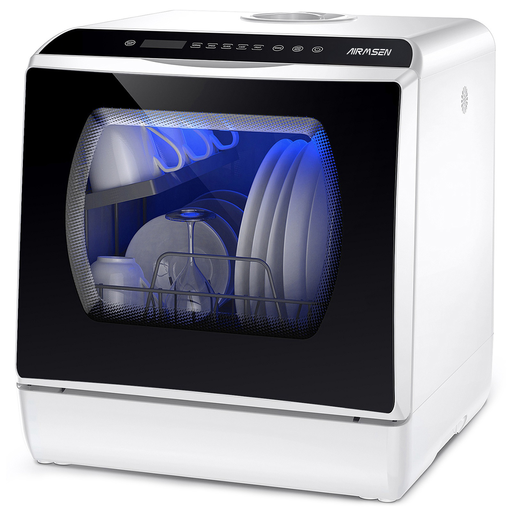 Image unavailable
AIRMSEN countertop dishwasher, 5 L tank, 5 + 1 cycles
Consider this if filling a water tank works better in your kitchen than a permanent connection. The product name lists an integrated 5 L tank and 5 + 1 wash cycles. Make sure there’s a secure route for drainage and check that the model will fit in your chosen spot.
View on Joybuy
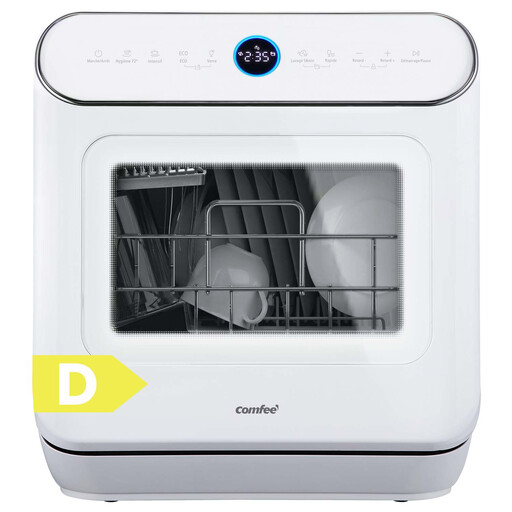 Image unavailable
COMFEE CDWMT305WD, 3 place settings, white
Worth considering for small loads if your dishes fit in the basket. The product description lists 3 place settings, 7 programmes, a delay start of up to 24 hours, automatic door opening and a D energy rating. Check how it’s filled and drained, and read the safety instructions specifically for the CDWMT305WD before installation.
View on Joybuy
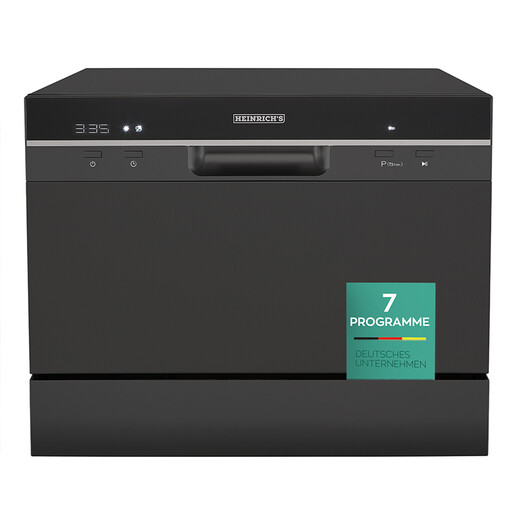 Image unavailable
Heinrich's HTG 8840 Schwarz, 6 place settings
Consider this if a plumbed-in countertop model suits your kitchen and you’re looking for a stated capacity of 6 place settings. The product description lists 7 programmes, 47 dB and a D energy rating. Check the specifications for the exact model to compare these figures with other appliances. Measure the space and check that your water supply and drain are compatible.
View on Joybuy
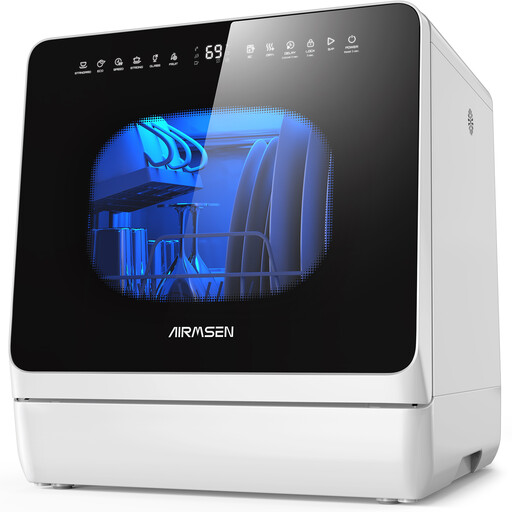 Image unavailable
AIRMSEN countertop dishwasher, 8 programmes
Compare this model if you’re looking for a countertop appliance with a choice of programmes. The product description lists 8 programmes, a built-in water softener, a delay start and a child lock. Before choosing it for a rented home, check how it’s supplied with water, its drainage requirements and its external dimensions.
View on Joybuy
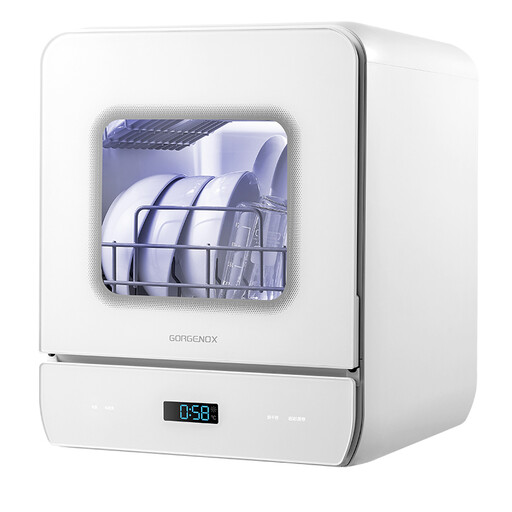 Image unavailable
GORGENOX DW5-D40A, 3 place settings
With a stated capacity of 3 place settings, this model is aimed at smaller loads, provided your plates and utensils fit in the basket. The product description lists a water softener and hot-air drying. Check how it’s supplied with water, its drainage requirements and its dimensions before making space for it on your worktop.
View on Joybuy
Frequently asked questions
Can a mini dishwasher with a water tank work without a water supply?
Yes. A model designed to be filled by hand can work without a permanent connection to the water supply. However, you’ll still need to direct the waste water through a hose into a sink, bowl or suitable drain, and make sure the hose stays in place during the cycle.
What should you check before connecting a dishwasher in a rented home?
First, check that the existing water supply and drain are compatible, and consider the route the hoses will take and any conditions in your tenancy agreement. If installation requires changes to the taps, plumbing or cabinets, get your landlord’s written permission before going ahead.
Is a capacity of three place settings enough for two people?
It may be enough for a small load, but the place-setting capacity alone won’t tell you whether your large plates, saucepans or tall glasses will fit in the basket. Check their dimensions, the interior layout and how many cycles you’ll need for your everyday dishes.
Which figures should you compare for water, electricity and noise?
ADEME recommends checking the energy use in kWh per 100 cycles, water use in litres per cycle, Eco programme duration and noise level in dB on the model’s energy label. Compare the same figures across appliances and consider the usable capacity: a smaller model doesn’t, by itself, tell you how much it will use for your needs.


