Renters without a usable water supply
You want to install an appliance without creating a permanent connection. A water tank lets you fill it by hand, but you’ll also need somewhere to drain the waste water.


In a small rented kitchen, start by considering the space available and which connections you can use without altering the property. A model with a water tank avoids the need for a dedicated water supply, but you’ll still need to drain the waste water. A plumbed-in compact model means no manual filling, provided the existing connections are suitable. A slimline 45 cm appliance offers more capacity, as long as you have enough space and the necessary connections. Then compare usable capacity, the energy label, noise levels and the repairability index of the model you’re considering.
You want to install an appliance without creating a permanent connection. A water tank lets you fill it by hand, but you’ll also need somewhere to drain the waste water.
You have accessible water and waste connections near the sink, and would rather not fill a tank for every cycle while still keeping a countertop appliance.
Your daily washing-up is more than a very small load, and you can set aside floor space or room under a worktop, provided the dimensions and connections are suitable.
| Priority | What to check | Who it’s for |
|---|---|---|
| Installation without a dedicated water supply | How the appliance is filled and how the drain hose can reach a suitable waste outlet. | If there’s no usable water supply, I want to wash a small load without creating a permanent connection, while still being able to drain the water. Around 42% of consumers would prioritise this installation compatibility. |
| Fewer manual refills | Whether the existing connections are compatible and how much room is available on the worktop. | If I run cycles often and my sink can be plumbed in, I’d rather not fill a tank every time. This ease of use would be a priority for around 33% of consumers. |
| Everyday capacity | Usable place-setting capacity and the full dimensions of the space available for a 45 cm appliance. | When my meals create more than a small load of washing-up, I want enough capacity to avoid running multiple cycles, provided my kitchen can accommodate the appliance. Around 25% of consumers would prioritise this need. |
Manual filling means you don’t need a dedicated water supply, but you’ll still need to drain the waste water. Daan Tech’s Bob model, for example, comes with a drain hose.
Before ordering, work out where the appliance will sit, how you’ll fill it and where the hose will go during a cycle.
A slimline appliance designed to stand on the floor or fit under a worktop takes up a different amount of space from a mini countertop model. A fully integrated version also needs a suitable niche and compatible furniture door.
Measure the width, height and depth, then check the installation type and fitting instructions for the specific model.
ADEME says the label also gives information about water per cycle, energy use per 100 cycles, capacity and noise. The rating alone won’t tell you whether the usable capacity or noise level is right for your kitchen.
Compare like-for-like figures on the labels of the models you’re considering, taking your everyday washing-up into account.
Daan Tech lists Bob as having 2 place settings under the European standard, while a Joybuy listing with the same name states 3 standard place settings. The name alone therefore doesn’t confirm that the specifications match.
Check the full model reference and the capacity stated by the manufacturer before choosing an appliance.
Its Bob model is a countertop dishwasher designed for small loads, with an integrated tank or the option to connect it to a standard water supply.
Bosch distinguishes its small countertop dishwashers from its compact built-in models, so check the installation type before comparing their dimensions.
Electrolux offers slimline 45 cm dishwashers, including freestanding and fully integrated models, for kitchens with a dedicated space.
This countertop selection includes models advertised with a water tank, one presented for connection to a water supply, and another whose water-supply method needs confirming. Choose according to the connections available, drainage options and the space you actually have in your kitchen.
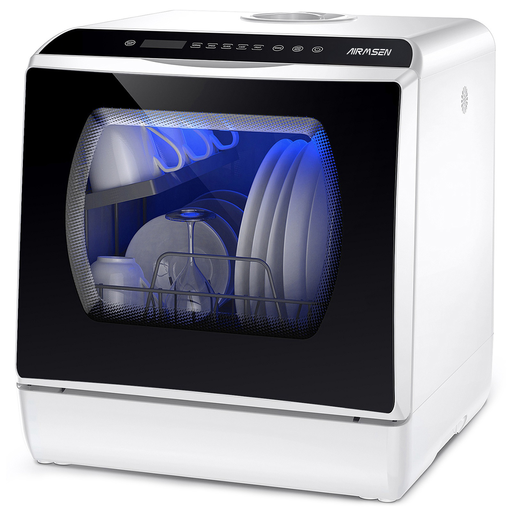 Image unavailable
Worth considering if manual filling suits you better than connecting to a water supply.
The product name lists an integrated 5 L tank and a glass door. You’ll also need a suitable outlet for the waste water, and should check the model’s dimensions on the product page.
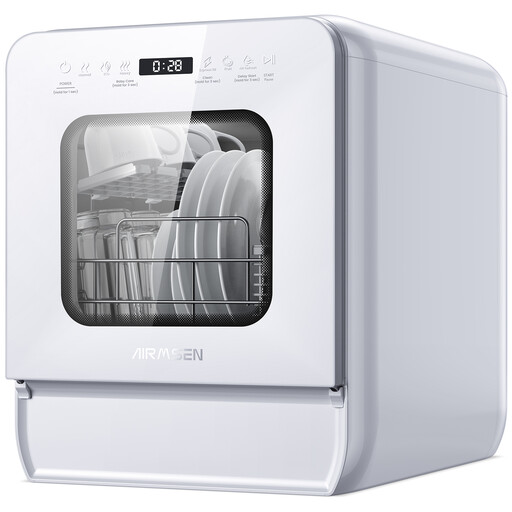 Image unavailable
A countertop option to consider if you’d rather fill a tank than rely on a dedicated water supply.
The title lists a 5 L tank, a width of 37 cm and a D energy rating. Check the exact depth and drainage arrangements, and, if you plan to use a tap, confirm which adapter you’ll need.
 Image unavailable
Tank filling may suit a small kitchen without a readily usable water supply.
The title lists an integrated 5 L tank, 6 + 3 programmes and a D energy rating. Check the place-setting capacity and where the drain hose needs to go before deciding whether it suits your everyday load.
 Image unavailable
Worth considering if your everyday washing-up calls for the advertised capacity of 6 place settings and you can use the existing connections.
The title mentions 7 programmes, 47 dB and a D energy rating. Measure the space, then check the full dimensions and where the drain hose needs to go.
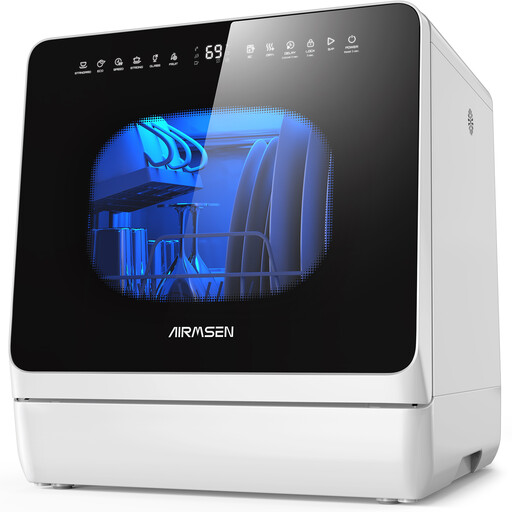 Image unavailable
This countertop format is worth comparing against the space you have, but you’ll need to confirm how it’s supplied with water before choosing it for a rented home.
The title lists 8 programmes, a built-in water softener and a delay start. Confirm whether it has a tank, its place-setting capacity, dimensions and drainage arrangements. The claim that it can be used without a fixed connection doesn’t clarify these details.
No. It means you don’t need a permanent connection to a water supply, but the waste water still needs to be drained. For Bob, Daan Tech says the hose should be directed into a sink or another suitable outlet. Check how to fill and drain the appliance before buying.
Compare the energy rating, energy use in kWh per 100 cycles, water use in litres per cycle, capacity and noise levels. ADEME notes that the consumption figures shown are based on reference cycles, so make sure you’re comparing the same measurements.
Check the repairability index displayed for the specific new dishwasher. France’s Ministry for Ecological Transition says dishwashers are among the product categories that must display this index in shops and online. On its own, the index doesn’t tell you about washing performance or whether the appliance will fit your kitchen.