In a studio flat with no accessible water supply
A tank model can be filled by hand. You’ll still need a stable surface and a safe route for the drain hose to the sink or a suitable drain.


If your small kitchen has no usable water supply, choose a mini dishwasher with a tank only if you can also drain the wastewater through its hose. If you have access to both a water supply and a drain, a plumbed-in compact model with 6 place settings offers more capacity than a 3-place-setting model, but it needs more space and a compatible installation.
Being able to fill the appliance is only one part of the decision: you also need to plan how to drain it and where to put it.
A tank model can be filled by hand. You’ll still need a stable surface and a safe route for the drain hose to the sink or a suitable drain.
If the water supply and drain are nearby, a compact model with 6 place settings can handle a larger rated load than a 3-place-setting model. Also measure the space needed to install it and open the door.
A tank can save you from making a permanent connection to the water supply, but you’ll still need a power socket and a safe way to drain the water. Check these points before deciding where to put it.
Consider this: if you can’t use a fixed water supply but have a suitable place to drain the water.
The trade-off: you’ll need to fill the tank by hand, and the wastewater still needs to be drained.
Consider this: if your kitchen has the necessary connections and you’d like to compare models with 6 place settings.
The trade-off: installation depends on compatible water and drain connections, as well as enough space.
First, check how you can supply and drain water. Then compare the space available, the dishes you need to load and the specifications of the exact model.
| What to consider | What to check | Think about your needs |
|---|---|---|
| Water management | Check how the appliance is filled, the route of the drain hose and where it empties. Even with a tank, you’ll need somewhere for the wastewater to go. | I don’t have a usable water supply. I can fill a tank, but I also need a suitable place to drain the water. |
| Capacity and dimensions | Compare the stated place settings with the diameter of your plates, the basket layout and the external dimensions. Leave enough room to open the door. | My pans and plates need to fit without me having to run multiple cycles, and the appliance must fit on my worktop. |
| Noise and consumption | Check the label for the exact model and compare dB, litres per cycle, kWh per 100 cycles and the Eco programme duration. ADEME lists these units for dishwashers. | In a room that doubles as a living space, noise matters as much to me as water and energy use and cycle duration. |
| Installation and maintenance | Check the manual for information about connections, hoses, seals and filter access. Make sure you know which settings and products are recommended for your water hardness. | I want to be able to install and maintain the appliance in my kitchen, without finding out after buying it that a connection or access point is missing. |
The tank supplies water to the appliance, but wastewater leaves through a hose. If you don’t have a sink or a suitable drain, the planned installation may not work.
Check the hose route and make sure it can stay in place without getting kinked during a cycle.
The stated capacity doesn’t tell you by itself whether your large plates, glasses or utensils will fit in the basket.
Measure the dishes you use most often, then check the maximum dimensions they can accommodate, the interior layout and the clearance needed to open the door.
The energy rating doesn’t replace the model’s water, energy, duration and noise figures. ADEME says the label shows these details with their units.
Compare litres per cycle, kWh per 100 cycles, Eco programme duration and dB on the labels of the appliances you’re considering.
A plumbed-in compact model needs accessible water and drain connections, as well as a power socket. The manual explains how to install the specific model.
Before ordering, check that the connections and hoses listed in the manual are compatible with your kitchen, and confirm which accessories are actually included.
These specifications apply to the models mentioned, not to every appliance made by each brand.
With Bob, Daan Tech offers a mini dishwasher with a tank that can also be connected to a water supply, according to the brand.
The MINID3SL is a mini dishwasher with a tank, designed for a load of 3 place settings.
The 6S47 D WAD929C V2 is a 6-place-setting compact option to consider for a kitchen with plumbing connections.
The TD602E-W is another 6-place-setting compact model to consider if you can connect it to your plumbing.
These worktop models mainly offer tank filling. A plumbed-in compact model is also an option if your kitchen has a water supply.
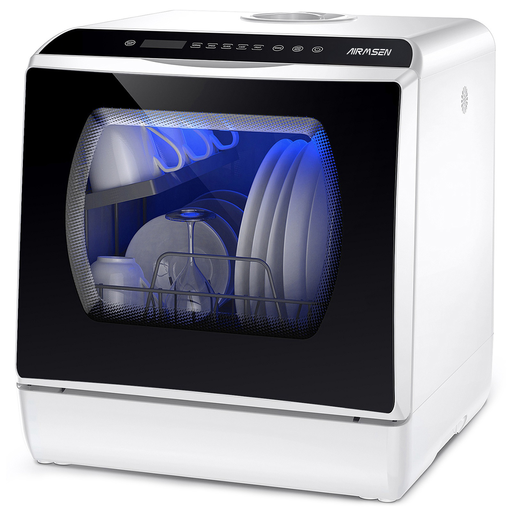 Image unavailable
The tank makes it possible to install the appliance without a direct water supply. The product listing says wastewater drains through a hose into a container. It lists 4 place settings, plates up to 26 cm and dimensions of 45,8 × 42,8 × 42,5 cm. Check where you can put the container, and refer to the model’s label for its noise and consumption figures.
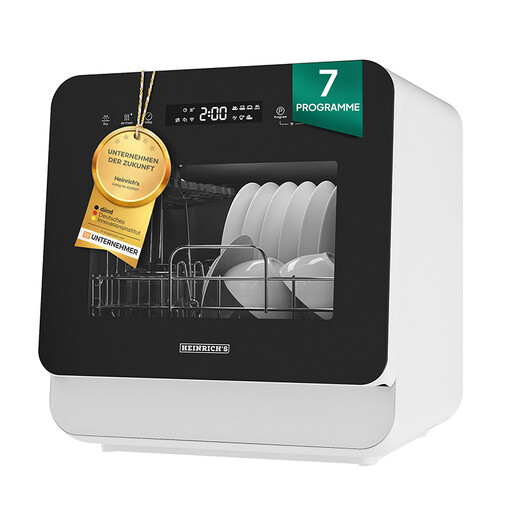 Image unavailable
This worktop model is listed with a tank and the option of a direct connection. The product listing states that it has 3 place settings and a 1 500 mm drain hose. Check where the wastewater can go and measure the space available for installation. Product descriptions give noise levels of 56 dB and 56,3 dB; check the label for the exact model to confirm the noise level.
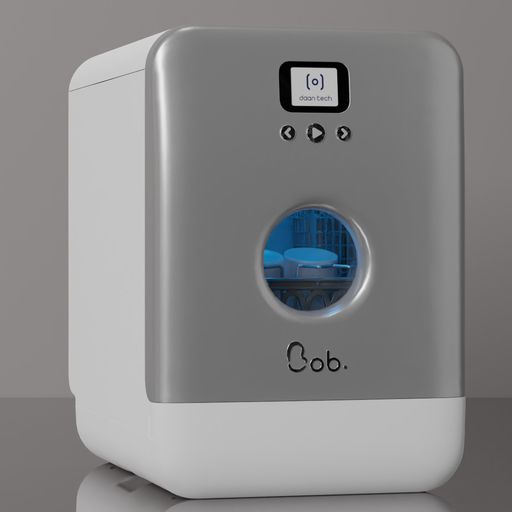 Image unavailable
For Bob, Daan Tech describes a 3,9 L tank that you fill by hand, with drainage through a hose. Check that the version supplied supports this filling method. The Joybuy listing gives a capacity of 3 place settings and dimensions of 49 × 34 × 49 cm. Also make sure your plates fit inside the dishwasher.
 Image unavailable
Consider this compact model if you can connect it to a water supply and drain. It isn’t listed as a tank-fed option. The product listing gives a capacity of 6 place settings, a noise level of 47 dB and water use of 6,5 L per cycle. Measure the space available and check that the connections are compatible before buying.
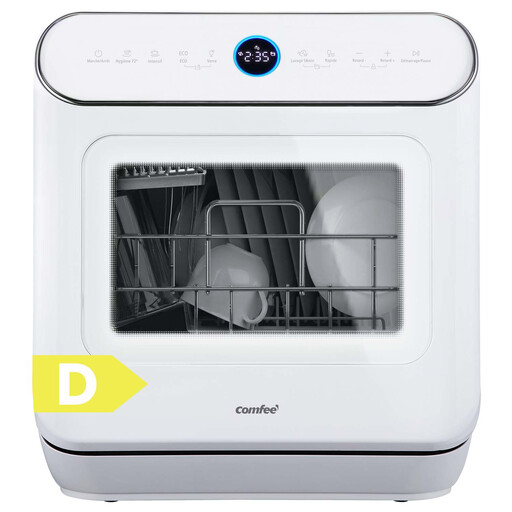 Image unavailable
The product listing describes a tank that you fill by hand, so you can use the appliance without connecting it to a tap. It gives a capacity of 3 place settings, says it can fit plates up to 270 mm and lists dimensions of 420 × 436 × 465 mm. Before deciding where to put it, check the route for the drain hose and where it can empty. Also check the model’s noise and consumption figures.
Yes, if the model has a tank that you can fill by hand. Daan Tech describes this set-up for Bob, and the Moulinex Studio MINID3SL is also listed with a tank. In both cases, make sure you can drain the wastewater as instructed for the model.
Choose a flat, stable surface with an accessible power socket and a suitable route for the drain hose. Check the external dimensions, available height and door clearance. If the appliance needs plumbing, also check that the water supply is close enough and compatible.
A 3-place-setting model may suit smaller loads if you don’t mind running cycles more often. If you regularly use large plates or pans, compare the basket layout and the maximum dish dimensions with those of a 6-place-setting compact model, provided you have room to install it.
Check the energy label for the exact model rather than looking at its rating alone. ADEME says it includes details such as litres per reference cycle, kWh per 100 cycles, Eco programme duration and noise level in dB.