Studio-dwellers without a dedicated water supply
A mini model with a water tank avoids a fixed connection to the water supply. You’ll still need a stable surface, a power supply and a suitable drainage solution, as set out in the instructions.


A mini dishwasher with a water tank can work without a fixed water supply, provided you have a plug socket and a suitable way to drain the water: the tank doesn’t remove the need for drainage. A plumbed-in countertop model needs space near the sink, while a freestanding 45 cm model needs a permanent space on the floor. If you don’t have a suitable surface or drainage point, washing up without adding a new appliance is still an option.
The right size depends first on where the appliance can stay installed and how you can route the waste water.
A mini model with a water tank avoids a fixed connection to the water supply. You’ll still need a stable surface, a power supply and a suitable drainage solution, as set out in the instructions.
A plumbed-in countertop dishwasher could be a good option if the water supply and drainage are within reach. Measure the space it will occupy permanently, and remember to leave room for food preparation.
A slimline freestanding appliance could work if you have a permanent spot for it and suitable connections. A width of 45 cm doesn’t mean you can overlook its depth, height or door clearance.
First rule out sizes that won’t fit your kitchen, then compare capacity and how each model needs to be used. If there’s nowhere suitable to position and drain an appliance, washing up without new equipment avoids planning an impractical installation.
| What to consider | What to check | Depending on your needs |
|---|---|---|
| Water supply and drainage | Check whether the model can use a water tank or needs a water supply connection. Then work out where the waste water will go and locate a suitable plug socket; the tank doesn’t collect waste water. | I don’t have a water supply near the worktop. I’d only consider a model with a tank if I can also drain the waste water safely. |
| Space and capacity | Measure the worktop or floor space, the available height and the clearance needed with the door open. Compare the stated capacity with the amount of washing-up your household produces each day. | I want to keep space for cooking without running several cycles for my household’s dishes. A larger-capacity appliance is only worthwhile if I can set aside enough room for it. |
| Water, energy and noise | For appliances with a similar capacity, check the energy label for kWh per 100 cycles, litres per Eco cycle, its duration and the noise level in dB. ADEME lists these as factors to consider when choosing a dishwasher. | In an open-plan kitchen, noise matters to me just as much as the consumption figures shown for the reference programme. |
| Programmes and care | Don’t compare the duration of one appliance’s quick programme with another’s Eco-cycle consumption. Check the instructions for programmes and care. UFC-Que Choisir measures the consumption of each programme separately as part of its test protocol. | A short cycle might come in handy occasionally, but I don’t want to treat it as a general measure of consumption or washing performance. |
| Without a new appliance | Work out whether you can use a stable surface, a plug socket and a drainage point without making unsuitable changes to the kitchen. If not, stick to a washing-up routine that works with the space available. | If I can’t leave an appliance on the worktop or on the floor, making the most of my space matters more than automating the washing-up. |
For a mini appliance such as Bob, the tank replaces the connection to the water supply, but the waste water still needs to be drained, according to Daan Tech.
Before buying, work out where the drainage hose will lead and check the instructions for how to secure it.
A slimline model still needs to stand on the floor. The Whirlpool WSFO3T223P, as listed by the manufacturer, measures 45 × 59 × 85 cm, so its depth and height matter in a kitchenette too.
Measure the permanent space, the access route and the clearance needed in front of the open door.
An Express cycle and an Eco cycle aren’t a like-for-like basis for comparing duration or consumption. UFC-Que Choisir assesses programmes separately when measuring water and energy use.
Start by comparing the reference-cycle figures on the energy label, then look at the other programmes for occasional use.
These examples highlight different installation requirements. The specifications quoted apply to the named models, not to every product range from those manufacturers.
The manufacturer’s Bob mini dishwasher can be filled using a water tank or connected to the water supply.
The CP 6E51LS is an example of a plumbed-in countertop model for a kitchen with space near the sink.
The WSFO3T223P is an example of a slimline freestanding dishwasher to consider if you have floor space available.
These countertop and mini dishwashers are designed for kitchens with a surface available for the appliance. Before choosing a spot, check each model’s water supply, drainage and clearance requirements in the instructions.
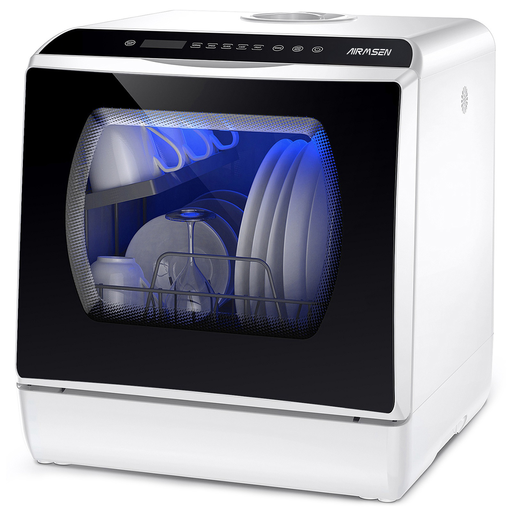 Image unavailable
Worth considering if you’re looking for a countertop appliance without a fixed water supply nearby. The product title lists a built-in 5 L tank and 5+1 cycles. Check the instructions for how to route and secure the drainage hose, and make sure there’s enough space around the appliance.
 Image unavailable
This countertop model with a 5 L water tank could be an option if you have limited space. The product title lists 6+3 programmes and an energy rating of D. Before choosing a spot, check the instructions for the space needed and how to drain the water.
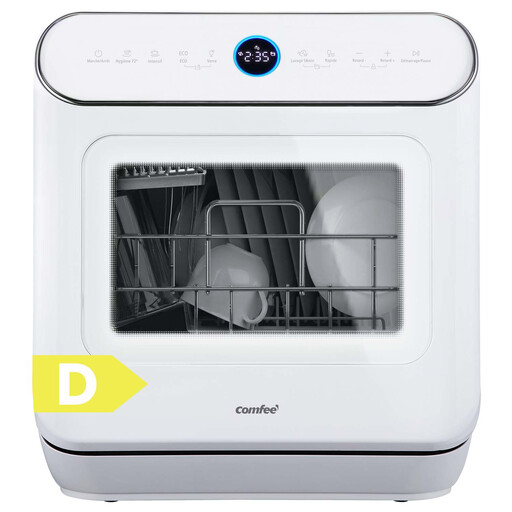 Image unavailable
This mini model is worth considering if you have a limited amount of washing-up and little space to spare. The product title lists 3 place settings and 7 programmes. Check the instructions for how to fill it and, in particular, how to drain it.
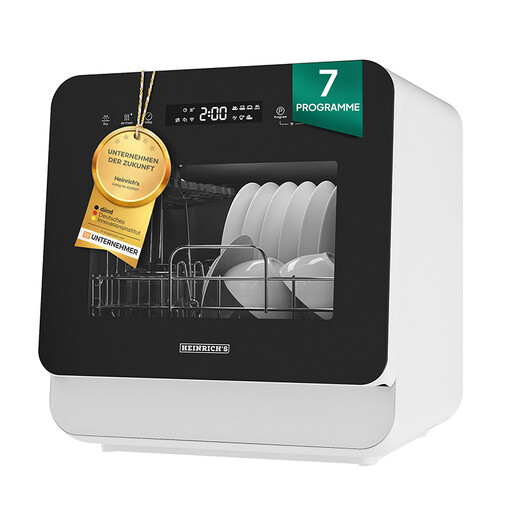 Image unavailable
This countertop model, listed for 3 place settings, could suit a smaller amount of washing-up if it can be installed in your kitchen. The product title lists 7 programmes. Measure the space and check the instructions for the water supply and the exact drainage route.
 Image unavailable
This countertop model, listed for 6 place settings, is for kitchens with more room to spare. The product title lists 7 programmes and a noise level of 47 dB. Check its dimensions and the water supply and drainage requirements before deciding where to put it.
No. For Bob, Daan Tech states that the tank replaces a fixed water supply, but the appliance still needs electricity and a way to drain the waste water. Check your model’s instructions for how to fit the drainage hose.
No, the model needs to support this type of water supply. Candy describes the CP 6E51LS as connecting directly to the water supply. Check the instructions for the model you’re considering rather than assuming it has a water tank.
No. The Whirlpool WSFO3T223P is a freestanding appliance measuring 45 × 59 × 85 cm, according to the manufacturer. Its narrower width doesn’t make it a countertop model.
For models with a similar capacity, compare the energy rating, kWh per 100 cycles, litres per Eco cycle, the duration of that cycle and the noise level. ADEME lists these as useful points of reference when choosing a dishwasher, but they don’t tell you everything about all its programmes.