What should you check before buying?
First, choose a water supply method that works in your kitchen, then check the drainage, usable capacity and available space.
Built-in tank
Worth considering: if you’d rather not connect the water supply to the tap for every cycle.
You’ll need: to fill the tank by hand, a suitable drainage point and an accessible socket.
Temporary tap connection
Worth considering: if your tap accepts the model’s fitting and you can position the appliance near the sink.
You’ll need: to connect and remove the hose, without assuming that the tap can be adapted in your home.
Washing by hand
Worth considering: if there’s no room for an appliance with its socket and drain, or if you have very few dishes to wash.
The trade-off: you’ll still need to wash everything by hand.
| What to consider |
What to check |
What I need |
| Water supply and drainage |
Check whether the model fills from a tank, a tap or either option. Consult the manual to see where the drain hose can be directed and the route it needs to take. |
I want to avoid a permanent water supply, but I need to be able to drain the dirty water during every cycle. |
| Usable capacity |
Compare the stated place setting capacity with the size of your dishes, particularly the diameter of your plates and the height of your glasses. Allow for utensils that could take up a large part of the basket. |
A few place settings aren’t enough if my usual plates don’t fit or I have to run several cycles. |
| Position and noise |
Measure the space available, the door opening and the room needed for the hoses. Check the required socket in the manual, and the stated noise level if the appliance will be used near a living area. |
In a small kitchen, I need to be able to use the appliance without blocking the way or having to improvise where the connections go. |
| Energy and water use, and cycle duration |
To compare energy labels, use the same measures: kWh per 100 cycles and litres per reference cycle. Also check the Eco cycle duration and the manual for the programme you plan to use. |
I want to understand what the stated consumption means before choosing a programme for my routine. ADEME explains that the kWh and litre figures on the label relate to these reference cycles. |
| Renting |
Work out whether your planned installation would involve changing the tap, trap, cupboard or a fixture. For changes to the property or its fittings, ANIL says you need the landlord’s written permission. |
If I rent my home, I’ll choose an installation that requires no changes, or get written permission before altering any fittings. |
Mini dishwashers available on Joybuy
These countertop models include options with built-in tanks and one model designed to connect to a tap. Compare how each one takes in water with the drainage and positioning options available in your kitchen.
 Image unavailable
Comfee CDWMTO201D(W), 5 L tank, white
The built-in tank lets you fill the appliance by hand instead of connecting it to a water supply. The Comfee manual also covers connecting it to a tap and draining the water into a sink or bucket. Check that your tap is compatible if you plan to use this second option. The CDWMTO201D(W) energy label states 5,0 L of water per reference cycle and 31 kWh per 100 cycles.
View on Joybuy
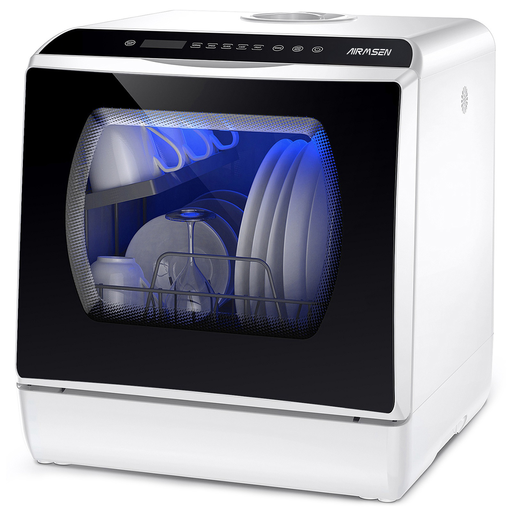 Image unavailable
AIRMSEN countertop model, 5 L tank, 5+1 cycles
The built-in 5 L tank is ideal if you want to fill the appliance without a permanent water supply. For this version, check the space available and the route and positioning of the drain hose before deciding where to put it.
View on Joybuy
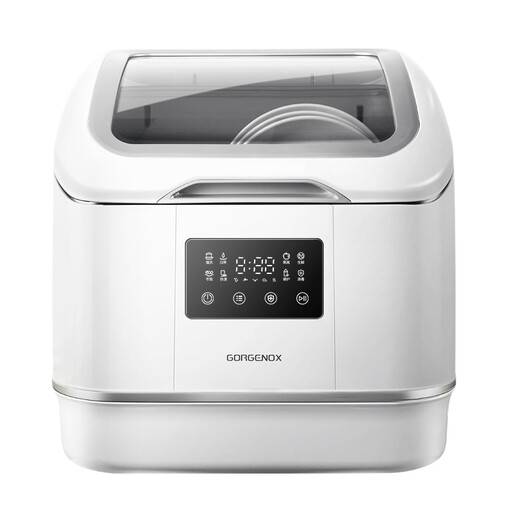 Image unavailable
GORGENOX DW4-D30A countertop model, 3 place settings
Consider this model if you can supply water from a nearby tap instead of filling a tank. The product details say it drains into a sink or bucket. Check the fitting required for your tap and the dimensions of the space where you plan to put it.
View on Joybuy
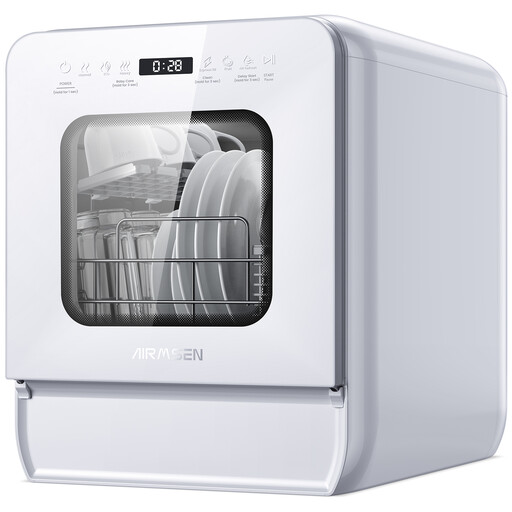 Image unavailable
AIRMSEN countertop model, 5 L tank, 9 programmes, white
The tank can be filled by hand, so you can use this model without a permanent water supply. Before deciding where to put it, check the dimensions of this version and the drainage method specified in the manual. The number of programmes doesn’t replace these checks.
View on Joybuy
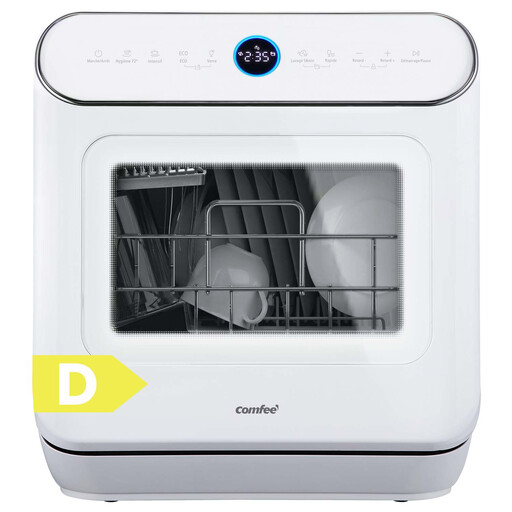 Image unavailable
COMFEE CDWMT305WD, 7 programmes, white
The manual describes filling this model by hand, so you won’t need a permanent water supply. It has 7 programmes. To check whether it will suit your kitchen, consult the manual to find out where to direct the drain water and which socket to use.
View on Joybuy
Frequently asked questions
Does a mini dishwasher with a tank always need a sink?
Not necessarily: where you can drain the dirty water depends on the model. The Comfee CDWMTO201D(W) manual says to drain its hose into a sink or bucket. Check the manual and, if you’re not using the sink, make sure you have a suitable container.
Do I need to fill the tank before every wash?
If you’re filling the tank by hand, follow the model’s instructions before starting a cycle. The Comfee CDWMTO201D(W) manual also covers supplying water from the tap, so which option you use depends on your setup and whether the fitting is compatible.
How can I compare the energy and water use of two models?
Compare their energy labels on a like-for-like basis. According to ADEME, electricity use is shown in kWh per 100 reference cycles and water use in litres per reference cycle. Also check the capacity and duration of the relevant cycle, and consult the manual if you plan to use a different programme.
Can I temporarily connect the appliance to the tap in a rented home?
First, check that the connection specified in the manual is suitable for your tap, without assuming it can be adapted. In France, ANIL says that changes to a property or its fittings require the landlord’s written permission. Get permission before changing the tap, trap or a cupboard. This rule doesn’t in itself determine whether every temporary connection is permitted.
How should I look after it day to day?
Remove large food scraps, clean the filters and let the appliance dry as directed in the manual. ADEME advises against pre-rinsing dishes and recommends waiting until you have a full enough load before starting a cycle. Check that your dishes are arranged in a way that allows them to be washed according to the manufacturer’s instructions.


