To choose mini Christmas chocolates for after exercise, start with a portion where you can count the pieces, then compare the nutritional information per 100 g, ingredients and allergens. A small format can help you decide how much to serve, but that alone doesn’t make chocolate a complete recovery snack.
Who is this choice for?
People who want to set a treat portion
After a workout, you may want to decide how many chocolates to have rather than dipping into an open box without a clear idea of how much you’re eating. A small piece can make that decision easier, but you’ll still need to check its ingredients separately.
People comparing recipes
You want to check the sugars, fat and energy per 100 g, then consider how much you plan to eat. The word “mini” doesn’t replace this information.
People mindful of allergens
If you need to avoid an ingredient, check the exact product and every recipe in an assortment. The colour of the packaging or a flavour name isn’t enough to tell you what it contains.
What should you check before choosing?
If you’re having chocolate after exercise, decide on your portion first, then check the ingredients of the product you’re thinking of buying.
| What matters |
What to check |
Who this matters to |
| Portion |
The net weight, number of pieces and, if shown, the weight of each piece. |
After a workout, I want to choose how much to have before opening the box; around 40% of consumers would make a defined portion their top priority. |
| Nutritional composition |
Energy, sugars, fat and protein per 100 g, then the amount you’ll actually eat. |
A small bite doesn’t tell me what my snack provides; around 50% of consumers would prioritise comparing the nutritional composition over the format. |
| Ingredients and allergens |
The ingredients list for the exact product, declared allergens and any “may contain” statements. |
With an assortment, I need to know which recipes suit my needs before choosing one; around 10% of consumers would put this check first. |
Mistakes to avoid
-
Assuming “mini” means a different nutritional composition
The format describes the size or presentation of a piece, not its sugar or fat content.
Decide how many pieces you’d like, then compare that portion with the values given per 100 g.
-
Judging a chocolate by the absence of a Nutri-Score
France’s DGCCRF states that displaying the Nutri-Score is voluntary in France. Its absence doesn’t tell you what the product contains.
Check the nutritional information and ingredients list. If the logo is on the packaging, use it as an additional guide.
-
Assuming the “soda tax” applies to solid chocolate
Article 1613 ter of the French General Tax Code, published on Légifrance, covers drinks and liquid preparations for drinks under the conditions it sets out. The sugar content of solid chocolate alone doesn’t bring it within this scope.
When comparing Christmas chocolates, focus instead on portion size, composition and allergens.
-
Relying on the flavour name of an assortment
Ingredients can vary from one recipe to another. Product listings for chocolates cited by Carrefour and Auchan mention milk, soya or nuts, depending on the product.
If you need to avoid an allergen, read the label for the exact assortment and check for any “may contain” statements.
Brands and retailers to consider
Lindt
Lindt France lists, among other products, a 112 g LINDOR assorted box containing nine chocolates.
- The number of chocolates gives you a handy guide when serving them.
- Check the nutritional values and allergens for the product you choose: the format doesn’t tell you what it contains.
Ferrero
Carrefour’s listings feature several Ferrero products in individual and assorted formats.
- You can choose between packs of the same recipe and mixed assortments.
- Check the ingredients and allergens for the exact product, especially when it contains several recipes.
Carrefour
The retailer lists chocolates and Christmas treats from a range of brands.
- Some product listings include detailed ingredients and allergen information, which can help you compare recipes.
- Read the listing for the product you’ve chosen, then check its packaging.
Auchan
An Auchan listing includes, among other products, a 337 g LINDOR assortment.
- The pack weight helps you tell the difference between an assortment to share and a small box.
- To work out your portion, also check the number of chocolates and their weight, if shown.
Chocolate calendars available on Joybuy
These chocolate Advent calendars are a festive option in a small format. If you’re choosing a piece for after exercise, check its weight, ingredients and allergens on the packaging.
 Image unavailable
ONE PIECE Advent Calendar Chocolate, 65 g
A calendar to consider if you prefer to have one festive chocolate at a time. The pack is marked 65 g. Before making it a post-workout portion, check the weight of each piece, nutritional information and allergens on the packaging.
View on Joybuy
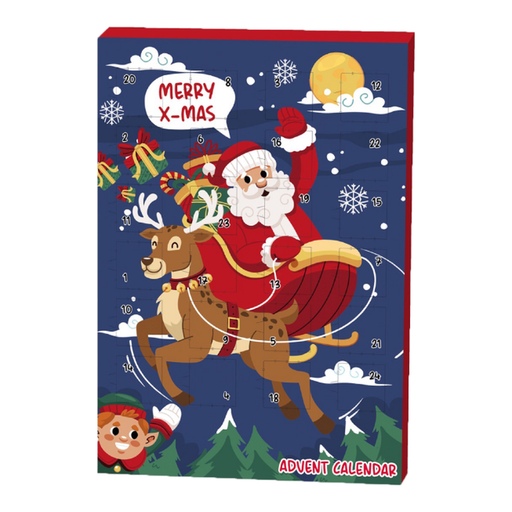 Image unavailable
Chocolate Advent Calendar, 50 g
This calendar is suited to choosing a piece at a time rather than serving from an open assortment. It weighs 50 g in total. Check the weight of each chocolate on the packaging before deciding on your portion, as well as the ingredients and allergens.
View on Joybuy
Frequently asked questions
Can a mini chocolate on its own make a good post-workout recovery snack?
No. If you fancy one, enjoy it as a treat portion, but don’t assume its small size meets the needs of a post-exercise snack. Check the nutritional values per 100 g and consider the amount you eat as part of your overall diet.
Is Nutri-Score compulsory on Christmas chocolates in France?
No. France’s DGCCRF says that displaying the Nutri-Score is voluntary. To compare prepacked foods, check the nutritional information, ingredients list and allergens, whether or not the logo is present.
What should you check on an assortment if you have an allergy?
Read the ingredients list for the exact product, check which allergens are highlighted and look for any “may contain” statements. Check every recipe in the assortment rather than relying on the name of just one chocolate.
Does France’s “soda tax” apply to solid Christmas chocolates?
No, not simply because of their sugar content. Article 1613 ter of the French General Tax Code, published on Légifrance, covers drinks and liquid preparations for drinks under the conditions it defines, not solid chocolate.


