Parents who prepare the portion
You want to count out the pieces or take out a pouch before closing the lunchbox, without assuming that a smaller format contains less sugar.


For the occasional Christmas chocolate in a school lunchbox, choose a format that lets you take out the portion before setting off, then compare the sugar content per 100 g: ‘mini’ doesn’t mean less sugar. If your child or their class needs to avoid certain ingredients, check the exact recipe and allergen information first, including for an assortment.
You want to count out the pieces or take out a pouch before closing the lunchbox, without assuming that a smaller format contains less sugar.
You need to check that the recipe and its ‘may contain’ warnings meet the dietary requirements for your child or their class.
You check the ingredients and nutritional values per 100 g, whether or not the packaging displays a Nutri-Score.
For a school lunchbox, start by checking any dietary exclusions. Then choose how much to prepare and compare recipes on the same 100 g basis.
| Criterion | What to check | Who is it for? |
|---|---|---|
| Portion to prepare | The stated number of pieces or pouches, and whether they can be taken out separately. | To pack a pre-decided amount in the lunchbox, you need to be able to count out the pieces without leaving the whole box within reach. Around 40% of consumers make portioning in advance a priority. |
| Sugar and ingredients | Sugar and other nutritional values per 100 g, followed by the ingredients list. | If the small size isn’t enough to choose between two recipes, comparing the labels becomes the main priority for around 40% of consumers. |
| Allergens | Highlighted ingredients and ‘may contain’ warnings for the exact recipe. | If your child or their class needs to avoid an ingredient, making sure each piece is suitable takes priority over the format or flavour. This is the top criterion for around 20% of consumers. |
The size of a bite doesn’t tell you how much sugar it contains. Côte d’Or mini bites listed by Auchan contain 57 g of sugar per 100 g, compared with 42 g per 100 g for the Lindor gift box listed by Lindt. These figures alone don’t tell you how much sugar is in one piece.
Compare the values per 100 g, then decide separately how many pieces to take.
The DGCCRF states that displaying a Nutri-Score is optional in France. If it’s not shown, you should still read the nutritional information for the prepacked food.
Check the values per 100 g and the ingredients. If the logo is displayed, use it as additional information.
Ingredients and ‘may contain’ warnings vary between recipes, particularly in assortments and praline bites.
Check the packaging of the exact product every time you buy it, and follow any applicable classroom guidance.
A product listing for Christmas praline bites at Carrefour showed the product as unavailable. An assortment spotted for the festive season may not be stocked by the store you choose.
Check local availability before planning to include that product in the lunchbox.
Lindt describes a Lindor gift box containing nine assorted bites in milk, dark and white chocolate.
Products listed by Carrefour and Auchan include a box of eight pouches weighing 200 g and a pack of 21 mini bites weighing 197 g.
The box of milk chocolate and praline bites listed by Auchan combines hazelnut and almond.
The retailer provides chocolate product listings where you can check the ingredients and nutritional information for each product, where available.
These two mini formats could work in a lunchbox prepared in advance. They aren’t described as Christmas editions, so check the product presentation if a festive theme matters to you.
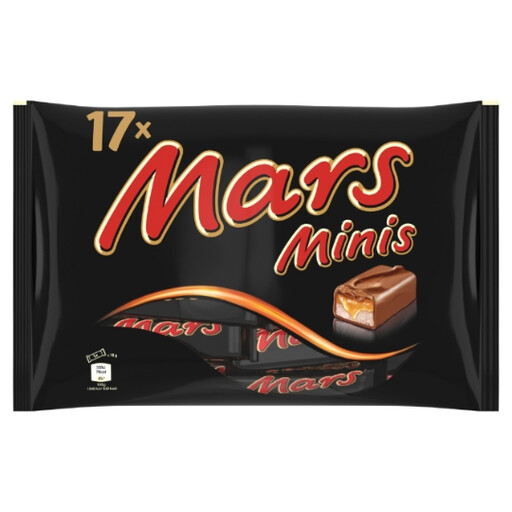 Image unavailable
A format to consider if you want to take out some mini bars before setting off. Check the bag for the number of pieces and information about milk, soya, peanuts and nuts before preparing the lunchbox.
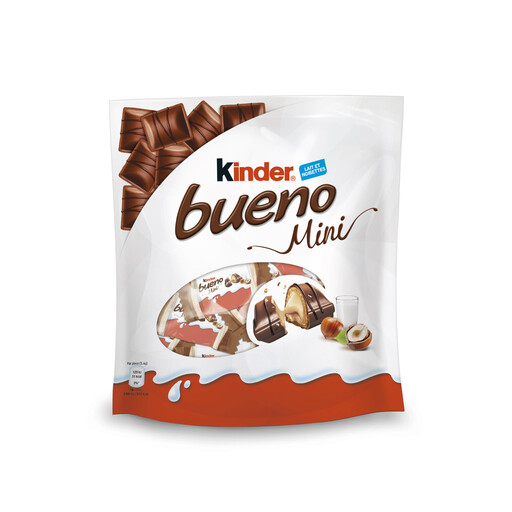 Image unavailable
An option to consider if your child likes a chocolate and hazelnut bite. Before deciding how much to pack in the lunchbox, check the number of pieces and how they’re packaged. Also check the information about hazelnuts, milk, soya and wheat.
No, not to solid chocolates as such. The scale published in the Official Bulletin of Public Finances applies to non-alcoholic drinks containing added sugars or artificial sweeteners. When choosing chocolate, check the ingredients and nutritional values instead.
No. The DGCCRF says the Nutri-Score is optional in France, while a nutrition declaration is generally required for prepacked foods. You can compare the sugar and fat content per 100 g without relying on this logo.
Choose a format where you can take out individual pieces or pouches, then put your chosen amount in the lunchbox before setting off. Counting the pieces helps you keep track, but doesn’t tell you their weight or how much sugar each one contains.
Read the highlighted ingredients and ‘may contain’ warnings for the exact product, then follow the school’s guidance. Depending on the product, the recipes reviewed list milk, nuts, soya or wheat. The ingredients in another bite from the same brand aren’t enough to make a decision.