What should you check before buying?
Start with the allergen to avoid and the recipes in the box. Then consider the number of pieces and the nutritional information, depending on how you plan to serve the chocolates.
| What matters |
What to check |
Who is it for? |
| Allergen to avoid |
Check the ingredients, highlighted allergens and ‘may contain’ warnings on the pack you buy; check each recipe in an assortment. |
When chocolate is for someone with an allergy, my priority is to check the ingredients before looking at the format. Around 40% of consumers put checking for allergens first. |
| Easy-to-read ingredients |
Compare the number of recipes and how clear the ingredients lists are for each variety. |
If I’m preparing several festive purchases, choosing a single recipe can save me from keeping track of the ingredients in lots of different chocolates. Around 30% of consumers prioritise keeping these checks simple. |
| Serving individual pieces |
Check the number of pieces, net weight and, if needed, whether they’re individually wrapped. |
When handing out chocolates one at a time, I want to be able to count the pieces without mistaking one chocolate for a fixed-weight portion. This is the main priority for around 20% of consumers. |
| Comparing sugar content |
Compare the ‘of which sugars’ figure per 100 g, then take the amount served into account. |
When comparing two Christmas formats, I want to compare the sugar content on a like-for-like basis rather than relying on the size of the chocolates. Around 10% of consumers prioritise this comparison. |
According to the DGCCRF, the nutrition declaration for most prepacked foods is given per 100 g or 100 ml. For solid chocolates, the per-100 g column lets you compare two products; it doesn’t replace checking the ingredients when an allergy is involved.
Brands and retailers to look at
These range and product-listing examples can help you compare formats. The label on the product you buy is always the one to check for its ingredients.
Lindt
Lindt’s range includes LINDOR chocolates, mini pralines and mini Christmas figures.
- Product details from Lindt and Carrefour give you an idea of the formats available, including a bag of 10 mini TEDDY moulded chocolates.
- Depending on the recipe, ingredients listed include milk, soya and tree nuts. The brand name alone isn’t a way to check for allergens.
Ferrero
The range includes Kinder chocolates. Auchan lists a 32-piece Kinder Happy Moments gift box with several mini recipes.
- The stated number of pieces can help you plan to serve the chocolates one at a time.
- The recipes in this assortment include ingredients such as milk, soya, hazelnuts and wheat, so you’ll need to check each one separately.
Carrefour
Some Carrefour product listings give details of the ingredients in mini pralines and Lindt mini Christmas figures.
- The listed ingredients and allergens can help you make an initial selection.
- An online listing doesn’t replace checking the product available and its packaging when you buy it.
Auchan
Auchan’s product listings cover several seasonal chocolates, including assortments and figures.
- Depending on the product, they provide details of ingredients, allergens, storage and nutritional information.
- Each recipe in an assortment may have different ingredients, so check them on the box you buy.
Advent calendars available on Joybuy
These two chocolate Advent calendars are designed for serving small portions throughout Advent. Their format doesn’t tell you whether they’re suitable for someone with an allergy: check the ingredients and any ‘may contain’ warnings on the exact packaging before choosing one.
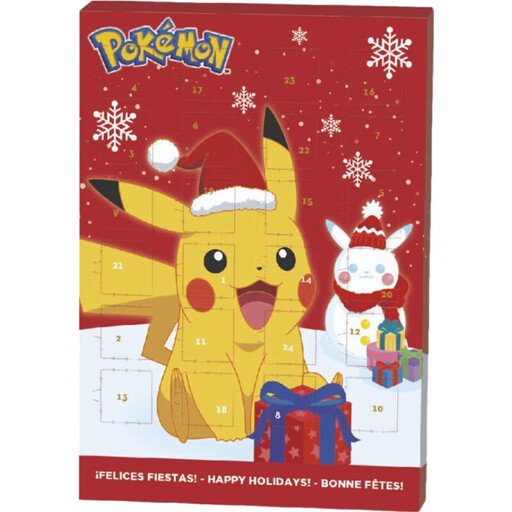 Image unavailable
POKÉMON Chocolate Advent Calendar, 65 g
A calendar to consider if you’d like to serve chocolate throughout Advent. This product weighs 65 g. If milk, soya or tree nuts need to be avoided, check the ingredients and any ‘may contain’ warnings carefully on the box you buy.
View on Joybuy
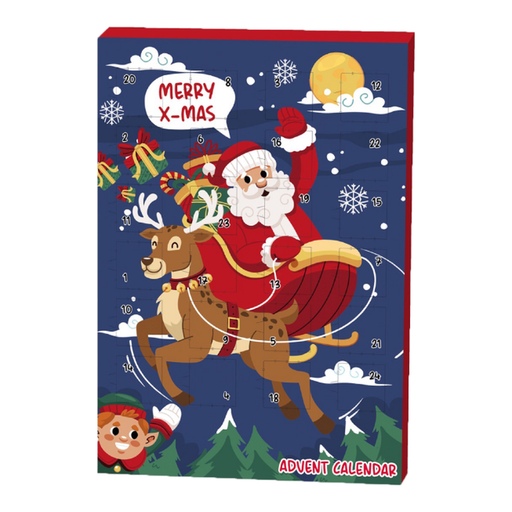 Image unavailable
Chocolate Advent Calendar, 50 g
Another calendar format for serving chocolate throughout Advent. This product weighs 50 g. If you need to avoid milk, soya or wheat, read the ingredients on the exact pack before buying, along with any ‘may contain’ warnings.
View on Joybuy
Frequently asked questions
How do you check mini chocolates for food allergens?
Read the ingredients and highlighted allergens on the packaging for the product you buy. For an assortment, check each recipe and any ‘may contain’ warnings. The brand name and mini format aren’t enough.
Is an assortment easier to choose than a single recipe?
Not if you need to avoid an allergen that’s only present in some recipes. An assortment can make sharing easier, but you’ll need to check several sets of ingredients. For example, Auchan’s Kinder Happy Moments listing describes mini products with different ingredients.
Is Nutri-Score compulsory on Christmas chocolates in France?
No. Santé publique France says displaying it is voluntary. The DGCCRF distinguishes this logo from the nutrition declaration required for most prepacked foods, so you can compare values per 100 g even without Nutri-Score.
Does the French tax on sugary drinks apply to solid chocolate?
No. Under Article 1613 ter of the French General Tax Code, published by Légifrance, the levy applies to drinks and liquid preparations for drinks. To compare chocolates, check their nutritional information instead, particularly the sugar content per 100 g.


