Anyone portioning out treats
If you’re making several crêpes, a mini bar, individual piece or single-serve pack makes it easier to keep track of what you hand out. However, the weight of a pack doesn’t tell you how many bites it contains.


To keep track of what you serve with crêpes, choose an individual piece or a wrapped portion with a clearly stated weight. If you’re sharing a bag of bites, decide how much to serve each person. A small size alone doesn’t tell you what’s in the recipe: compare the sugars and saturated fat per 100 g, then check the ingredients and allergens of the product you’ve chosen. According to Santé publique France, Nutri-Score is optional, so its absence doesn’t tell you anything about the product’s composition.
If you’re making several crêpes, a mini bar, individual piece or single-serve pack makes it easier to keep track of what you hand out. However, the weight of a pack doesn’t tell you how many bites it contains.
To compare different recipes, start with the nutritional values per 100 g. If you know the weight of each piece, you can then work out the values for the amount you’re actually serving, rather than relying on the word “mini”.
A filled or crunchy bite may contain several ingredients in addition to milk chocolate. Check the ingredients list and allergen information on the exact packaging before serving it to anyone who needs to avoid certain ingredients.
For Candlemas, start by deciding how you’ll serve the chocolate: as individual pieces, in single-serve packs or from a shared container. Then check the recipe of the format you’ve chosen.
| What to look for | What to check | Who is it for? |
|---|---|---|
| Clearly defined portion | Number of pieces and weight per piece or pack. | If I’m topping several crêpes, I want to know how much each person gets; around 31% of consumers would make clearly defined portions their top priority. |
| Nutritional composition | Sugars and saturated fat per 100 g; weight per piece if you want to calculate the amount in each one. | If I choose a small bar, I don’t want to assume it contains less sugar. Around 31% of consumers would put nutritional comparisons first. |
| Allergens | Ingredients list and “contains” or “may contain” statements on the specific pack. | If someone at the table needs to avoid certain ingredients, I need to know the recipe before serving. Around 23% of consumers would put identifying allergens ahead of other criteria. |
| Texture and how you’ll use it | Whether it contains a filling, wafer, cereal or nuts, depending on whether you’ll serve the chocolate whole or use it as a topping. | For my crêpes, I might want a crunchy bite rather than chocolate to melt; around 15% of consumers would prioritise this use or texture. |
A small piece makes it easier to count what you serve, but it doesn’t tell you what’s in it. E.Leclerc’s product listing for P’TIT DELI mini bars states that they contain 53 g of sugars and 20 g of saturated fat per 100 g.
Compare the values per 100 g, then use the weight of each piece, if stated, to work out how much you’re serving.
Milk chocolate doesn’t tell the whole story: praline, wafer or crunchy varieties may contain nuts or cereals, among other ingredients.
Read the ingredients and allergen information on the exact pack before offering it to anyone who needs to avoid certain ingredients.
Santé publique France states that displaying Nutri-Score is voluntary. So, the absence of the logo doesn’t let you draw any conclusions about the product’s composition.
Check the nutritional information and ingredients, whether or not a Nutri-Score is displayed.
Lindt France’s Mini Cône Lait is a 25 g piece that’s ready to serve.
Carrefour’s Lait Praliné bites come in a box of eight packs, weighing 200 g in total.
These crunchy bites combine milk chocolate, peanuts and cereals, and are designed for sharing.
E.Leclerc’s milk-filled mini chocolate bars come in a pack of 16, weighing 200 g.
These products give you the choice of tubes to share out, bars to count, squares to break off or bites to serve from a bag. Choose according to how much you want to give each person, then check the recipe on the packaging.
 Image unavailable
The six tubes give you individual portions to share with your crêpes. Each tube weighs 34 g; if you’re serving just a few sweets, count them out separately and check the ingredients on the packaging.
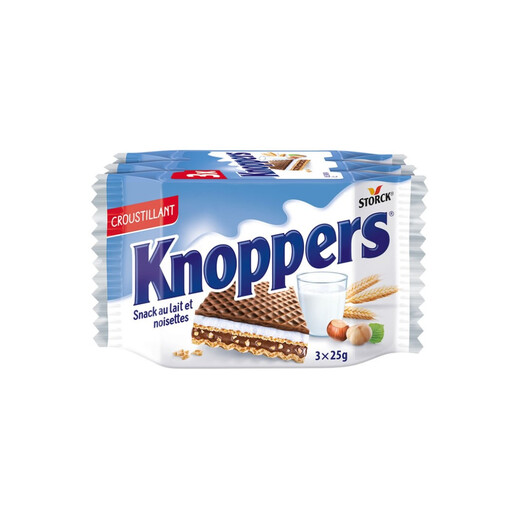 Image unavailable
The three 25 g pieces are a good choice if you’d rather count out bars than take bites from a bag. Check their texture and the ingredients list if you’re planning to use them as a topping.
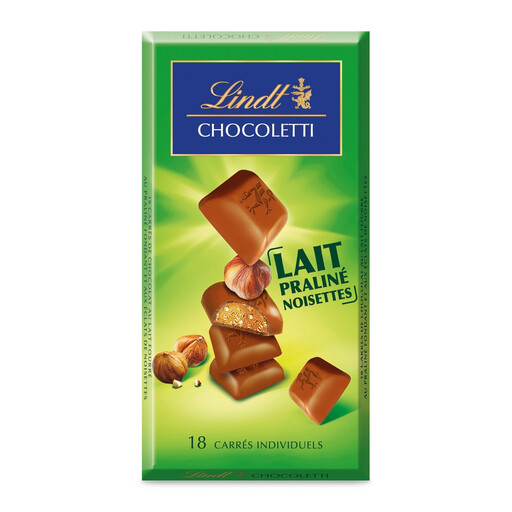 Image unavailable
This 100 g bar is a good option if you’d rather break off your own pieces for your crêpes. To keep track of what you’re serving, check the weight of the pieces and the product’s ingredients.
 Image unavailable
This bag of bites with a honeycomb centre is ideal for serving in a bowl, as long as you decide how much to give each person. The title states 192.5 g, while another detail gives 192 g, so check the net weight on the packaging.
 Image unavailable
The three 50 g bars can be counted out separately, but each is larger than a mini bite to put on a crêpe. If you want to serve less than a whole bar, decide how much to break off and check the ingredients on the pack.
No. Santé publique France states that displaying Nutri-Score is voluntary. It supplements the nutritional information covered by the labelling rules set out by EUR-Lex; compare that information and the ingredients, even if no logo is shown.
No. The French Ministry of the Economy describes this levy as applying to sugary drinks, not solid chocolate bites or mini bars. Sugar content is still worth checking in the nutritional information, regardless of the levy.
No: the weight of a piece and its composition are two different things. E.Leclerc’s product listing for P’TIT DELI mini bars states that they contain 53 g of sugars per 100 g. To work out how much you’ll serve, compare the label on your chosen product with the weight of its portion.
Read the ingredients list and the “contains” or “may contain” statements on the specific pack. Depending on the recipe, a milk chocolate bite may also contain nuts, peanuts, soya or cereals containing gluten; the product range name alone isn’t enough to tell you.