A bag of mini bars can make a sweet snack for your break, as long as you decide how many to have before sitting down in front of your screen. The word ‘mini’ alone, however, tells you nothing about the recipe. To make your choice, compare the nutritional values per 100 g, then the amount per bar or serving, along with the ingredients and allergens. Manger Bouger recommends limiting sugary products: a mini bar on its own is not a lunch.
Who might this format suit?
People working from home who like to plan their breaks
If you’d rather serve yourself a set amount than pick at a bag in front of your screen, individually countable bars can help you plan your break. Manger Bouger points out that sedentary activities in front of a screen often go hand in hand with snacking.
Shoppers who compare labels
To distinguish serving size from recipe composition, check the values per 100 g, then those for the portion you plan to have. The DGCCRF notes that nutrition information on pre-packed foods includes energy, fat and sugars, among other details.
People who need to avoid certain allergens
Check each product’s recipe individually, especially in an assortment. According to the DGCCRF, allergens must be emphasised in the ingredients list on pre-packed foods.
What should you check before buying?
For a break during your work-from-home lunch, start with the factor that really matters to your choice: how much to serve, where the bar fits into your meal, or which ingredients to avoid.
| What matters to you |
What to check |
Who is it for? |
| How much you serve |
Count the bars and check their weight, as well as the values given per serving. |
When I’m in front of a screen, I’d rather decide how much to have before opening the bag than keep reaching for more bars during my break. Around 42% of consumers would make portion control their priority. |
| What’s in your lunch |
Compare sugars and energy per 100 g; check the Nutri-Score only if it’s shown. |
If I have a bar with lunch, I want to understand how this sugary product fits into the meal without assuming that a smaller size means a different recipe. Around 33% of consumers would put this first. |
| Ingredients to avoid |
Read the emphasised allergens and precautionary allergen statements for each recipe, including those in an assortment. |
If I need to avoid an ingredient, the bar’s flavour or size won’t make up for a recipe that isn’t suitable. Around 25% of consumers would check this before anything else. |
Mistakes to avoid
-
Assuming ‘mini’ means less sugar
The term describes the size, not the sugar content. Start by comparing two recipes of different sizes on the same basis: per 100 g.
Then check the value per bar or serving to see what the amount you’re having adds up to.
-
Leaving the bag open on your desk
A multipack makes it easy to have several bars without always noticing how many you’ve eaten while working.
Decide how many bars you’ll have before your break, then put the rest of the bag away.
-
Assuming you know the allergens based on the brand
Ingredients can vary between recipes, so take extra care with each variety in an assortment.
Check the ingredients list and allergen information for the product you’re buying.
-
Relying on the Nutri-Score alone
The DGCCRF explains that displaying the Nutri-Score is voluntary in France. Whether or not it appears on the pack, you still need to read the nutrition information and ingredients.
If it’s shown on the packaging, use it as an additional guide.
Some brands to know
TWIX
A familiar caramel-and-biscuit mini bar, sold in a 15-piece bag for anyone who wants to count out their bars.
- The Carrefour listing gives 99 kcal per 20 g mini bar for this product: a useful per-bar guide.
- The recipe includes wheat, milk and soya, and may contain nuts and other cereals containing gluten.
MARS
A familiar milk chocolate, caramel and nougat mini bar, sold in a 17-piece bag.
- The Carrefour listing gives 439 kcal per 100 g, making it easier to compare with other recipes.
- It includes milk, barley, soya and egg, and may contain peanuts and nuts. Check the weight of each bar if you want to set a precise portion.
SNICKERS
A familiar chocolate, caramel and peanut mini bar, sold in a 17-piece bag.
- A peanut-flavoured option if peanuts aren’t an ingredient you need to avoid.
- The Carrefour listing includes peanuts among the ingredients. Check the other allergens and any precautionary allergen statements on the pack you choose, too.
KITKAT
KITKAT Mini MIX brings together several recipes for shoppers who like to mix up the flavours.
- The Carrefour listing gives a suggested serving of two mini bars for this assortment.
- As it contains several recipes, check the ingredients carefully. The listing mentions wheat, milk, peanuts and hazelnuts, among others.
Mini bars available on Joybuy
These two mini bar multipacks could be a good choice if you want to decide how many bars to have before a work-from-home break. The first also gives you a guide per piece; for the second, check the weight of each mini bar before deciding on a portion.
 Image unavailable
Nestle KitKat Strawberry Short Cake, 9 pieces, 104.4 g
If you want to serve a pre-decided amount, this pack contains nine individually wrapped mini bars, each weighing 11.6 g. The listing gives 63 kcal per piece and mentions milk, wheat and soya, among other ingredients. Check the ingredients if you need to avoid any of them. To compare recipes by sugar content, refer to the value shown on the packaging.
View on Joybuy
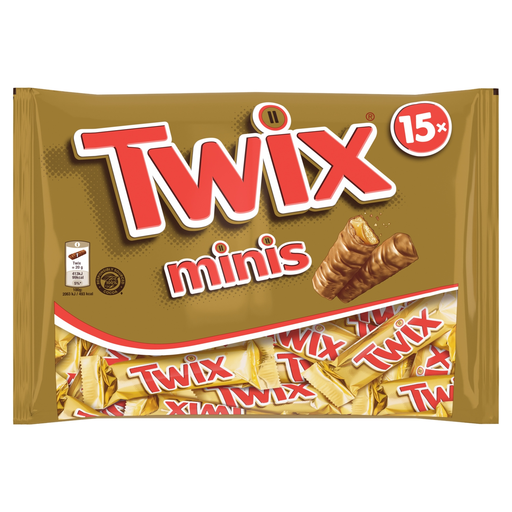 Image unavailable
TWIX Mini Caramel, pack of 15
This multipack lets you decide how many mini bars to have before your break. The listing gives 493 kcal and 48 g of sugars per 100 g; check the weight of one bar on the packaging to work out the amount for the number you’re serving. The recipe includes wheat, milk and soya, and may contain nuts and other cereals containing gluten.
View on Joybuy
Frequently asked questions
Are mini chocolate bars subject to the ‘soda tax’ in France?
No. Article 1613 ter of the General Tax Code, published on Légifrance, applies to drinks and liquid preparations for drinks, not solid chocolate bars. Sugar content is still worth checking on the label, but it doesn’t bring a bar within the scope of this levy.
Does the Nutri-Score have to appear on mini chocolate bars?
No. The DGCCRF states that displaying the Nutri-Score is voluntary in France. If it appears on the packaging, you can consider it alongside the nutrition information and ingredients list. Its absence doesn’t tell you anything about the product’s composition.
What should you compare on the labels of two mini bars?
First compare their nutritional values per 100 g on a like-for-like basis, particularly sugars and energy. Then check the weight and values for the portion you plan to serve. The DGCCRF states that nutrition information is mandatory for the relevant pre-packed foods, and allergens must also be emphasised in the ingredients list.
Can a mini bar count as lunch when you’re working from home?
A small size doesn’t make a bar suitable as the main part of your lunch. It can be part of a sweet snack, while you choose the rest of your meal separately. Manger Bouger recommends limiting sugary products as part of your overall diet.


