Parents who want to control how much they pack
You’re preparing a school lunchbox and want to count the individual bars before closing it. However, the ‘mini’ size alone doesn’t tell you whether a portion is suitable for your child.


A mini bar can make it easier to decide how many to put in a lunchbox, but it isn’t automatically a suitable portion for a child or lower in sugar. First decide how much you plan to pack, then check the nutritional information and ingredients for the exact product. If you’re managing an allergy or avoiding an ingredient, the allergen information on the pack matters more than the brand or format.
You’re preparing a school lunchbox and want to count the individual bars before closing it. However, the ‘mini’ size alone doesn’t tell you whether a portion is suitable for your child.
You need to check for a specific ingredient. The recipe, any ‘may contain’ statements and the label on the pack you buy matter more than the brand name.
You want to compare sugars and other nutritional values against the amount you’ll actually pack. Nutri-Score can be a useful extra guide when it appears on the products you’re comparing.
For a school lunchbox, start by deciding how much you plan to pack and checking for any ingredients that need to be avoided. Then compare the nutritional content of the products you’re considering.
| Criterion | What to check | Who this matters to |
|---|---|---|
| Amount packed | How many bars you plan to pack and the nutritional values for that amount, rather than just for the whole pack. | If I prepare the lunchbox in advance, I want to know how many bars I’m putting in without assuming that ‘mini’ means a suitable portion. Around 45% of consumers put controlling the amount first. |
| Allergens | Ingredients and any ‘may contain’ statements on the exact pack, particularly if it includes a selection of different recipes. | If I need to avoid an ingredient, I have to check each recipe rather than rely on a familiar brand. Checking allergens is the main concern for around 33% of consumers. |
| Nutritional content | Sugars and other nutritional values for the amount packed; check Nutri-Score only if it appears on the products you’re comparing. | When I compare two mini bars, I want to understand what the amount in the lunchbox represents, rather than just looking at the product size. This is the priority for around 22% of consumers. |
A smaller bar doesn’t tell you how much sugar you’ll be packing altogether. That also depends on how many bars you include.
Decide how many bars to pack before preparing the lunchbox, then check the nutritional values for that amount.
The recipes reviewed contain different ingredients and have different ‘may contain’ statements. An assortment may include several recipes in the same pack.
Check the label on the product you buy for the allergen or ingredient you need to avoid, including any ‘may contain’ statements.
Under Article 1613 ter of the French General Tax Code, published on Légifrance, the so-called ‘soda tax’ applies to drinks and liquid preparations for drinks, not solid chocolate bars. Santé publique France also states that displaying Nutri-Score is voluntary.
When choosing a bar, check its ingredients, nutritional information and the amount you plan to pack. Use Nutri-Score as an additional guide if it’s displayed.
The details below relate to the mini products described on Carrefour’s product pages, not every recipe from each brand.
The Mars Mini nougat and caramel product comes in a pack of 17.
Snickers Mini combines peanuts, caramel and milk chocolate in a pack of 17.
Twix Mini caramel bars come in a pack of 15. Carrefour’s product page gives the weight as 20 g and the energy value as 99 kcal per mini bar.
KitKat Mini MIX contains five mini recipes. Its product page gives two KitKat Mini bars as a guide portion.
These products offer mini bars or several smaller individual bars that you can count out for a lunchbox. Check the quantity you plan to pack and the allergens in your chosen recipe on each pack.
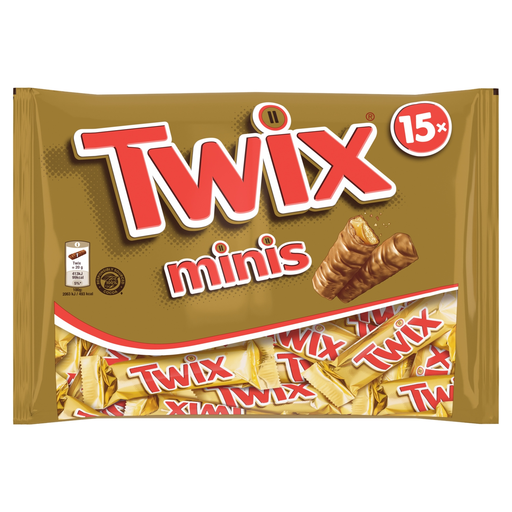 Image unavailable
The 15 bars make it easy to decide how many mini bars to put in the lunchbox. If you need to avoid wheat, milk or soya, check the pack label; it also states that the product may contain tree nuts. Check the nutritional values for the amount you choose.
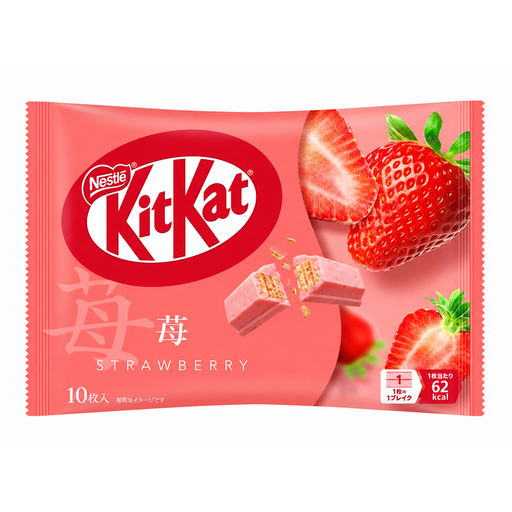 Image unavailable
The pack of ten bars lets you plan how many to put in the lunchbox; this product isn’t described as a mini format. To compare the amount you’re packing, check the basis used for the nutritional values on the packaging, along with the ingredients and allergen information if you need to avoid anything.
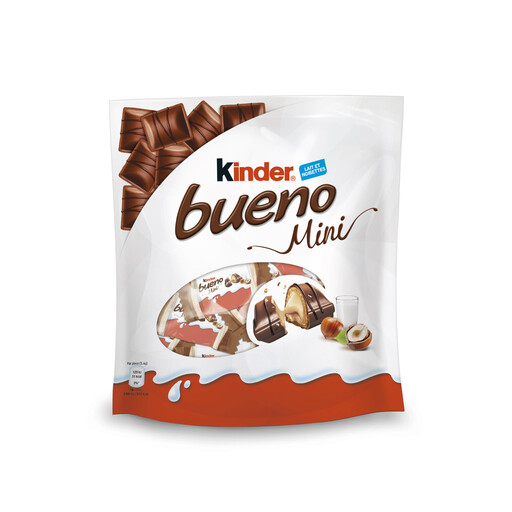 Image unavailable
The mini format lets you decide how much to pack before closing the lunchbox. Check the number and weight of the bars on the pack so you can compare the nutritional information with the amount you plan to pack. The recipe lists hazelnuts, milk, wheat and soya, so check the label if you need to avoid any of these.
No. Article 1613 ter of the French General Tax Code, published on Légifrance, applies to drinks and liquid preparations for drinks intended for human consumption, not solid chocolate bars. However, sugar content is still worth checking when deciding how much to pack.
No. Santé publique France says that displaying it is voluntary. When it appears on several comparable products, it can supplement the nutritional information, but it doesn’t replace checking the ingredients, allergens and amount you plan to pack.
No. The format mainly makes it easier to count the bars. Carrefour’s product page for KitKat Mini MIX says portions should be adjusted to the child’s age. You should also consider the number of bars, the rest of the lunchbox and the values given for the product you choose.
Read the ingredients and any ‘may contain’ statements on the exact pack. In the Carrefour product pages reviewed, Snickers Mini contains peanuts and may contain tree nuts; Twix Mini may contain tree nuts; and KitKat Mini MIX lists peanuts and hazelnuts, among other ingredients.