Organisers looking for a lower-fat recipe
If you want to compare recipes rather than simply choose smaller bars, start with the fat per 100 g. The DGCCRF uses this common basis in the nutrition declaration for prepacked foods.


To choose a recipe that’s lower in fat, compare the fat per 100 g in similar chocolate bars. A mini bar means a smaller portion, but it doesn’t necessarily mean the recipe contains less fat. For a Christmas market, also check the weight of each portion, its packaging and the allergens for the product you’ll be handing out. Neither a smaller size nor the Nutri-Score proves a ‘reduced fat’ claim.
If you want to compare recipes rather than simply choose smaller bars, start with the fat per 100 g. The DGCCRF uses this common basis in the nutrition declaration for prepacked foods.
If you’re giving one item to each visitor, the weight and number of bars in a pack matter just as much as the packaging format. However, a smaller portion isn’t a nutrition claim.
When catering for a varied audience, keep the information for each recipe readily available. Product information published by Carrefour France shows that allergens and ‘may contain’ warnings vary between bars.
For your stall, compare recipes on the same 100 g basis first, then choose the portion and selection to suit how you plan to hand out the bars.
| Criterion | What to check | Who is it for? |
|---|---|---|
| Fat content of the recipe | Compare fat and saturated fat per 100 g across similar products. Also check the sugars and energy values. | If a lower-fat recipe is your priority, the weight of a mini bar isn’t enough to help you choose. Around 37% of consumers put this nutritional comparison first. |
| Portion size | Check the weight of each bar, the number of items and whether they’re individually wrapped. | If I’m handing one bar to each visitor, I want to know how much I’m giving out without confusing that with the recipe’s composition. Portion control is the priority for around 27% of consumers. |
| Allergens | Read the ingredients list and any ‘may contain’ warnings on the packaging for each product. | When you don’t know in advance who will be visiting, you need to be able to check the ingredients in each bar on offer. Access to this information comes first for around 18% of consumers. |
| Stall organisation | Check the number of items and identify which recipes are included in each pack or selection. | If I’m offering several bars, I’m mainly looking for a format that’s easy to count and recipes I can tell apart. Around 18% of consumers prioritise this kind of organisation. |
A smaller portion and a lower fat content per 100 g are not the same thing. A mini format helps you control how much you hand out, but it doesn’t prove that the recipe has changed.
Compare the nutrition information per 100 g before checking the weight of each bar you’ll be giving out.
In France, Santé publique France and the DGCCRF describe the Nutri-Score as a voluntary label. Its absence doesn’t mean a bar is non-compliant or tell you anything about its composition.
If it appears on the packaging, use it alongside the nutrition declaration, particularly the values per 100 g.
Information published by Carrefour France for Mars, Snickers and Twix products lists different ingredients and ‘may contain’ warnings. Information for one bar doesn’t cover the whole selection.
Keep the packaging for each recipe and make sure its ingredients list is available to check.
These product examples help you distinguish between recipes, portion sizes and allergens. Their features don’t necessarily apply to every bar from the same brand.
Caramel and nougat bars, including mini versions.
A caramel and nougat bar; the product reviewed contains peanuts.
A bar combining biscuit, caramel and a chocolate coating.
Chocolate-covered wafer bars available in different recipes and pack sizes.
The own-brand range includes milk chocolate bars in a pack of 10 × 21 g.
These two Mars products come as a pack of mini bars and a single bar. Your choice will depend first on the format you want to hand out. Check the nutrition information and allergens on the packaging separately for each product.
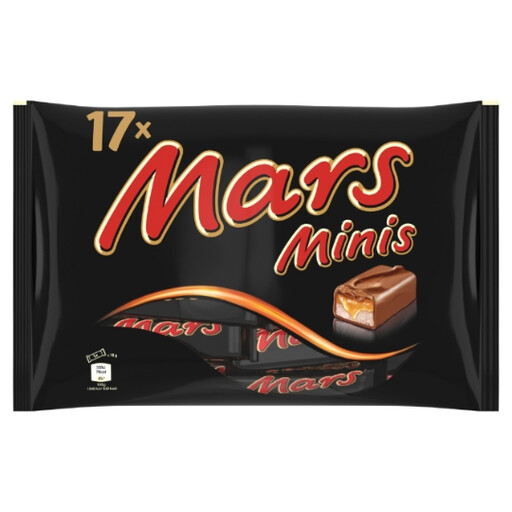 Image unavailable
The mini format may suit you if you want to hand out smaller items rather than a full-size bar. The pack weighs 333 g. Before organising your distribution, check the number of bars and whether they’re individually wrapped. Also check the nutrition information and allergens for the product on offer: a mini format doesn’t prove the recipe is lower in fat.
 Image unavailable
A single 51 g bar makes it easy to plan one whole bar per person. If the recipe’s fat content is your priority, compare its nutrition declaration per 100 g with those of the other products you’re considering, then check the allergens on the packaging.
No. It’s a smaller portion, but that doesn’t prove the recipe contains less fat. Compare the values per 100 g first, then check the weight of each bar if you want to control how much you hand out.
No. The DGCCRF explains that nutrition claims must be authorised and meet the conditions for their use. When describing a product, give its nutrition information without making a claim you haven’t verified for that specific product.
No. According to Santé publique France and the DGCCRF, displaying it is voluntary. To compare prepacked bars, use their nutrition declarations per 100 g, bearing in mind the exceptions to the requirement to provide a declaration.
Keep the packaging for each bar you offer so you can check its ingredients and allergens. The DGCCRF specifies that, for the prepacked foods concerned, allergens must be highlighted in the ingredients list.
No. The levy described by the French Ministry of the Economy applies to sugary drinks, not chocolate bars. If sugar content is part of your decision, compare the value per 100 g shown on the products you’re considering.