Shoppers who prioritise organic products and a defined portion
You’re looking for milk chocolate described as organic, with a clear weight per piece, rather than a bag where you have to decide how much to serve.


When shopping for organic products, first check that the milk chocolate is described as organic. Then look at the weight of each piece if you want a portion that’s easy to count. A 25 g mini bar gives you a clear measure; bagged chocolate discs are handy for sharing, but their small size doesn’t tell you how many pieces people will take. If a Nutri-Score is shown, it can help you read the label, but it doesn’t replace the nutritional information or allergen list.
You’re looking for milk chocolate described as organic, with a clear weight per piece, rather than a bag where you have to decide how much to serve.
A bag of chocolate discs or bites can work well for a shared treat. The recipe, allergens and amount eaten per person still need to be considered separately.
You want to compare the sugar content and ingredients in similar products, without assuming that every pack displays a Nutri-Score.
When choosing a small format as part of an organic shop, distinguish organic status from packaging, then check the quantity per piece and the label for the specific product.
| Criterion | What to check | Who is it for? |
|---|---|---|
| Organic status | The organic claim and certification details for the exact product; the word “mini” isn’t enough. | If organic status determines what I buy, I want to be able to identify it on the product before choosing a format. Around 36% of consumers prioritise this. |
| Quantity per piece | The weight of each piece, or the number of pieces and total weight of the bag. | If I want to take a set amount with me or portion out a snack, I need to know what each piece represents. This is the top priority for around 28% of consumers. |
| Recipe and label | Sugars per 100 g, ingredients and allergens, particularly in filled chocolates. | When I’m comparing recipes or need to avoid an ingredient, the information on the packaging determines my choice. This is the main priority for around 36% of consumers. |
A small format describes how a product is presented, not how it was produced. For example, Carrefour’s product listing for Milka mini bars doesn’t describe this product as organic.
Check the organic claim and certification details for the specific product before comparing formats.
A mini bar with a stated weight gives you a clear measure per piece. With a bag of chocolate discs, you may eat several in a row.
Check the weight per piece if it’s given, and decide how much to serve before opening a bag to share.
According to the French Ministry of Agriculture, displaying the Nutri-Score is voluntary in France. Even when it’s shown, the logo doesn’t list the ingredients or allergens.
Use it to compare similar products, then read the nutritional information and ingredients list.
Carrefour’s product listing for Côte d’Or bites mentions hazelnuts and almonds, as well as possible traces of wheat. A small size tells you nothing about the ingredients.
If you need to avoid an ingredient, check the packaging of the product you’re buying, including any statements about possible traces.
The brand offers mini bars of organic milk chocolate, including a milk chocolate variety with 41% cocoa.
Naturalia offers organic mini milk chocolate discs filled with peanut butter in a 120 g bag.
Carrefour’s product listing describes a bag of 20 milk chocolate mini bars, weighing 200 g in total.
The product listed at Carrefour is a filled milk chocolate bite, rather than a plain mini bar.
This selection features a 100 g milk chocolate bar described as organic. If you’re specifically looking for mini portions, check the packaging and weight per piece before choosing it for that purpose.
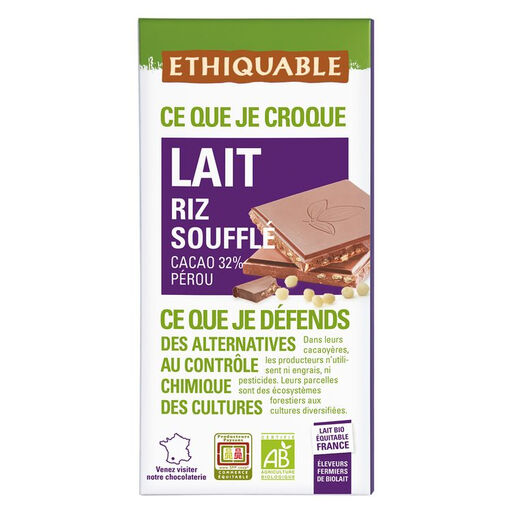 Image unavailable
Worth considering if you’re looking for milk chocolate described as organic and want to decide for yourself how much to serve. The product name specifies a 100 g bar, but not the number of pieces or their individual weight. Check the organic details, format and allergens on the packaging of the product you buy.
No. The French Ministry of Agriculture says that displaying the Nutri-Score remains voluntary in France. If it appears on a product, use it to compare similar products, then check the nutritional information, ingredients and allergens.
No. The so-called “soda tax” described by the French Ministry of the Economy applies to sugary drinks, not solid chocolate. To compare chocolate products, check the “of which sugars” line in the nutritional information, particularly per 100 g.
Check the organic claim and certification details for the specific product. Neither its small size nor where it’s placed in a shop is enough to confirm its organic status.
Always follow the instructions on the packaging you buy. For the Go Nuts mini chocolate discs listed by Naturalia, the retailer recommends storing them in a dry place between 10 °C and 15 °C.