Who might these formats suit?

People who want to keep their portion small

If you don’t want to eat a large cake before getting active, the weight of each piece is a more useful guide than the word ‘mini’. St Michel lists its Petites Madeleines as 17 g per portion; Auchan gives 28 g for a mini marble cake and 30 g for a mini brownie.

People who take a snack with them

An individually wrapped cake means you can take one piece without cutting it or having to carry an opened packet. Auchan lists this type of packaging for its Organic mini marble cakes and mini brownies; check the weight of each piece too.

Shoppers who check ingredients and allergens

If some recipes don’t suit you, compare the fat and sugar content for the amount you’ll eat. Also check the ingredients and any ‘may contain’ statements for the exact product: the allergens listed vary from one cake to another.

What to check before you buy

When choosing a snack before a workout, start with what matters most to you: how much you want to take, how easy it is to carry, the ingredients or the allergens. Nutritional values per 100 g help you compare recipes, but the portion size shows what you’ll actually be eating.

Criteria What to check Who is it for?
Portion size The weight of each cake and the nutritional values for the piece you’ll eat. St Michel lists a 17 g portion for its Petites Madeleines. If I want to start with a small amount before getting active, I’d rather know the weight of one piece than rely on the packet. Around 36% of consumers prioritise portion control.
Portability Whether the cakes are individually wrapped and how many pieces are included. Auchan lists this type of packaging for its Organic mini marble cakes and mini brownies. When I’m heading out with my gym bag, I mainly want a piece I can take with me without cutting it or carrying an opened packet. Around 29% of consumers put portability first.
Ingredients The fat and sugar content per 100 g, then per portion if that information is shown on the packaging. If my workout is coming up and some recipes suit me less than others, I want to be able to assess the ingredients in my portion. This is the top priority for around 21% of consumers.
Allergens The ingredients list for the exact product, highlighted allergens and any ‘may contain’ statements. If I need to avoid a particular ingredient, a smaller format doesn’t change the need to read the label. Around 14% of consumers check this before anything else.

Mistakes to avoid

  • Assuming ‘mini’ means less sugar or fat

    The size doesn’t tell you what’s in the recipe. St Michel lists 71 kcal for a 17 g portion of Petites Madeleines, while Auchan gives 127 kcal for a 28 g mini cake and 131 kcal for a 30 g mini brownie. These figures relate to different products and portion sizes.

    Check the weight of the piece you’ll eat and its nutritional information. Don’t assume you know what’s in it just from its size.

  • Choosing a different flavour without checking the allergens again

    Ingredients and ‘may contain’ statements vary by recipe. Products from St Michel, Auchan and LU list ingredients such as wheat, eggs, milk or soya, depending on the product, as well as possible traces of some allergens.

    Read the packaging for the product you’re buying, even if you already know another cake from the same brand.

  • Treating a mini cake as a pre-workout meal

    A cake before a workout is not a substitute for your meals. For the meal before a competition, IRBMS distinguishes between your earlier dietary preparation and your final meal, which it recommends should be light and low in fat.

    Think of the cake as an optional snack, and consider your usual routine and when you’ll be eating it.

  • Making your decision based on the Nutri-Score alone

    The DGCCRF states that displaying the Nutri-Score is voluntary in France. If it appears on a packet, it doesn’t tell you the weight of each piece or the allergens in the recipe.

    When comparing cakes, also check the portion size, ingredients list and nutritional information.

Brands to compare

St Michel

The plain Petites Madeleines give you a 17 g portion as a guide if you’re looking for a small piece.

  • St Michel lists 71 kcal and 3.6 g of fat per portion.
  • The product information lists wheat, egg and milk, and possible traces of nuts and soya.

LU

Prince Minis are chocolate-filled cakes; compare them based on the portion you’ll actually eat.

  • The product information published by Auchan lists 60 g of carbohydrates, including 43 g of sugars, per 100 g.
  • It also lists 17 g of fat per 100 g and mentions several allergens and possible traces.

Carrefour

Carrefour Bio chocolate mini cakes and Carrefour Classic’ mini marble cakes let you compare two different recipes from the retailer.

  • Carrefour lists four 40 g mini cakes for the Bio product.
  • The product information lists 28 g and 22 g of fat per 100 g respectively; check the allergens for each recipe.

P'TIT DELI / Marque Repère

This product, sold by E.Leclerc, contains ten mini chocolate chip cakes in a 300 g packet.

  • E.Leclerc lists 51 g of carbohydrates, including 30 g of sugars, per 100 g.
  • It lists wheat, eggs and soya, and possible traces of milk and nuts.

Auchan

The Organic mini marble cakes and mini brownies are individually wrapped, with each piece weighing 28 g and 30 g respectively.

  • Auchan lists 127 kcal per 28 g mini cake and 131 kcal per 30 g mini brownie.
  • The recipes and allergen information differ, so check the label for the cake you choose.

Joybuy products to consider

This cake comes in a pack of three, which may suit shoppers who want to choose a piece to take with them. To compare it with mini cakes that have a stated portion size, check the weight of one piece and the nutritional information for the amount you’ll eat.
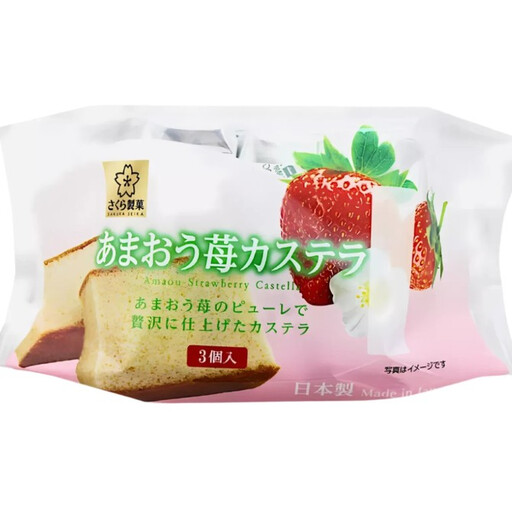
Sakuraseika Amaou Strawberry Castella, 3-piece pack, 105 g

Sakuraseika Amaou Strawberry Castella, 3 pieces, 105 g

This pack of three may suit you if you want to choose how many cakes to take with you. The pack is listed as 105 g; check the weight of the piece you plan to eat, its nutritional values and the allergens on the packaging.

View on Joybuy

Frequently asked questions

Should you eat a mini cake before every workout?

No, it isn’t essential. A mini cake can be an occasional snack, depending on your appetite and usual routine. In the context of a competition, IRBMS points out that energy stores aren’t built up by the final meal alone.

Does the advice to eat 2 h 30 to 3 h before a competition apply to a mini cake?

This IRBMS guidance is about the pre-competition meal, which it recommends should be light and low in fat; it isn’t a universal timing rule for a mini cake. If you’re having a snack shortly before exercise, consider the amount and your usual routine rather than trying a new recipe on the day.

Which allergens should you check on a packet of mini cakes?

Read the ingredients and any ‘may contain’ statements for the exact product. Depending on the recipe, cakes from St Michel, Auchan and LU list wheat, eggs, milk or soya, as well as different possible traces. The DGCCRF states that allergens must be highlighted in the ingredients list of prepacked foods.

Is the Nutri-Score compulsory on mini cakes?

No. The DGCCRF says the Nutri-Score is displayed voluntarily in France. If it appears on the packet, also check the portion weight, ingredients, allergens and nutritional information to compare the products you’re interested in.

Is a small cake necessarily low in sugar?

No: the size of the piece alone doesn’t tell you what’s in the recipe. The information for LU Prince Minis published by Auchan lists 43 g of sugars per 100 g; to work out what that means for your snack, relate it to the portion you’ll eat.