Parents who want to decide how much to serve
The weight of an individual brioche helps you compare formats, but it doesn’t determine how much to give your child. Check the recipe too, along with the sugar content per 100 g.


An individually wrapped brioche makes it easier to see what you’re serving, while a large brioche lets you cut a piece to suit. With mini brioche topped with pearl sugar, you’ll also need to consider its texture. Neither format, on its own, defines a suitable portion for a toddler: check the recipe and allergens, then adapt how you serve it to suit your child. Manger Bouger recommends introducing sugary foods as late as possible and limiting the amount.
The weight of an individual brioche helps you compare formats, but it doesn’t determine how much to give your child. Check the recipe too, along with the sugar content per 100 g.
If an ingredient or a trace of one is a concern for your child, the label on the exact product you buy matters more than the word ‘plain’ in its name. Recipes vary from one brioche to another.
The ‘mini’ size doesn’t tell you whether your child can manage that texture yet. Manger Bouger describes a gradual move to solid pieces; how you serve food should match your child’s abilities.
First, choose a texture your child can manage. Then compare how much you can serve and check the exact recipe.
Worth considering: if having an individually portioned brioche helps you keep track of what’s being served; Brioche Pasquier lists each brioche as 40 g.
Keep in mind: 40 g isn’t a recommended portion for a toddler.
Worth considering: as a small snack to take with you, if your child can already manage this texture; Harrys Mini Tressée weighs 35 g.
Keep in mind: consider the texture of the pearl sugar before serving it.
Worth considering: if you’d rather choose the size and shape of each piece yourself.
Keep in mind: you’ll need to prepare each piece and follow the storage instructions once opened.
| What matters | What to check | Who is it for? |
|---|---|---|
| Quantity and sugar | Weight per piece and sugar per 100 g; an individually wrapped brioche isn’t a prescribed portion. | For snack time, I want the option to serve less than a whole brioche if needed. Around 46% of consumers would put this first. |
| Ingredients and allergens | The ingredients and allergens for the exact product, including any stated traces. | If an ingredient is a concern for my child, the word ‘plain’ isn’t enough to help me choose. Around 27% of consumers would put this first. |
| Texture and serving | The texture, any added ingredients and the shape of the piece, based on what the child can already eat. | If my child is still learning to manage solid pieces, I want to adapt how I serve them rather than rely on the ‘mini’ size. Around 27% of consumers would prioritise this. |
The 35 g and 40 g individual sizes describe Harrys and Brioche Pasquier products; they don’t tell you how much is right for every child.
Use the weight per piece to compare formats, then decide what to serve based on your child and the rest of the meal.
Plain brioche can contain ingredients such as wheat, eggs or milk. Ingredients and any traces vary by product.
Check the packaging of the product you buy, especially if an allergen or stated trace is a concern for your child.
A bite can still be difficult for a child who is learning to eat solid pieces. Assurance Maladie reminds parents that a piece of food can enter the airways.
Make sure your child is seated and supervised while eating, and adapt the piece to a texture they can already manage.
Pasquier Briochettes are round, plain brioches; the brand lists a 40 g portion.
Harrys Mini Tressée is a 35 g individual brioche topped with pearl sugar.
Carrefour Original Mini-Gâches made with pure butter and crème fraîche are sold in packs of eight, according to Carrefour’s product information.
The E.Leclerc range includes round Epi d’Or briochettes sold in packs of twelve.
Auchan’s range includes 400 g plain brioches to slice when serving.
These ham and Emmental brioche bites are a savoury option, unlike the plain and pearl sugar brioches compared above. Before choosing them for a toddler’s snack, check the ingredients and how they should be served.
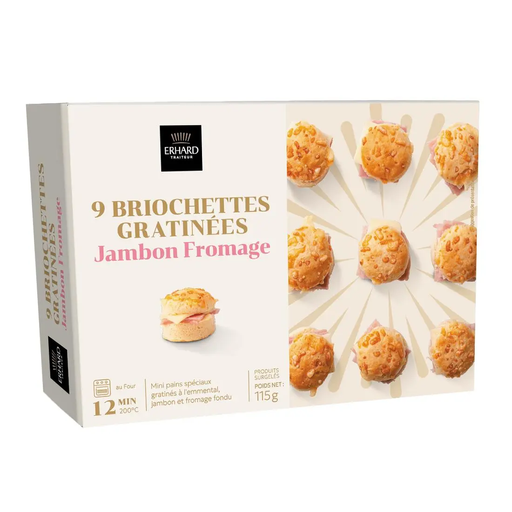 Image unavailable
The pack of nine bites lets you choose how many to serve, but that doesn’t mean a whole bite is suitable for your child. The pack weighs 115 g in total; check the size and texture of each bite before serving. Follow the cooking instructions and check the allergens listed on the packaging.
No. The weight of a brioche helps you compare products, but how much you serve should take your child and the rest of their meal into account. Manger Bouger recommends introducing sugary foods as late as possible and limiting the amount.
Only serve it in a way that matches a texture your child can already manage, and supervise them rather than relying on the word ‘mini’. Check for added ingredients too, such as pearl sugar. Manger Bouger describes a gradual progression through textures as children are introduced to solid foods, and Assurance Maladie reminds parents of the risk of food entering the airways.
Read the ingredients and check the packaging for any statements about traces. Depending on the recipe, the Pasquier, Harrys and Carrefour products mentioned here contain wheat, eggs or milk ingredients. The DGCCRF specifies that allergens must be emphasised on the labels of prepacked foods.
Follow the storage instructions on the packaging, including any stated time limit for consuming the product after opening. The date printed on an unopened pack doesn’t replace the product’s specific instructions once it has been opened.