Anyone planning an individual break
If you prefer to decide how much you’ll have before opening the pack, a unit with a stated weight gives you a clearer guide than a large bag that everyone helps themselves to.


For an individual break where you’ve decided on your portion in advance, choose a mini bar with a clearly stated weight. If you’re handing out milk chocolate to several people, individually wrapped bites are a better choice. A sharing bag can work if you portion out what you’ll serve before opening it. In every case, compare the sugars per 100 g and per serving, then check the ingredients and allergens for the specific product you’re considering.
If you prefer to decide how much you’ll have before opening the pack, a unit with a stated weight gives you a clearer guide than a large bag that everyone helps themselves to.
Individually wrapped portions make it easier to hand them out in a meeting or in the break room. If you’re serving loose chocolate balls or bites, have something ready to portion them out separately.
The word “mini” tells you nothing about the nutritional values or the full recipe. Check the “of which sugars” line, the ingredients list and the allergen information on each product’s packaging.
First, decide whether you want an individual portion or a format to hand out. Then check how much you’ll actually serve, along with the nutritional information and ingredients.
| What to consider | What to check | Who is it for? |
|---|---|---|
| Amount per break | Weight per unit and whether it comes in separate wrappers; for a sharing bag, decide how much to serve in advance. | If I’m taking a break on my own, I want to know how much I’ve set aside before I start. Around 33% of consumers prioritise a clearly defined portion. |
| Sugars | The “of which sugars” figure per 100 g, followed by the weight of the amount you plan to eat. | To compare two recipes in different sizes, I check the sugars at the same weight, then look at the sugars in my portion. This is the main consideration for around 27% of consumers. |
| Sharing | Number of separate bags or units; whether you can serve the bites without passing around an open pack. | In a meeting, I want to be able to offer separate portions to several people. Around 20% of consumers put ease of sharing first. |
| Allergens | Highlighted ingredients and “may contain” warnings for the exact product. | Before putting chocolates in a shared space, I need to know what’s in them so I can take account of any restrictions my colleagues have mentioned. Around 20% of consumers put this check first. |
A small pack makes it easier to keep track of how much you’re having, but it doesn’t change the recipe. The Lindt EXCELLENCE Milk mini bar reviewed here contains 51 g of sugars per 100 g.
Compare the “of which sugars” figure per 100 g, then work out how it relates to the weight you plan to eat.
According to the French Ministry of the Economy, the so-called “soda tax” applies to sugary drinks. It doesn’t tell you how much sugar is in solid milk chocolate.
When choosing chocolate, check its nutritional values and the weight of the unit or portion you’ll be serving.
The French order of 14 March 2025, published on Légifrance, describes Nutri-Score as supplementary labelling recommended by the state, rather than a general requirement. Its absence tells you nothing about the product’s composition.
Whether or not the logo appears on the packaging, check the nutritional values and ingredients list.
Depending on the product, milk chocolate bites may contain hazelnuts, almonds, peanuts, milk, wheat or soya, among other ingredients. A praline recipe and a coated chocolate ball won’t necessarily contain the same ingredients.
Keep the packaging to hand and check the allergens for the product you’ve bought before offering it to colleagues.
For an individual break, Lindt France offers products including a 35 g EXCELLENCE Milk mini bar and a 25 g mini milk chocolate cone.
For handing out individual portions, Carrefour France offers Côte d’Or Milk Praline Chocolate Bites in a box of eight sachets, with a total weight of 200 g.
KITKAT Ball are chocolate balls in a sharing bag. Carrefour France’s product information suggests ten balls per portion.
Carrefour Extra offers products including crunchy bites made with milk chocolate, peanuts and cereals.
The E.Leclerc catalogue features Marque Repère chocolate products, including those sold under the names EQUADOR, TABLETTE D’OR and P’TIT DELI.
These products include bars or tubes to hand out individually, as well as bags of bites to serve yourself. If you want a set amount for your break, distinguish between the total pack weight and the weight of the unit you’ll eat.
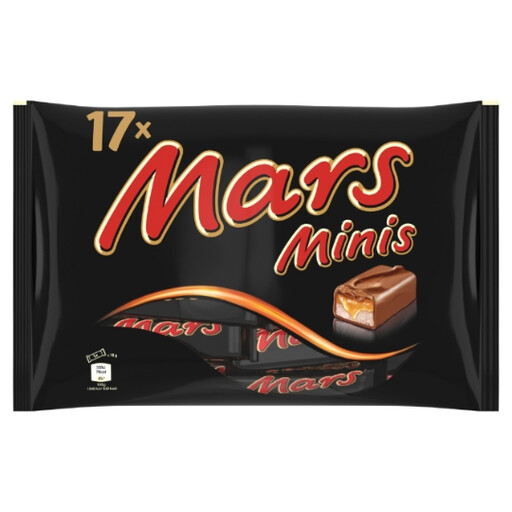 Image unavailable
Individually wrapped mini bars can be set aside for a break or handed out at the office.
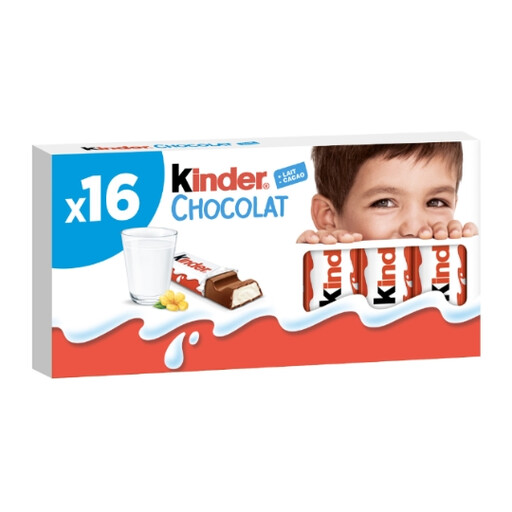 Image unavailable
Individually wrapped bars are a good option if you want to hand out separate portions.
 Image unavailable
The six tubes let you share out 34 g portions without opening a communal bag.
 Image unavailable
If you’re sharing this bag of chocolate balls, serve the amount you want first rather than leaving the open pack out for everyone to help themselves.
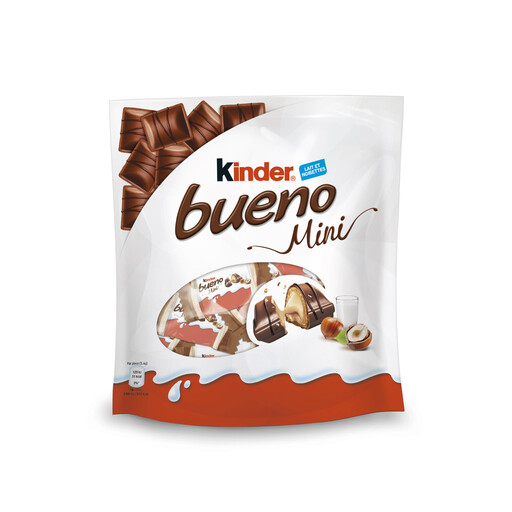 Image unavailable
Serve as many of these bagged bites as you choose before your break. They’re hazelnut wafers, not simply squares of milk chocolate.
No. The so-called “soda tax” described by the French Ministry of the Economy applies to sugary drinks, not solid milk chocolate. When comparing chocolates, look at their nutritional information rather than this tax.
No, there is no general requirement for these products to display it. The French order of 14 March 2025, published on Légifrance, describes it as supplementary labelling recommended by the state. If it appears on the packaging, consider it alongside the nutritional values and ingredients list, rather than using it as your only personal criterion for choosing.
First compare the “of which sugars” figure per 100 g, then take account of the weight you actually plan to eat. A value per 100 g doesn’t automatically tell you how much sugar is in a whole bar, a single bar or a few chocolate balls.
Read the ingredients list and allergen information for the product you’ve bought, then leave its packaging where people can check it for themselves. Depending on the recipes featured by Carrefour France, the bites may contain milk, nuts, peanuts, wheat or soya, among other ingredients.