Buying a case of mineral water might seem straightforward, but with the wide variety of options available, making the right choice for your family and your health requires a bit of discernment. Between the different mineral compositions and brand promises, it's easy to feel overwhelmed. The purpose of this guide is to provide you with clear benchmarks for selecting the water that will meet your needs, all while enjoying the convenience of water case delivery to your home.
Buying Guide: 3 Things to Check Before Buying Your Mineral Water
To make an informed choice, it's helpful to know how to read a label and understand what sets one water apart from another. Here are some key elements to consider.
1. Decoding the Mineral Composition
The "natural mineral water" designation guarantees a stable composition of minerals and trace elements. The label is your best ally for understanding what you're drinking.
- Dry residue at 180°C: This indicator, expressed in mg/L, represents the amount of minerals left after the water has evaporated.
- Very low mineral content: dry residue below 50 mg/L.
- Low mineral content: dry residue between 50 and 500 mg/L.
- Rich in minerals: dry residue above 1500 mg/L.
- Key minerals: Depending on your needs, pay special attention to calcium (bone health), magnesium (fatigue, digestion), or sodium (to be limited on a low-salt diet). For example, a water rich in calcium can be a great way to supplement your daily intake.
2. Understanding the "Suitable for Infant Feeding" Claim
This claim is strictly regulated by French and European law. For a water to carry this label, it must meet strict criteria, including a very low mineral content (dry residue < 500 mg/L) and a nitrate level below 10 mg/L. This is a guarantee of purity and safety for baby water.
3. Tailoring Water to Your Specific Needs
Your hydration and mineral needs change throughout your life.
- Pregnant women: Sufficient hydration is crucial. A water for pregnant women can be chosen for its purity (low mineral content) or for its high calcium and magnesium content, based on the advice of a healthcare professional.
- Bowel regularity: Certain waters, naturally rich in magnesium and sulphates, are known for their effects on digestion. They can provide occasional help for constipation. This is the case for specific waters recommended as water for digestion.
Recommended Mineral Water Cases
As a Joybuy Product Recommendation Officer, my role is to present products with features that meet clear and identified needs. Here is a selection of three mineral waters with distinct profiles.
CONTREX Natural Mineral Water 6x1.5L
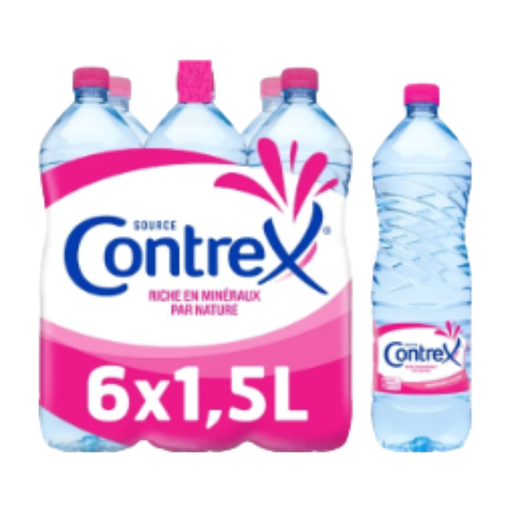
- Why we recommend it: Contrex mineral water is sourced from the heart of the Vosges mountains and is distinguished by its unique mineralisation. It is particularly known for its high content of calcium and magnesium, making it an ally in supplementing daily intake.
- Benefits:
- Rich in calcium: A 1.5L bottle covers 87% of the recommended daily intake of calcium (468 mg/L).
- Source of magnesium: It also provides 29% of the daily intake of magnesium (74.5 mg/L).
- Recognition: Its mineral profile has been recognised by the French Academy of Medicine for over a century.
- Convenient format: The 6x1.5L case is ideal for regular family consumption.
- Who is this product for?: For individuals looking to increase their intake of essential minerals, particularly calcium and magnesium, through their daily hydration.
H?PAR Natural Mineral Water 6x75 cl
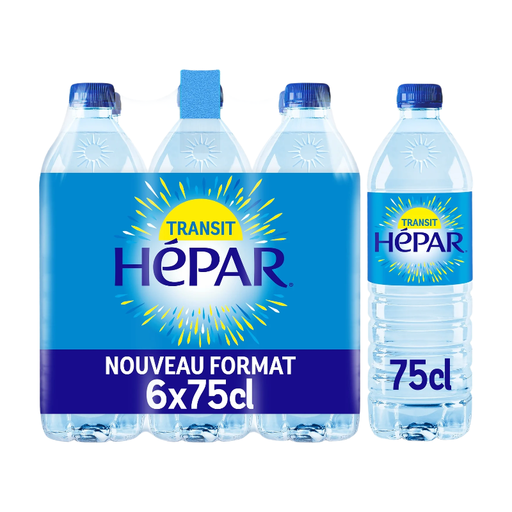
- Why we recommend it: Hépar is a natural mineral water with well-established digestive benefits. According to information provided by the brand, its effectiveness has been clinically proven. Its high concentration of magnesium (119 mg/L) and sulphates (1530 mg/L) makes it a natural option for those seeking a solution for sluggish digestion.
- Benefits:
- Effective for digestion: It is one of the few waters with a documented effect on bowel regularity.
- Very rich in magnesium: Its content is one of the highest on the market.
- Natural solution: A simple alternative to help regulate digestion as part of a balanced diet.
- Who is this product for?: For adults experiencing digestive issues who are looking for a water for constipation as a natural and occasional aid.
MONT ROUCOUS Natural Mineral Water 6x1L
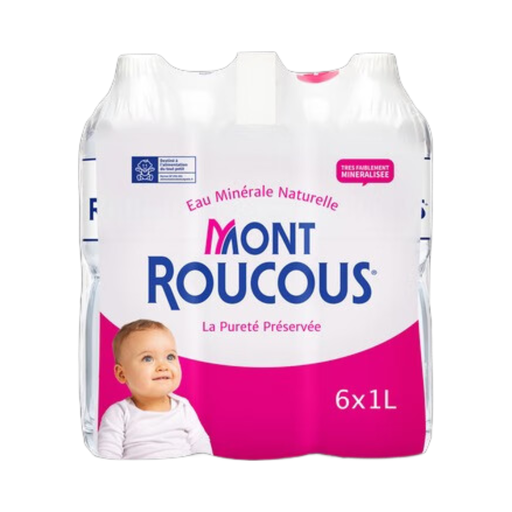
- Why we recommend it: Mont Roucous water is the perfect example of water suitable for the most sensitive individuals. Sourced from the Haut-Languedoc Regional Natural Park, it has a very low mineral content (dry residue of 22 mg/L). It meets all regulatory criteria for infant feeding.
- Benefits:
- Ideal for babies: Its low mineral content makes it perfectly suitable for preparing baby bottles.
- Very low in sodium: Suitable for low-salt diets.
- Purity: Sourced from a preserved environment, it is valued for its lightness and purity.
- Who is this product for?: For new parents looking for water for their baby, for pregnant and nursing women, and for anyone who prefers a very light, low-mineral water for daily hydration.
Can't Find What You're Looking For? Explore Other Options
Our selection highlights waters that meet specific needs. However, the choice of a mineral water is also a matter of taste and habit. If these options don't meet your expectations, or if you're looking for other brands and formats, many alternatives are available.
We invite you to discover our full category of Still Drinks to find the water that will perfectly fit your daily routine.
Frequently Asked Questions (FAQ)
What is the difference between spring water and natural mineral water?
Natural mineral water is characterised by a mineral composition that is stable and consistent over time, and it may have health-promoting properties recognised by the French Academy of Medicine. Spring water, which is also from a protected underground source, can have a variable mineral composition. Both are subject to strict quality controls.
Can you drink the same mineral water every day?
For daily hydration, it is perfectly fine to drink the same water, especially if it has a low mineral content. For waters very rich in minerals (like Contrex or Hépar), it is sometimes advisable to consume them for limited periods or to alternate them with a less mineralised water, unless a specific need justifies continuous consumption.
How should you store a case of water at home?
To preserve the quality of your bottled water, it is recommended to store your case of mineral water in a clean, dry, cool place, away from direct sunlight and strong odours. Once a bottle is opened, it is best to consume it within 24 to 48 hours and keep it in the refrigerator.


