What should you check before buying?
For a marathon, start by deciding what role the product will play in your fuelling plan, then compare the amount per piece, the format and the ingredients.
| Consideration |
What to check |
Who is it for? |
| Carbohydrates during the race |
Carbohydrates per 100 g and the weight of each piece; how much it contributes to your planned fuelling. |
For a long race, I want to be able to count the carbohydrates in each serving without relying on sweetness alone. Around 36% of consumers put planned carbohydrate intake at the top of their list of concerns. |
| Portions to take with you |
The number of pieces, the weight of each one and the packaging of the product you choose. |
If I prepare my servings before setting off, pieces that are easy to count matter more to me than a large sharing bag. Portion control is the top priority for around 29% of consumers. |
| Nutritional composition |
Carbohydrates, sugars and fat per 100 g, then per portion. |
When comparing two mini formats, I want to check the nutritional values rather than choose based on a logo or apparent size. This comparison is the main concern for around 21% of consumers. |
| Ingredients and individual requirements |
The ingredients list and allergens for the exact product; any precautions specific to your circumstances. |
When certain ingredients or blood glucose management affect my choice, I need to check the product before planning to eat it during exercise. Around 14% of consumers prioritise this check. |
World Athletics refers to intakes of up to 90 g of carbohydrates per hour during efforts lasting more than 2 h 30, using multiple transportable carbohydrates. This guideline doesn’t, on its own, determine the right amount for every runner. Mini chocolate should be considered as part of a fuelling plan that you’ve prepared and tried in training.
Formats available on Joybuy
These formats include mini milk chocolate bars with biscuit or filling, as well as chocolate sweets in tubes. They could be considered as portioned top-ups, but none of these product descriptions replaces calculating your carbohydrate intake per serving for a marathon.
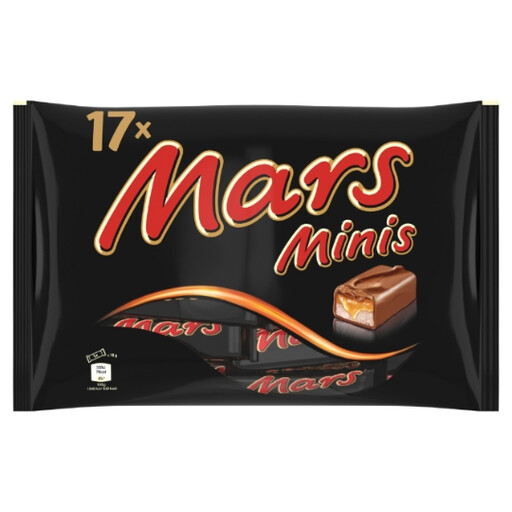 Image unavailable
MARS Minis milk chocolate with caramel and nougat, 333 g
A mini bar format to consider if you want to prepare several small top-up portions. The bag is listed as weighing 333 g; check the packaging for the weight and carbohydrate content of each bar before counting them as part of your fuelling plan. Check the ingredients too if you need to avoid certain allergens.
View on Joybuy
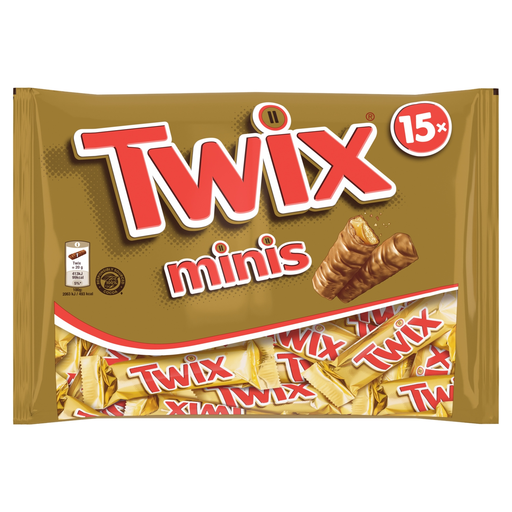 Image unavailable
Twix Mini, pack of 15 caramel bars
The pack of 15 mini bars could suit you if you like to prepare your portions before a run. As these are bars with biscuit and caramel, check the ingredients if you have dietary requirements. If they matter to your race-day fuelling, also check the weight, carbohydrate content and packaging of each bar.
View on Joybuy
 Image unavailable
SMARTIES Hexatube, 6 x 34 g tubes
The tubes offer another way to prepare portions to take with you, but these coated chocolate sweets are neither mini chocolate bars nor mini bars. To include them in a planned carbohydrate intake, check the product’s nutritional information and calculate how much you’d need for the portion you intend to have.
View on Joybuy
Frequently asked questions
Can mini milk chocolate be my main fuel during a marathon?
Don’t assume it can: its place in your plan depends on the carbohydrates each piece actually provides and what else you’re using to fuel your race. World Athletics refers to intakes of up to 90 g of carbohydrates per hour for efforts lasting more than 2 h 30, using multiple transportable carbohydrates. Plan your strategy and try it during training.
How many carbohydrates are in a 20 g Milka mini chocolate bar?
For Minis Lait Alpin, which Milka lists as containing 59 g of carbohydrates per 100 g, a 20 g piece contains around 11.8 g of carbohydrates. Check the packaging of the product you buy if you choose a different variety or format.
Is the Nutri-Score compulsory on mini chocolate in France?
No. Public Health France says that producers can choose whether to display the Nutri-Score. When choosing a portion for a race, check the nutritional information and ingredients for the specific product too.
What should I check if I have diabetes and am considering these mini chocolates during exercise?
The amount you’re considering, your treatment and the planned exercise all need to be assessed in light of your individual circumstances. Don’t rely on a rule based only on the mini format. French Health Insurance recommends discussing precautions and any adjustments needed for physical activity with your doctor.


