People comparing protein while keeping an eye on fat
If you’re choosing milk to go with a high-protein diet, it’s worth comparing semi-skimmed and skimmed milk with whole milk. Check the protein per serving before settling on a product.


If you want to limit fat while comparing protein content, start by looking at semi-skimmed or skimmed milk rather than whole milk. According to Manger Bouger, the calcium content is similar across all three types, while the fat content varies. To compare protein, check the nutritional information for the products you’re considering, per 100 ml and per serving. Whole milk is still an option if you prefer its taste and are happy with its fat content.
If you’re choosing milk to go with a high-protein diet, it’s worth comparing semi-skimmed and skimmed milk with whole milk. Check the protein per serving before settling on a product.
For coffee, cereal or cooking, you can prioritise the taste and creaminess you’re looking for. Just bear in mind that whole milk contains more fat.
Pack size, ingredients and nutritional information can help you choose between products. Compare the information per 100 ml and pick a pack size that suits how much you’ll use once opened.
First decide whether your priority is reducing fat, knowing how much protein is in your serving or keeping the taste you enjoy. Then check the figures on each pack.
| Criteria | What to check | Who is it for? |
|---|---|---|
| Fat | The level of skimming and the fat content per 100 ml. Lactel states that whole milk contains around 3,5 g per 100 ml, compared with 1,5 % for its semi-skimmed milk. | I want to keep drinking milk, but reducing fat matters more to me than its texture. Around 45 % of consumers are said to prioritise reducing fat. |
| Protein per serving | The protein content per 100 ml, then the amount in the serving you drink; don’t assume it from the level of skimming. | To find out how much protein is in my glass, I’d rather calculate what I’ll actually consume than choose whole milk out of habit. Around 36 % of consumers are said to share this priority. |
| Taste and cooking | The level of skimming that suits your drink or recipe, as well as the pack size you need. | In my coffee or cooking, I prioritise the taste and creaminess I’m looking for, even if I’m also keeping an eye on protein. Around 19 % of consumers are said to prioritise this. |
The name tells you about the fat content, not whether the milk contains more protein. For example, one Auchan semi-skimmed milk product lists 3,2 g of protein per 100 ml; this figure doesn’t apply to all milk.
Compare protein and fat per 100 ml for the products you’re considering, then work out the protein in your serving.
The Manger Bouger leaflet gives skimmed and semi-skimmed milk a Nutri-Score of B and whole milk a C. This letter alone doesn’t tell you how many grams of protein are in the serving you’ll drink.
Use the product’s nutritional information alongside its Nutri-Score.
Pack sizes vary by product. A large pack may not be practical if you don’t use much milk once a container has been opened.
Check the volume of each carton or bottle and the storage instructions after opening.
Semi-skimmed milk is still a milk product. Its level of skimming does not mean it is “lactose-free” or indicate that it is suitable for anyone with a milk protein allergy.
If lactose or milk content matters to you, check the labelling and ingredients for the exact product.
The range includes whole and semi-skimmed milk, making it easy to compare different levels of skimming from the same brand.
The GrandLait range includes whole and semi-skimmed milk.
The range includes organic UHT semi-skimmed milk, including 1 L and 50 cl packs.
The brand offers UHT semi-skimmed milk in a range of pack sizes.
The Eco+ and Marque Repère ranges, including Delisse, offer semi-skimmed milk in a range of pack sizes.
These skimmed and semi-skimmed milk options suit anyone looking to reduce their fat intake. Pack sizes vary, so compare the nutritional information for each product before choosing one that suits your usual serving.
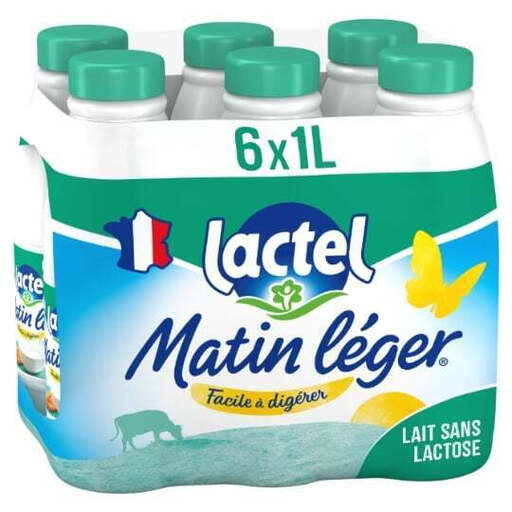 Image unavailable
Worth considering if you prefer skimmed milk to limit your fat intake. The pack contains six 1 L containers; check the protein per 100 ml and the storage instructions after opening on the packaging.
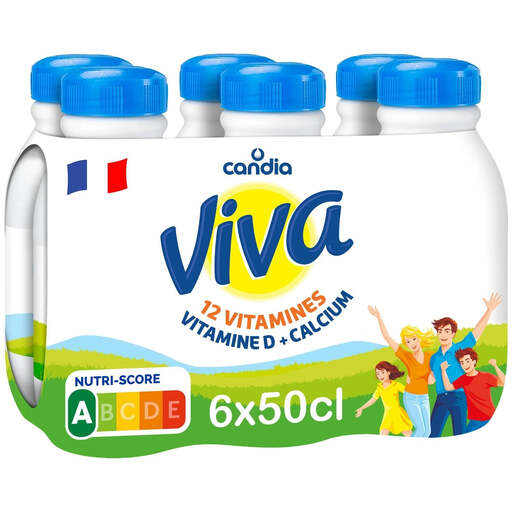 Image unavailable
Worth considering if you’re looking for semi-skimmed milk in 50 cl containers. The pack contains six; check the protein and fat per 100 ml for this product.
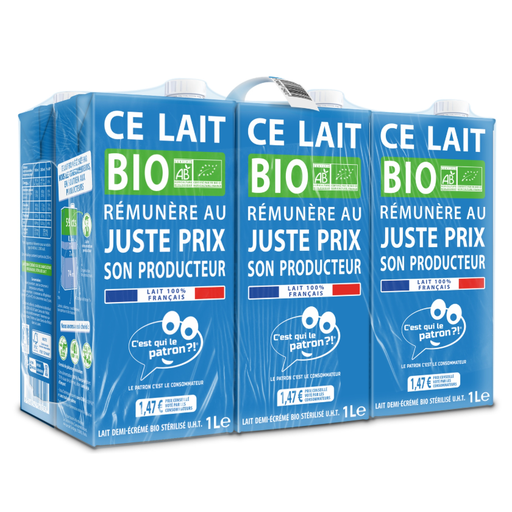 Image unavailable
Worth considering if you’re looking for semi-skimmed milk in 1 L containers. The pack contains six; check the nutritional information on the packaging to compare protein, fat and, if it matters to you, saturated fatty acids.
No. “Whole” mainly tells you about the fat content, not that the milk contains more protein. Compare the “protein” line per 100 ml on both packs, then work out how much protein is in your serving.
According to Manger Bouger, skimmed, semi-skimmed and whole milk contain similar amounts of calcium; it’s the fat content that varies. To compare specific products against your other criteria, check their nutritional information.
Check the type of milk, ingredients, net quantity, date and nutritional information for the product you’ve chosen. The DGCCRF notes that the nutrition declaration lets you check energy, fat, sugars and protein, among other things. Compare these values on the same basis.
Follow the instructions on the carton or bottle, especially those about refrigeration and how soon to use the milk after opening. Don’t assume the instructions are the same for every product.
No. “Semi-skimmed” describes the level of skimming; it doesn’t mean “lactose-free”. If you’re looking for lactose-free milk, check that this is clearly stated on the product. This label also doesn’t mean the product contains no milk proteins.