If your main requirement is the ‘sugar-free’ claim, check that it appears on the variant you choose: under EU regulations, this claim is reserved for products containing no more than 0.5 g of sugars per 100 g. Individually wrapped portions can be handy for a journey, but the portion size alone says nothing about the sugar content. Also compare the ‘of which sugars’ line, the ingredients and the allergen information.
Who is this choice for?
People looking specifically for ‘sugar-free’
The difference between ‘sugar-free’ and ‘no added sugars’ is crucial for you. EU regulations set a limit of 0.5 g of sugars per 100 g for a product to carry the ‘sugar-free’ claim. Check the exact wording and the nutritional values of the bar you choose.
Travellers who prefer individually wrapped portions
Bars and smaller packs can be easier to carry and share. Carrefour’s pack of eight Milka Mini Bars is an example of this format, but sugar is the first ingredient on its list.
People who check ingredients and allergens
Depending on the product, you’ll need to check for milk, nuts, soya or wheat, as well as any ‘may contain’ warnings. Carrefour’s product information for Gerblé and Milka also shows why the exact recipe matters more than the claim on the front of the pack alone.
Which criteria should you check first?
When choosing milk chocolate to take with you, start with your non-negotiable: the sugar claim, the recipe, the packaging or ingredients you need to avoid. Compare the format separately from the nutritional values.
| What matters to you |
What to check |
Who this is for |
| ‘Sugar-free’ claim |
The exact claim on the variant you’re buying and the ‘of which sugars’ line per 100 g; the EU limit for this claim is 0.5 g per 100 g. |
If I need a product specifically labelled ‘sugar-free’, simply having no added sugars doesn’t meet my criteria. Around 36% of consumers make this strict requirement their priority. |
| Added sugars and sweeteners |
The ‘no added sugars’ claim, the list of sweeteners and the total amount of sugars per 100 g. |
I may be happy with a recipe that contains sweeteners, but I want to distinguish sugars already present in the ingredients from those added to the recipe. This is the main concern for around 29% of consumers. |
| Format for taking with you |
Number of portions, weight per portion and type of packaging. |
If I want to pop a snack in my bag or share it, I look first for portions that are easy to separate. Around 21% of consumers prioritise this format. |
| Ingredients and allergens |
The ingredients list, declared allergens and any ‘may contain’ warnings on the exact pack. |
If an ingredient is a problem for me, I need to be able to check the recipe and warnings before setting off. This compatibility comes first for around 14% of consumers. |
Common points of confusion
-
Confusing ‘sugar-free’ with ‘no added sugars’
These claims aren’t interchangeable. EU regulations limit the ‘sugar-free’ claim to a maximum of 0.5 g of sugars per 100 g. Milk chocolate with no added sugars may still contain sugars from its ingredients.
Look for the exact claim, then check the ‘of which sugars’ line per 100 g for the variant you’re buying.
-
Assuming a mini format tells you anything about the sugar content
Individually wrapped portions make it easier to control how much you eat, but they don’t change the recipe. Carrefour lists sugar as the first ingredient in its pack of eight Milka Mini Bars.
Compare the weight of each portion separately from the ingredients and sugars per 100 g.
-
Making your decision based on Nutri-Score alone
According to Santé publique France, displaying Nutri-Score is voluntary. It doesn’t replace checking the nutritional information or ingredients list.
If it appears on the packaging, use it as extra information and check the sugar content and allergens separately.
-
Overlooking the ingredients behind the claim
The Gerblé bar with no added sugars described by Carrefour contains milk, hazelnut, maltitols and lactitol, among other ingredients. Other milk chocolate products list soya or possible traces of wheat and nuts.
Read the full ingredients list and warnings for the exact product, especially if you need to avoid a particular ingredient.
Brands to explore, depending on the format you want
Gerblé
Carrefour describes an 80 g Gerblé milk chocolate bar carrying the claim ‘no added sugars’.
- The product information lets you check the maltitols, lactitol, milk and hazelnut in this recipe.
- The ‘no added sugars’ claim doesn’t mean this bar can be described as ‘sugar-free’; check the ‘of which sugars’ line.
Milka
Carrefour’s Mini Bars are suited to anyone looking for individually wrapped portions: the pack contains eight bars and weighs 200 g.
- The packaging lets you take one portion without breaking off part of a bar.
- Sugar is the first ingredient listed for this product, so it isn’t suitable if you’re specifically looking for ‘sugar-free’.
Lindt
Lindt France offers milk chocolate in several formats, including a 100 g EXCELLENCE bar and a 33 g NUXOR bar.
- These formats let you compare a bar with a smaller snack for your journey.
- If you need a ‘sugar-free’ product, check the claim and nutritional values for the exact variant.
Marque Repère et Bio Village E.Leclerc
E.Leclerc offers several milk chocolate products, including Tablette d'Or, Equador and Bio Village.
- The Bio Village 36% cocoa milk chocolate product information lists the sugars per 100 g, so you can check this for the product.
- This Bio Village bar contains 46 g of sugars per 100 g and has a Nutri-Score of E, so it doesn’t meet the ‘sugar-free’ requirement.
Carrefour
Carrefour’s product information for the Gerblé bar with no added sugars and Milka products lets you compare different recipes and packaging.
- The ingredients and allergen information for these products help you check the variant you’re considering.
- A claim on one product page doesn’t mean that all the retailer’s milk chocolate products carry the same claim.
Milk chocolate formats on Joybuy
These products include bars or confectionery to take with you, as well as a maltitol-sweetened recipe. They aren’t a selection of milk chocolate products that meet the regulated ‘sugar-free’ claim: check the sugar content and packaging for each product.
 Image unavailable
Toblerone Milk, 3 × 50 g
The pack of three bars may suit you if you’re looking for separate portions to take with you. The product information lists 58.5 g of sugars per 100 g, so it doesn’t meet the ‘sugar-free’ requirement. Check the allergens on the exact packaging.
View on Joybuy
 Image unavailable
Milka Alpine Milk, 3 × 100 g
The three individually wrapped bars are a convenient choice if you need separate portions for travelling. Each weighs 100 g; the product information lists 58.5 g of sugars per 100 g, so it doesn’t meet the ‘sugar-free’ requirement. Check the allergens for the variant you buy.
View on Joybuy
 Image unavailable
CARRE Gianduja, 90 g milk chocolate
This maltitol-sweetened recipe may interest anyone comparing sweeteners, but its ‘Sugar-Free’ product name doesn’t match the 9 g of sugars per 100 g listed in the product information. Don’t choose it as a ‘sugar-free’ product. The product information also lists 42 g of polyols per 100 g and warns that excessive consumption may have a laxative effect. Check the ingredients and warnings on the packaging.
View on Joybuy
 Image unavailable
SMARTIES Hexatube, 6 × 34 g
The six tubes are a handy option if you want separate portions to pop in your bag. These are sugar-coated milk chocolate sweets, not bars, so if sugar content is your main concern, check the nutritional information on the packaging. The product information lists milk and gluten among the allergens.
View on Joybuy
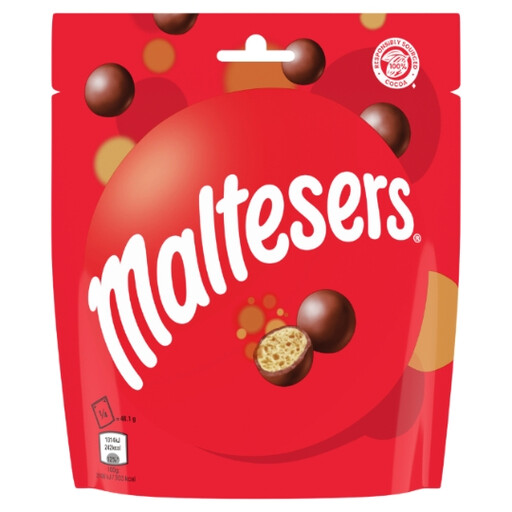 Image unavailable
MALTESERS, 192.5 g bag
This bag of malt centres coated in milk chocolate is easy to take with you, but the portions aren’t individually wrapped. The product information lists 53 g of sugars per 100 g, and the ingredients include milk, soya and wheat, so it isn’t suitable if you’re looking for a ‘sugar-free’ product.
View on Joybuy
Frequently asked questions
Do ‘sugar-free’ and ‘no added sugars’ mean the same thing?
No. EU regulations set the limit for the ‘sugar-free’ claim at a maximum of 0.5 g of sugars per 100 g. A bar labelled ‘no added sugars’ may still contain sugars from its ingredients, so check the ‘of which sugars’ line and the exact recipe.
Is Nutri-Score compulsory on milk chocolate in France?
No. According to Santé publique France, displaying Nutri-Score is voluntary. Its absence doesn’t mean that a bar fails to meet the requirements; check the nutritional information and ingredients list to compare products.
Is the ‘soda tax’ relevant when choosing a milk chocolate bar?
No: the levies referred to by the Ministry of the Economy and Finance apply to non-alcoholic drinks, not solid bars. To compare milk chocolate products, check the sugars per 100 g and the ingredients list instead.


