People organising an office coffee break
You want pieces or individual bags that everyone can take without having to break up a bar. The 24-mini-bar and eight-bag formats featured by Carrefour offer two different ways to hand round chocolate.


For a coffee break where everyone can help themselves quickly, choose a format with individually portioned pieces. The box of 24 Côte d'Or mini bars makes it easy to count portions, while the box of eight bags of praline bites is simple to hand round. A large cone may be a better choice if the total weight matters more than the number of portions. Either way, check the allergens and nutritional information for the specific product you buy.
You want pieces or individual bags that everyone can take without having to break up a bar. The 24-mini-bar and eight-bag formats featured by Carrefour offer two different ways to hand round chocolate.
You might prefer a cone to put on the table rather than portions counted out in advance. Check the ingredients and allergens before offering it to the group.
You want to compare the sugars, fat and allergens in each product. The nutrition declaration on relevant prepacked foods gives you a basis for comparison. According to Public Health France, Nutri-Score is still voluntary.
For a group coffee break, first decide whether you need to count individual pieces, hand out separate packs or simply put enough chocolate on the table for everyone.
| Criteria | What to check | Who is it for? |
|---|---|---|
| How portions are handed out | Number of pieces or bags, and whether each portion is individually wrapped. | If everyone needs to help themselves quickly, I prefer separate portions to a bar that needs breaking up. Around 31% of consumers put ease of distribution first. |
| Quantity for the group | Net weight and stated number of units: weight alone doesn’t tell you how many portions there are. | When planning a break, I want to choose enough for everyone without confusing a large pack with a set number of portions. Around 25% of consumers prioritise quantity. |
| Nutritional information | Sugars, fat and saturated fatty acids, shown on the same basis, particularly per 100 g. | When choosing between two recipes, I want to compare their nutritional values on a like-for-like basis. Around 25% of consumers prioritise this comparison. |
| Allergens | Ingredients list and any ‘may contain’ warnings for the exact product. | Before offering chocolate to the group, I need to rule out any recipe that isn’t suitable for people with known allergies. This is the main concern for around 19% of consumers. |
A 337 g cone doesn’t let you plan portions as precisely as a box labelled as containing 24 mini bars.
If you need to count portions, look for the number of pieces or bags shown on the packaging, then compare it with the number of people.
According to Public Health France, displaying Nutri-Score is voluntary. Its absence doesn’t tell you how much sugar the chocolate contains.
Compare nutrition declarations on the same basis and check the ingredients list. Use Nutri-Score as additional information if it appears on the pack.
The product information for the Côte d'Or Praliné bites lists hazelnuts and almonds, among other ingredients. Allergens vary from one product to another.
Before serving the group, read the label on the pack you buy, including any warnings about the possible presence of other allergens.
A product listing doesn’t guarantee that the item will be available at the shop or for your chosen collection option.
Check that it’s available before planning to serve this particular format.
Carrefour lists a 240 g box of 24 Mignonnettes Lait and a 200 g box of eight bags of Lait Praliné bites: two formats for sharing individual portions during a break.
The Lindor range includes a 188 g bag of squares and a 337 g cone listed by Carrefour.
The Milka product featured on Joybuy France is a 25 g milk chocolate bar, better suited as an individual portion than as a large pack for sharing.
Carrefour lists an 800 g Nestlé assortment box for people who compare total weight first.
These products offer a few different ways to serve milk chocolate during a coffee break: a bag of sweets, individually packaged tubes, a praline bar or several small bars. Whatever the format, check the ingredients to make sure they’re suitable for your group.
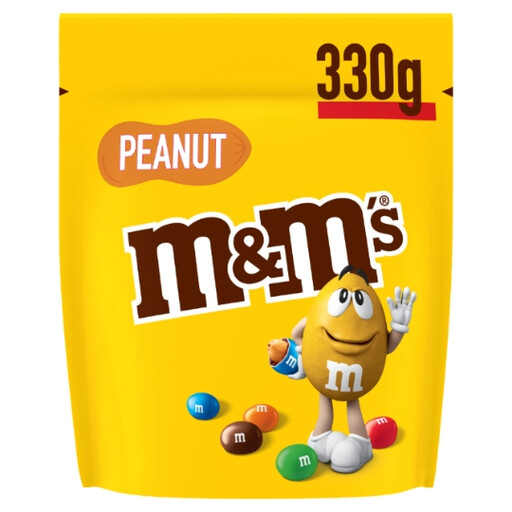 Image unavailable
A bag to consider if you’d like to put milk chocolate sweets on the table for everyone to share, rather than hand out individually wrapped pieces. The title states 330 g. If anyone in the group has allergies, check the packaging for information about peanuts in particular.
 Image unavailable
The six separate tubes are handy if you’d rather hand out individual packs than share from a single bag. These are milk chocolate sweets with a sugary shell. Check the ingredients and allergens for this product before offering it to the group.
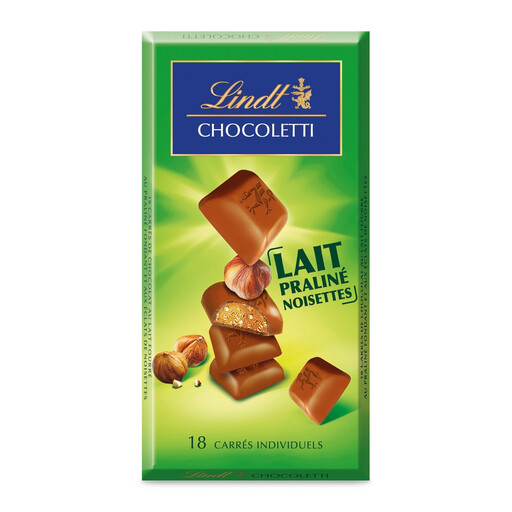 Image unavailable
This praline bar could be a good option if you’re planning to serve chocolate from a single 100 g pack. Check the number of squares on the packaging when planning your break, and check the allergens in this recipe before sharing it.
 Image unavailable
The pack of three bars lets you share out separate packs among the group. Each bar weighs 50 g, but one bar won’t necessarily provide a portion for everyone. Check the ingredients if anyone has a known allergy.
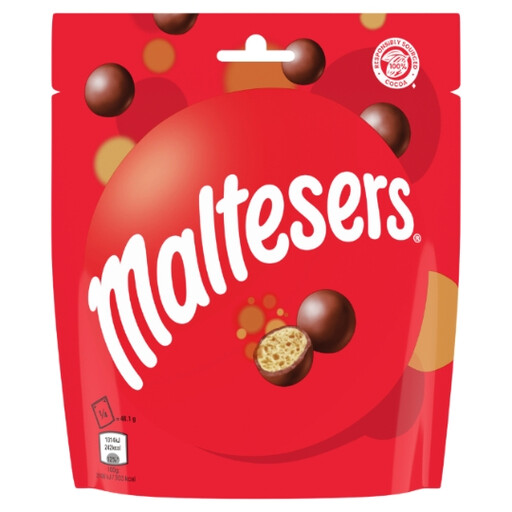 Image unavailable
This bag can be put on the table for everyone to share, without handing out individually wrapped portions. Check the net weight on the pack before working out how much you’ll need, and read the ingredients if anyone in the group has a known allergy.
No. According to Public Health France, displaying Nutri-Score is voluntary for producers. For relevant prepacked foods, EU rules require a nutrition declaration that includes energy, fat, saturated fatty acids, carbohydrates, sugars, protein and salt, among other information.
The levy described by the French Ministry of the Economy applies to sugary drinks, not to the bag of milk chocolate considered here. It isn’t a factor to consider when choosing between these formats.
Compare the ‘sugars’ line in their nutrition declarations on the same basis, particularly per 100 g. Then consider how much you plan to serve. Individually portioned packaging makes it easier to count portions, but doesn’t change the product’s nutritional values.
Check the ingredients and allergen information for each product before offering it. Depending on the product, the recipes featured may contain milk, soya or nuts. Don’t assume that two chocolates from the same brand have the same ingredients.