Coffee lovers avoiding added sugar
If you’re pairing your coffee with milk chocolate, check the wording on the packaging first, then look at the sugars per 100 g and any sweeteners.


If you want to avoid added sugar, look for the exact wording ‘no added sugars’, then check the ‘of which sugars’ line and the sweeteners: this claim does not mean ‘sugar-free’. If you prefer classic milk chocolate with your coffee, compare the values per 100 g and choose the portion you’ll serve. In either case, the ingredients and allergens may be your first consideration.
If you’re pairing your coffee with milk chocolate, check the wording on the packaging first, then look at the sugars per 100 g and any sweeteners.
You prefer a classic recipe and want to choose how much to serve with your coffee. Decide on your portion separately from the sugars per 100 g.
If a particular ingredient or possible trace affects your choice, check the ingredients list and allergen warnings for the specific bar before considering its sugar content.
When choosing milk chocolate to have with your coffee, start with anything that might rule out a recipe, then compare the packaging details of the remaining options.
| What to consider | What to check | Who is it for? |
|---|---|---|
| Added sugar | The exact ‘no added sugars’ claim and any sweeteners in the ingredients. | You mainly want to avoid a recipe with added sugar, without assuming it contains no sugars at all. Around 36% of consumers put this need first. |
| Sugars and portion size | The ‘of which sugars’ line per 100 g and the amount you plan to serve. | You prefer the taste of a classic bar with your coffee and want to decide on the portion. This is the main priority for around 29% of consumers. |
| Ingredients and allergens | The allergens listed and any warnings about traces for the specific product. | If an ingredient doesn’t suit you, the recipe takes priority over any preference about sugar. Around 21% of consumers make this their main consideration. |
| Format and availability | The bar size and whether it’s available when you place your order. | You’re mainly looking for an option you can buy in a format that suits your morning routine. This is the top priority for around 14% of consumers. |
A recipe with no added sugars may still show sugars in its nutritional information and contain sweeteners.
Compare the claim on the packaging with the ‘of which sugars’ line per 100 g and the ingredients list.
According to the DGCCRF, displaying Nutri-Score is voluntary. If it appears on a bar, it doesn’t replace the information you need about sugars and allergens.
Check the nutritional values and product ingredients too.
The Gerblé recipe described by Carrefour France contains milk and hazelnut paste, among other ingredients. A claim about sugar alone doesn’t tell you whether a product is suitable for your needs.
If you need to avoid an allergen, check the ingredients and any warnings about traces first.
You may still be able to view a product’s ingredients even when the bar isn’t available to buy at the time you want it.
Check the availability and details of the exact product before completing your basket.
A milk chocolate bar labelled ‘no added sugars’ provides a useful comparison for this category.
The L’Authentique Lait bar is a useful benchmark when comparing classic milk chocolate to have with coffee.
The Bio Village 36% cocoa milk chocolate bar lets you explore the details of a classic organic recipe.
These options include a gianduja chocolate whose sugar claim is worth checking, as well as classic or praline milk chocolates to consider depending on the portion size and ingredients that suit you.
 Image unavailable
Worth considering if you’re looking for a gianduja to have with your coffee and are happy to check the ingredients before choosing. The stated pack size is 90 g. Don’t assume that the ‘sugar-free’ description means it contains no sugars: check the ‘of which sugars’ line on the packaging. The ingredients list includes maltitol and a warning about excessive consumption.
 Image unavailable
Consider this if you’d like classic milk chocolate with your coffee and prefer to choose your own serving size. The pack contains three 100 g bars; this format doesn’t change the sugar content per 100 g. Check the label if milk, hazelnuts or soya are ingredients you need to avoid.
 Image unavailable
Worth considering if you prefer classic milk chocolate in individually sized portions to have with your coffee. The pack contains three 50 g bars; check how much you plan to serve and the sugars per 100 g. Also check the ingredients if honey, almonds, milk, soya or egg are important considerations for you.
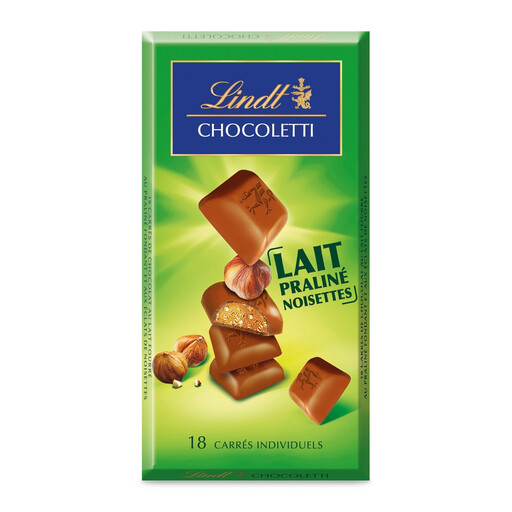 Image unavailable
Worth considering if you’d like a praline option rather than a plain milk chocolate bar with your coffee. This product comes in a 100 g pack. Check the ingredients if tree nuts, milk, soya or barley are ingredients you need to avoid, and compare the sugars per 100 g before choosing your portion.
No: this claim doesn’t mean the ‘of which sugars’ line will show zero. Check it on the packaging, along with the ingredients list. For example, the Gerblé bar described by Carrefour France contains sweeteners.
No. The DGCCRF describes Nutri-Score as a voluntary label. If it appears on a bar, use it alongside the nutritional information and ingredients list, according to the factors that matter to you.
Read the ingredients and any warnings about traces for the specific product before buying it. The Gerblé recipe described by Carrefour France contains hazelnut paste, while Lindt France states that its products are not guaranteed to be free from tree nut allergens.
No, not to a chocolate bar as such. The legislation published on Légifrance applies to drinks and liquid preparations for drinks, so this levy isn’t a factor when comparing two chocolate bars.
Follow the storage instructions and best-before date shown on the packaging of the bar you buy. These details apply to the specific product you’ll be using.