For packing lunchboxes
Individually wrapped bars make it easy to split a multipack without opening the whole box. Carrefour, for example, lists multipacks of several 100 g bars. Check the number and weight of the bars in the product you choose.


To share milk chocolate between several people or pack it in lunchboxes, choose a multipack of individually wrapped bars, checking both the weight of each bar and the total weight. If you mainly need chocolate for a dessert, a milk chocolate made for baking is a more suitable choice. In either case, check the recipe, allergens and nutritional information for the product you choose.
Individually wrapped bars make it easy to split a multipack without opening the whole box. Carrefour, for example, lists multipacks of several 100 g bars. Check the number and weight of the bars in the product you choose.
If you’re buying chocolate for several people, the total net weight helps you choose the right amount. The number of bars alone doesn’t tell you how much chocolate is in the multipack.
If you’re buying chocolate for a recipe, look for formats intended for baking. Carrefour, for example, lists Nestlé Dessert Lait as two 170 g bars rather than smaller bars for sharing.
First decide whether you need chocolate to portion out, share in a particular quantity or use in a recipe. Then check the format and the product label.
| Your needs | What to check | Who is it for? |
|---|---|---|
| Portioning out the bars | Number of bars, weight of each bar and how the multipack is presented. | For filling several lunchboxes, I look for individually wrapped bars so I don’t have to open the whole multipack. Around 45% of consumers prioritise being able to portion out the chocolate. |
| Having enough to share | Total net weight and the number of bars suitable for sharing. | When I’m expecting several people, I want enough to go round without buying more than I need. Having enough to share is the main priority for around 33% of consumers. |
| Baking a dessert | Whether it’s intended for baking, the amount needed for the recipe and the product’s allergens. | If I’m making cookies or a cake, the chocolate needs to suit the recipe first and foremost. Baking is the top priority for around 22% of consumers. |
According to Santé publique France, producers can choose whether or not to display the Nutri-Score. The European Commission states that nutrition labelling is required for the vast majority of prepacked foods.
Whether or not a product has a Nutri-Score, read the nutritional information per 100 g to compare products intended for the same use.
Ingredients and allergen warnings vary between products. A Joybuy listing for Milka I737, for example, mentions milk, hazelnuts and soya. This doesn’t apply to every Milka bar.
Check the ingredients list and allergen information on the exact multipack before sharing it.
Three 100 g bars and two 170 g bars don’t have the same total weight or offer the same portioning options.
Check the number of bars, their weight and what you plan to use them for, especially if the chocolate is for a recipe.
Carrefour lists multipacks of 100 g Milka milk chocolate bars, including packs of three, five or six.
Carrefour lists Lindt L’Authentique as a multipack of three 100 g milk chocolate bars.
Carrefour lists Côte d’Or L’Original as a multipack of three 100 g bars.
Carrefour lists Nestlé Dessert Lait as a multipack of two 170 g bars, intended for desserts.
Carrefour Classic’ is listed as a multipack of three 100 g milk chocolate bars.
Here, E.Leclerc is a grocery and collection retailer, not a milk chocolate brand.
These products include milk chocolate bars to share out, as well as a tube of sweets for anyone looking for that type of pack. Sweets aren’t a substitute for a bar of chocolate when baking.
 Image unavailable
For sharing chocolate between several people, this multipack contains three individually wrapped 100 g bars. Check the ingredients and allergens for this product before sharing them out.
 Image unavailable
If you’d rather share bars than classic chocolate slabs, this multipack contains three 50 g bars, weighing 150 g in total. The recipe includes honey and almond nougat, as well as egg white. Check the ingredients if you’re looking for plain milk chocolate.
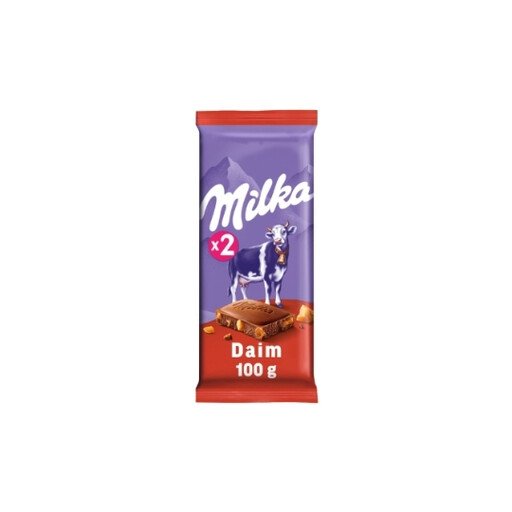 Image unavailable
If two bars are enough to share, this multipack gives you 200 g in total. The product listing mentions milk, hazelnuts and soya, and says it may contain traces of other nuts and wheat.
 Image unavailable
For sharing out individually portioned sweets, this multipack contains six 34 g tubes, weighing 204 g in total. These aren’t milk chocolate bars; the description mentions milk and gluten, so check the packaging.
No. Santé publique France says producers can choose whether or not to display it. To compare bars intended for the same use, also check their nutrition information per 100 g. The European Commission says this is required for the vast majority of prepacked foods.
Check the number of bars, total net weight, ingredients list, allergens and nutritional information per 100 g. The European Commission lists net quantity, ingredients, allergen information and nutrition labelling among the details required for prepacked foods, subject to the rules that apply to the product.
Not just because its best-before date has passed: this is not the same as a use-by date. Anses explains that the product may lose some of its quality, though. Check the packaging and how it has been stored.
Compare the ‘sugars’ line in the nutrition information per 100 g for products intended for the same use, then consider how much you plan to serve. Don’t assume that one nutritional value means a bar is suitable for everyone’s dietary needs.