If you’re offering milk chocolate before or after a marathon, choose individually wrapped mini chocolates or mini bars if you want to hand out portions that are easy to count. During the race, don’t rely on a sharing bag as your main source of fuel: plan the carbohydrates and drinks you need for your effort, then try your strategy in training. Also compare the sugars, fat and allergens in the specific product you choose.
Who is this choice for?
Runners planning their fuel
If you’re thinking of eating chocolate during a marathon, distinguish a sharing treat from a carbohydrate and hydration plan suited to the effort. The advice on hourly carbohydrate intake published in Ned Tijdschr Geneeskd relates to an endurance strategy, not to choosing a bag of chocolate.
People organising a sharing moment
If you’re offering chocolate to friends, volunteers or runners around the event, individually wrapped mini chocolates and mini bars make it easier to plan how many pieces to hand out. The Milka and Côte d’Or formats described by Carrefour France are examples of this.
Shoppers comparing labels
If the ingredients matter to the people sharing the chocolate, check the ingredients, allergens and nutritional values for the exact product. In France, Nutri-Score can provide additional information when displayed; Santé publique France explains that its use is voluntary.
What should you look for?
First decide whether the chocolate is for a sharing break or whether you’re looking to plan your fuel during the race. These two uses call for different checks.
| Criterion |
What to check |
Who is it for? |
| Fuel during exercise |
Carbohydrates per portion, planned drinks and a trial run in training. |
If I’m planning to eat during the race, I want to know what each serving provides rather than improvise on marathon day. Around 50% of consumers put this fuelling need first. |
| Sharing and portions |
Number of pieces and whether they’re individually wrapped. |
When handing out chocolate to a group before or after the event, I’d rather be able to count the pieces than serve from an open bag. This sharing need comes first for around 30% of consumers. |
| Ingredients and labelling |
Sugars and fat per 100 g, ingredients and allergens for the exact product. |
When several people will be trying the same product, I want to check its ingredients before offering it. Reading the label is the main priority for around 20% of consumers. |
Mistakes to avoid
-
Confusing sharing chocolate with race fuel
A bag of sweets isn’t enough to determine how much carbohydrate and how many drinks to have during a marathon. An article published in Ned Tijdschr Geneeskd describes hourly carbohydrate intake for endurance exercise; the Milka and Côte d’Or mini chocolates featured by Carrefour France each contain 29 g of fat per 100 g.
Plan your race strategy separately and try it during long training sessions. Save the chocolate for sharing before or after the event, or for a use you’ve already tested.
-
Assuming Nutri-Score is compulsory
Santé publique France states that displaying it is voluntary. So if it’s absent, you should still read the ingredients, allergens and nutritional declaration required under the European regulation on food information to consumers.
Start by comparing the nutritional information and ingredients list. If a Nutri-Score appears on the packaging, use it as additional information.
-
Applying a tax on drinks to solid chocolate
The French legislation published by Légifrance applies to drinks and liquid preparations for drinks that meet its conditions, not to a bag of solid chocolate.
When choosing between two chocolates, compare their sugar and fat content, ingredients and format instead.
-
Choosing a large format without checking allergens
The recipes mentioned by Carrefour France differ: depending on the product, they may contain milk, soya, wheat, hazelnuts or almonds, or warn of possible traces. Information for one product does not apply to the whole brand.
Check the packaging of the exact product you’ll be handing out, and confirm the arrangements for obtaining it for your event.
Brands to consider
These product range examples mainly show differences in packaging and recipe. Choose the exact product to suit how you plan to share it, and check its label.
Milka
Carrefour France features, among other options, a 200 g bag of 20 mini chocolates and a 200 g bag of eight mini bars.
- These individually wrapped pieces are suitable for handing out one at a time.
- For these products, check the packaging for milk, soya and any possible traces. The mini chocolates mentioned contain 29 g of fat per 100 g.
Lindt
Examples featured by Carrefour France include 140 g bags of Crispy milk chocolate balls and 188 g bags of Lindor squares.
- Crispy balls combine chocolate with biscuit pieces.
- Ingredients and nutritional values vary by recipe. Check the details on the bag you choose rather than assuming they apply to the whole range.
Côte d’Or
Carrefour France describes a box of 24 mini chocolates weighing 240 g and a box of eight bags of praline bites weighing 200 g.
- The mini chocolates make it easy to plan how many individual pieces to hand out.
- Praline bites and mini chocolates have different recipes. Check the product you choose for nuts, milk and soya in particular.
Nestlé
Formats described by Carrefour France include a 250 g bag of KitKat Ball and 200 g Les Recettes de l’Atelier almond squares.
- The KitKat Ball product information gives a reference portion of 10 balls, which is useful when checking its nutritional information per portion.
- The ingredients differ between the balls and the almond squares, so check the allergens for the exact product.
Carrefour Original
The 100 g milk chocolate chips featured by Carrefour France are better suited to baking or a buffet than to handing out individually wrapped pieces.
- The bag lets you portion the chips into a recipe that can then be served in portions.
- The chips aren’t individually wrapped. Their product information warns of possible traces of nuts, soya and wheat gluten.
Milk chocolate formats on Joybuy
These bags of sweets, tubes and multipacks of bars can be shared around the race. Choose between small pieces to hand out and individually wrapped portions. None of these formats, on its own, provides a fuelling plan for the marathon.
 Image unavailable
Maltesers milk chocolate balls, 192.5 g bag
A bag of small pieces to offer during a group break, rather than individually wrapped portions.
The stated amounts are 53 g of sugars and 25 g of fat per 100 g. Before handing them out, check the packaging for nutritional values per portion and allergen information.
View on Joybuy
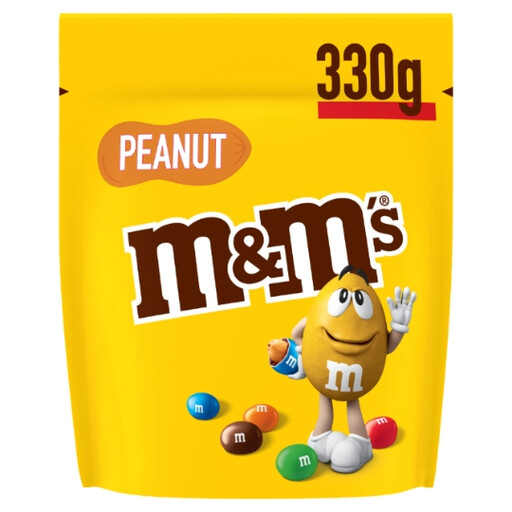 Image unavailable
M&M'S Peanut, milk chocolate-coated peanuts, 330 g
This large bag is suitable for handing out small pieces, provided peanuts are suitable for everyone present.
The stated amount is 53 g of sugars per 100 g. Check the packaging for values per portion and information about other nuts.
View on Joybuy
 Image unavailable
Smarties Hexatube, 6 x 34 g tubes
The six separate tubes make it easy to give one to each person, without sharing pieces from a large open bag.
These sweets contain milk chocolate. Check the packaging for nutritional values and allergens for this product, including the stated milk and gluten.
View on Joybuy
 Image unavailable
Milka Alpine Milk, 3 x 100 g bars
This multipack of separate bars is suitable if you’re planning to hand out whole bars or share them afterwards; it doesn’t provide small, pre-portioned bites.
The stated amounts are 58.5 g of sugars and 29.5 g of fat per 100 g. Check the packaging for information about milk, hazelnuts and soya.
View on Joybuy
 Image unavailable
Toblerone Milk, 3 x 50 g bars
Three bars could work for sharing among a small group, but this format is different from a bag of small pieces to hand out.
The recipe includes honey, almonds and egg white. If you need to hand out each bar without handling it, check whether the bars in the multipack are individually wrapped.
View on Joybuy
Frequently asked questions
Can a bag of milk chocolate replace my fuel during a marathon?
Don’t rely on it as a fuelling strategy on its own. An article published in Ned Tijdschr Geneeskd describes intakes of 30 to 60 g of carbohydrates per hour for some endurance efforts. The amount you need and the drinks you take should form part of a strategy you’ve tried in training.
Is Nutri-Score compulsory on milk chocolate in France?
No. Santé publique France explains that producers choose whether to display it. Read the ingredients and nutritional information for the exact product, whether or not it displays a Nutri-Score.
Does France’s tax on sugary drinks apply to a bag of solid chocolate?
No. The legislation published by Légifrance applies to drinks and liquid preparations for drinks that meet the specified criteria, not to solid chocolate. To compare two bags, check the sugar content shown on their labels.
Which allergens should I check before sharing milk chocolate?
Always check the packaging of the specific product. Among the products featured by Carrefour France, recipes may contain milk, soya, wheat, hazelnuts or almonds, and may also carry warnings about possible traces. These details don’t automatically apply to other products from the same brand.


