For adding milk chocolate to cookies or a cake with children, choose chocolate chips or a bar made for baking. A sharing bag is better suited to eating as it is, unless its ingredients and texture work for your recipe. Work out how much you’ll need for the group and check the allergens on every pack before you get started.
Who is this guide for?
Parents baking cookies or cakes with a group of children
If the children need to mix chocolate into a batter, chips save you from having to break up a bar. For a recipe that calls for melted or chopped chocolate, look for a bar made for baking instead.
Anyone organising a children’s party where allergies need to be considered
Check the ingredients and allergen information for each product before baking or serving food. A milk allergy rules out milk chocolate containing milk; depending on the recipe, nuts or soya may also be a concern.
Families keeping an eye on sugar and portions
Compare the sugar per 100 g in the nutritional information, then factor in how much you’ll use in the recipe and how many portions you’ll serve. Manger Bouger recommends limiting sugary products for children.
What should you check before buying?
Start with the recipe and the number of children, then check the exact packaging before choosing between chocolate chips, baking bars and sharing chocolate.
| What to consider |
What to check |
Who it matters to |
| Format and quantity |
Choose chips or chocolate made for baking to suit the recipe, and add up the quantities needed for all the batches. |
When baking cookies with several children, I look for pieces that are easy to share out and enough chocolate for the recipe. Around 36% of consumers would put this need for the right format and quantity first. |
| Allergens |
Read the ingredients and any ‘may contain’ warnings for the exact product, then follow the instructions provided for each child. |
If a child has a declared allergy, I need to check what’s going into the recipe before offering them any. This compatibility would be the top priority for around 36% of consumers. |
| Sugar and portions |
Compare the sugar per 100 g of products intended for the same use and work out how much will go into the recipe. If the packaging displays a Nutri-Score, use it as an additional guide. |
For an occasional baking session, I want to know how much chocolate is going into the cake and what size portion will be served. Keeping an eye on sugar and portions would come first for around 28% of consumers. |
What should you avoid?
-
Assuming a sharing bag is the same as baking chocolate
Bites or a crunchy mix can add inclusions and a different texture to the batter. The fact that they’re presented as a snack doesn’t mean they’re suitable for your recipe.
For cookies or a cake, start by looking for the format specified in the recipe. If you’d rather use a sharing product, check its ingredients and consider how the pieces will work in the mixture.
-
Relying on the words ‘milk chocolate’ to check for allergens
Other ingredients vary between products. Their allergen information is especially important if a child needs to avoid nuts or soya.
Check the packaging of the product you’ve actually bought, including any ‘may contain’ warnings, and follow the individual instructions provided for the baking session. The DGCCRF reminds manufacturers that allergenic ingredients in prepacked foods must be highlighted.
-
Making a Nutri-Score a must-have when buying
In France, displaying a Nutri-Score is voluntary. Its absence doesn’t mean you can skip reading the ingredients and nutritional information, but it doesn’t mean the product is non-compliant either.
If it’s displayed, use it as additional information when comparing like-for-like products. Also check the sugar per 100 g and the quantity required for your recipe.
-
Confusing a large pack with the amount you actually need
A bag of Carrefour Original chocolate chips cited for baking contains 100 g, while the NESTLÉ DESSERT Lait 2 × 170 g multipack contains 340 g. The amount you need to buy depends on your recipes and the number of batches, not just the size of the pack.
Add up the quantities specified in your recipes before choosing how many bags or bars to buy.
Brands and ranges to know
These examples help you tell baking formats apart from products intended for sharing. The features mentioned apply to the specific products listed, not every bar from a brand.
NESTLÉ DESSERT
Auchan lists a 170 g milk chocolate bar for baking, also available in a 2 × 170 g multipack.
- The multipack contains 340 g, suitable for a recipe or several batches that call for baking chocolate.
- You’ll need to break or chop the bars if your recipe calls for pieces. The product reviewed contains milk and lactose and warns that it may contain nuts.
Carrefour Original
Carrefour lists its 100 g milk chocolate chips among its baking ingredients.
- You can mix the chips into a batter without chopping up a bar.
- For several recipes, work out how many bags you’ll need and check the allergens for the product you choose.
Lindt
Lindt distinguishes its DESSERT bars, which the brand presents for baking, from its milk chocolates intended for eating as they are.
- This distinction helps you find a product suited to the way you plan to use it in your recipe.
- Don’t assume a bag of chocolate bites has the same ingredients or texture as a baking bar.
Milka
The 200 g milk chocolate bar reviewed on Joybuy is presented as ready to eat, rather than as baking chocolate.
- It may be suitable for eating as it is or for a recipe that works with the ingredients and pieces in this product.
- The product reviewed contains milk, hazelnuts and soya. Its packaging doesn’t confirm that it’s suitable for every type of baking.
Côte d'Or
Among the milk chocolate bars listed by Auchan is a 180 g Côte d'Or bar with whole hazelnuts.
- The hazelnuts may work in a recipe that specifically calls for this type of inclusion.
- This isn’t a plain milk chocolate chip product: check that the texture is right for your recipe and follow the allergen guidance.
A sharing-bag option on Joybuy
This bag of crunchy milk chocolate mix may work in a recipe that calls for crunchy pieces or a topping. It isn’t automatically a substitute for chocolate chips or a baking bar.
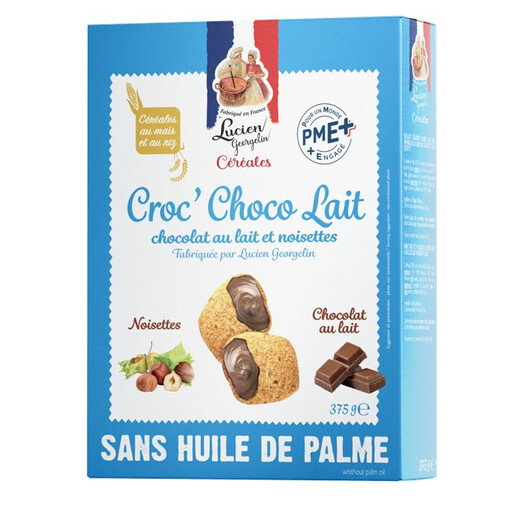 Image unavailable
Lucien Georgelin Milk Chocolate Crunch 375 g
Consider it as a topping or for a recipe where you want a crunch. This 375 g bag contains a mix with cereals and hazelnuts, rather than baking chocolate on its own. It contains milk and hazelnuts, so check the packaging and any guidance for the children attending. If your recipe calls for melted chocolate, make sure this mix is suitable before you buy it.
View on Joybuy
Frequently asked questions
Is Nutri-Score compulsory on milk chocolate in France?
No. The DGCCRF describes Nutri-Score as a voluntary scheme. If it appears on the packaging, it provides additional information to help compare like-for-like products. You should also read the ingredients and nutritional information.
Does the tax on fizzy drinks apply to milk chocolate bars and chips?
No. The tax section published by Légifrance relates to non-alcoholic drinks, not solid chocolate. To compare the sugar content of two chocolates, check their nutritional information per 100 g instead.
How can you check for allergens before a baking session with children?
Check the packaging for each product and any individual instructions before making the recipe. The DGCCRF says that allergenic ingredients must be highlighted on prepacked foods. Milk is a consideration for milk chocolates that contain it; depending on the product, also check for nuts, soya and any ‘may contain’ warnings.


