You’re making a small Christmas dessert
For a ganache, cookies, marble cake or fondant-style cake for a few people, start with the amount specified in the recipe. You can then choose a bar that suits the recipe without ending up with lots left over.


If your recipe calls for melted milk chocolate, start with a bar specifically labelled for baking. If you’re adding a few chunks to biscuits or making a small batch, a 100 g bar may be suitable if its ingredients fit the recipe. In either case, check how much you need, the ingredients and the allergen information.
For a ganache, cookies, marble cake or fondant-style cake for a few people, start with the amount specified in the recipe. You can then choose a bar that suits the recipe without ending up with lots left over.
If you plan to use a few squares in a recipe and save the rest for eating, check both the net weight and how the bar is labelled: baking chocolate or eating chocolate.
If sugar or particular allergens matter to you, rely on the label of the bar you buy rather than its name. Check the nutritional information, ingredients list and any ‘may contain’ warnings before cooking for guests.
For a small Christmas bake, start with how the recipe uses the chocolate, then check how much to buy and read the label.
| What to consider | What to check | Best for |
|---|---|---|
| How it’s used in the recipe | Look for the words ‘baking chocolate’ if the recipe calls for melted chocolate or ganache. Follow the recipe instructions too. | I’m planning to melt chocolate for a fondant-style cake and want to choose a bar that’s suitable for this use. Around 43% of consumers prioritise suitability for a recipe that calls for melted chocolate. |
| Quantity and leftovers | Compare the net weight with the amount required: the products listed by Carrefour and Auchan include 100 g bars and 170 g baking bars. | For a few biscuits or a small dessert, I’d rather not open more chocolate than I need. A smaller pack is the top priority for around 29% of consumers. |
| Label and allergens | Check the sugars per 100 g, the ingredients and allergens, including any ‘may contain’ warnings. Check the Nutri-Score if one is shown. | Before cooking for my guests, I need to check the ingredients in the bar I’m buying. Around 28% of consumers prioritise checking sugar and allergens. |
The levy described by the Ministry of the Economy applies to sweetened drinks, not solid milk chocolate. It doesn’t tell you how much sugar a chocolate bar contains.
To compare two products, check the ‘of which sugars’ line per 100 g and consider how much you’ll use in your recipe.
According to Santé publique France, displaying it is voluntary. So its absence doesn’t, on its own, mean there’s a labelling problem.
If it’s shown, use it as additional information and check the nutritional information and ingredients list too.
A 100 g eating chocolate bar and a 170 g baking chocolate bar are intended for different uses. Weight alone doesn’t guarantee that a product will suit every recipe.
Check how much the recipe calls for, then look at the bar’s recommended use and net weight.
The wrong size could leave you with chocolate to store, or mean you need another bar to finish the recipe.
The product information for some of the bars listed here mentions milk, soya or possible traces of nuts. Ingredients vary from one product to another.
Before cooking for guests, check the ingredients, allergens and any ‘may contain’ warnings on the packaging of the product you buy.
These products illustrate different sizes and uses. The details below apply to the specific bars listed, not to every product from each brand.
Auchan’s product information describes the 170 g Lait bar as baking chocolate, with a minimum of 39% cocoa.
Marque Repère E.Leclerc’s ‘Chocolat Dessert Pâtissier Au Lait’ is a 170 g bar.
Carrefour’s product information lists a 100 g organic milk chocolate bar, with a minimum of 40% cocoa.
The 100 g L’Authentique Lait Extra Fin bar listed by Auchan is milk chocolate intended for eating.
Monoprix Courses describes L’Original as a 200 g milk chocolate bar, with a minimum of 33% cocoa.
This 100 g milk chocolate bar is a good option if you’re buying a smaller amount. For a Christmas bake, choose it based on how much your recipe calls for and how the chocolate will be used.
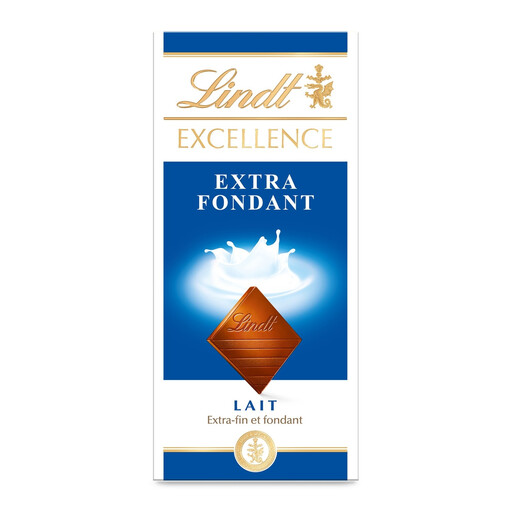 Image unavailable
The 100 g size may suit you if your recipe calls for a small amount or you’d like to save a few squares for later. The bar’s name doesn’t specify that it’s for baking, so check that it’s suitable for your recipe if you need to melt the chocolate.
No. The levy described by the Ministry of the Economy applies to sweetened drinks. To find out how much sugar is in a chocolate bar, check the nutritional information per 100 g on the packaging.
No. Santé publique France explains that producers can choose whether to display the Nutri-Score. Even if the logo isn’t shown, check the ingredients list and nutritional information to compare bars.
Start with the amount specified in your recipe. The products featured here include 100 g bars and 170 g baking bars. Check how much you’ll use and what you’ll do with the rest, and don’t assume they’re intended for the same purpose.
Yes, especially if you’re cooking for other people. Depending on the product, the information listed here mentions milk, soya, barley malt or possible traces of nuts. Check the details on the packaging of the bar you actually buy.