People organising a self-service table
Individual squares or a box of mini chocolates save you from having to break up a large bar while serving. However, check whether the portions also need to be individually wrapped.


For handing out milk chocolate at a festival, choose individually portioned pieces if you need to serve people quickly. If you’re preparing several lunchboxes, a multipack of small bars lets you portion them out before you set off. A large bar is a better choice if you can break it up on site. Whichever you choose, check the allergens for the specific product and make sure it’s protected from the heat.
Individual squares or a box of mini chocolates save you from having to break up a large bar while serving. However, check whether the portions also need to be individually wrapped.
A multipack of small bars makes it easy to portion out sealed items in advance. The number of bars is just as important as the total weight of the pack.
Before sharing, compare the nutritional information and check the ingredients and allergens for each recipe. Keep the packaging to hand in case anyone has questions while you’re serving.
First decide whether the chocolate needs to be handed out straight away, divided between several lunchboxes or broken up on site. The packaging, label and transport conditions will help you make your final choice.
| What to consider | What to check | Who is it for? |
|---|---|---|
| Portioning for serving | Count the individual squares or mini chocolates, and check whether each portion is individually wrapped if needed. | For a self-service table, I want to hand out a portion without breaking up a bar in front of everyone; around 36% of consumers would put ease of serving first. |
| Dividing between lunchboxes | Compare the number of bars, the weight of each one and the total weight of the pack. | If I’m preparing several lunchboxes, I’d rather portion out sealed bars before setting off; around 29% of consumers would make this their priority. |
| Label and allergens | Check the sugar content per 100 g, ingredients and allergens for the exact product. Look at the Nutri-Score if one is displayed. | When the people I’m serving have different dietary requirements, I need to be able to check the recipe before sharing; around 21% of consumers would prioritise this check. |
| Transport and storage | Check the storage instructions on the packaging and plan to keep the chocolate somewhere cool and dry during the journey and event. | For an event in hot weather, I want to keep the chocolate away from the heat until it’s served; around 14% of consumers would put this consideration first. |
The French Ministry of the Economy describes this levy as applying to sugary drinks. It isn’t a relevant criterion for classifying milk chocolate bars.
If sugar content matters to you, check the amount listed in the nutritional information for each bar.
According to Santé publique France, the Nutri-Score is an addition to the nutritional information and its display is voluntary. If it’s not shown, you should still read the rest of the label.
If it appears on the product, use it as extra information and also compare the nutritional values, ingredients and allergens.
A box of 24 mini chocolates, three 100 g bars and a family-sized bar don’t need the same preparation, even if their total weights seem similar.
Before choosing a format, work out how many portions you need to hand out and whether you can break up the chocolate on site.
Allergens vary between milk chocolate recipes. Without the packaging, it’s harder to check what each product contains while serving. Heat can also make transport more difficult.
Keep the labels to hand, distinguish between the recipes you’re serving and follow the storage instructions on the products.
These products offer a few examples of formats for sharing and lunchboxes. Always check the format and recipe for the specific product you’re considering.
Multipacks of milk chocolate bars, including 3 × 100 g packs, are available from Carrefour and Joybuy.
The range listed includes a 100 g bar and a Chocoletti bar made up of individual squares.
Carrefour lists a box of 24 milk chocolate miniatures, while Joybuy offers a 200 g family-sized bar.
Carrefour’s catalogue lists packs of two or three 100 g milk chocolate bars.
E.Leclerc lists a multipack of milk chocolate bars in a 3 × 100 g format.
These products show a few ways to share milk chocolate at an event: a multipack of bars, tubes of sweets, bars or a chocolate bar that can be broken into squares. Smarties tubes contain milk chocolate sweets, not chocolate bars.
 Image unavailable
The three bars can be divided between several lunchboxes or groups before the event.
Store in a cool, dry place, away from heat. The listing mentions milk, hazelnuts and soya, and possible traces of other nuts and wheat.
 Image unavailable
The six tubes can be handed out individually. Choose this format if milk chocolate sweets are a better fit than bars.
The listing mentions milk and gluten, and recommends storing the product between 15 °C and 18 °C, away from light. Bear these conditions in mind when transporting it.
 Image unavailable
The three bars can be given to different groups or saved for different points during the event. If each bar needs to stay individually wrapped, check the packaging before you buy.
The listing mentions milk, almonds, soya and egg white. Check the label before sharing with a group.
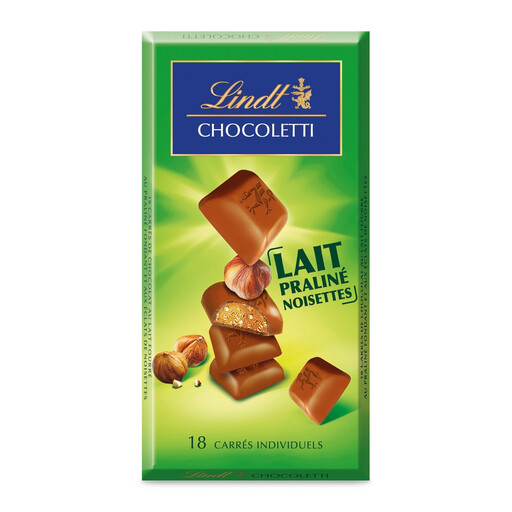 Image unavailable
This single bar can be shared in squares; it isn’t a multipack. If the portions need to be wrapped individually, check this before choosing it.
The listing mentions hazelnuts, almonds, milk, lactose, soya and barley. Keep the label to hand while serving.
No. The French Ministry of the Economy describes this levy as applying to sugary drinks, not solid chocolate bars. To compare the sugar content of different bars, check their nutritional values on the same basis, particularly per 100 g.
No. Santé publique France describes the Nutri-Score as a voluntary addition to the nutritional information. The European Commission states that nutritional information is required for the vast majority of prepacked foods. If the logo is displayed, read it alongside the other nutritional information. Its absence doesn’t tell you anything about the recipe.
Keep the packaging for each product so you can check its ingredients and allergens while serving. The European Commission states that allergens used as ingredients must be clearly identified. The ingredients vary from one product to another.
Follow the storage instructions for each product and protect it from the heat during the journey and at the event. Some products should be stored in a cool, dry place, while the listing for the Smarties tubes specifies a temperature range of 15 °C to 18 °C.