When sharing milk chocolate with children, first choose a format that suits the number of people and how you plan to hand it out. Then check the ingredients for the exact product, especially if anyone has an allergy or there are school guidelines to follow. To compare similar products, check the nutritional values per 100 g. The Nutri-Score can be a useful extra reference when shown, but displaying it is voluntary in France.
Who is this guide for?
Anyone planning a children’s tea party or celebration
The number of children, where the party is being held and how you plan to hand out the chocolate will help you decide whether a box of chocolates, individually wrapped pieces or bars to portion out is the right choice.
Parents who are mindful of allergens
The exact recipe matters more than the brand name. France’s DGCCRF (the consumer affairs authority) says allergens must be highlighted in the ingredients list on pre-packed products. You should also take account of any guidance specific to each child.
Anyone buying a box to share
An assorted box can offer a little variety. However, if several children will be eating the chocolates, check each one carefully, especially if they contain praline or other fillings.
What should you check before buying?
When buying for a group of children, start by checking dietary requirements. Then choose a format that’s easy to share and review the nutritional information for the product you’re considering.
| What to consider |
What to check |
Who is this for? |
| Allergens and group requirements |
Read the ingredients and check the allergens highlighted on the exact product. At school, check the relevant guidance and any Individualised Support Plan (PAI) in place for a child. |
If a child has an allergy, I need to rule out any unsuitable recipe before planning to share the chocolate. Around 36% of consumers prioritise this compatibility. |
| Format and quantity to share |
Compare the net weight, the number of pieces if stated, and whether they’re individually wrapped. Weight alone doesn’t tell you how many portions there are. |
When serving several children, I want to know how to divide up the chocolate without having to improvise on the day. This is the top priority for around 29% of consumers. |
| Nutritional information |
Compare sugar and energy per 100 g in similar products, then decide how much to serve. Check the Nutri-Score only if it’s displayed. |
When planning how much to serve at a party, I want to compare sugar content on a like-for-like basis rather than judge by the packaging. Around 21% of consumers prioritise this comparison. |
| Presentation and variety |
Check whether the box contains one type of milk chocolate or an assortment, and look at the fillings and inclusions in each product. |
When buying a gift box, I look for a range of flavours, while accepting that I’ll need to check more ingredients. Variety comes first for around 14% of consumers. |
France’s DGCCRF says nutritional information appears on most pre-packed foods sold in France, while displaying the Nutri-Score is voluntary. Manger Bouger recommends limiting sugary foods in the diets of children aged 4–17, so the amount you serve should be considered separately from the presentation of the gift box.
Mistakes to avoid
-
Assuming “milk chocolate” means a simple recipe
A milk chocolate sweet may also contain a filling or other ingredients. For example, a product listing published by Carrefour France mentions milk, hazelnuts and soya in chocolate bites.
Check the label on the exact product you’ve chosen. A photo of the gift box or a familiar brand name won’t tell you whether it’s suitable for everyone in the group.
-
Assuming that no Nutri-Score means poor nutritional quality
According to France’s DGCCRF, displaying the Nutri-Score is voluntary in France. If it isn’t shown, you should still check the nutritional information.
To compare similar gift boxes, use the values per 100 g and consider how much you plan to serve.
-
Choosing a large box without planning how to share it
The total weight of a gift box doesn’t tell you how many pieces it contains or how to divide them between children.
Decide how many children will be sharing and where, then check whether the product contains portions or individually wrapped pieces.
-
Relying on child-friendly packaging to decide how much to serve
The product’s presentation doesn’t tell you how much is right for your party. Manger Bouger recommends limiting sugary foods for children aged 4–17.
Plan how much to serve based on the occasion, regardless of how the gift box looks.
Brands to know
Lindt
Lindt France offers boxes and assortments that include milk chocolate and other varieties, depending on the product.
- Boxes and cones come in a range of formats for gifting or sharing.
- An assortment may include pralines or nuts, so check every recipe before sharing with children.
Milka
Milka offers, among other things, a gift box of milk chocolate bars in a range of flavours.
- The gift box product information includes nutritional values per 100 g and per portion.
- Ingredients and allergens vary between bars, so check the recipe you’ve chosen before handing them out.
Nestlé / Lanvin
Nestlé France’s Lanvin range includes praline chocolates, particularly for gift boxes.
- This format may suit a family gift where a selection of flavours is welcome.
- The praline recipe mentioned by Nestlé France contains almonds and hazelnuts. Check the ingredients of the specific box, as some products are seasonal.
Joybuy products for sharing milk chocolate
These products include chocolate bites in bags or tubes, as well as multipacks of bars or slabs. If you’re looking for a gift box of chocolates, check the packaging: a multipack of bars is designed to be shared differently.
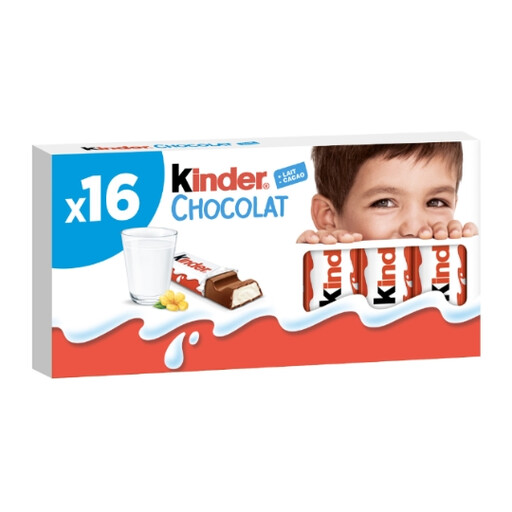 Image unavailable
Kinder Chocolate x16
The pack of 16 makes it easier to plan how to share the chocolates between several children. The description says they’re individually wrapped and contain milk and soya. Check that they meet the group’s requirements before sharing.
View on Joybuy
 Image unavailable
MALTESERS, 192.5g bag
These milk chocolate-coated balls are easy to share from a bag. If you need to prepare separate portions, check the number of pieces and how they’re packaged. The description lists milk, soya, wheat and barley.
View on Joybuy
 Image unavailable
Toblerone Milk 3 x 50 g
This pack of three 50 g bars is a good option if you plan to portion out the chocolate rather than hand out sweets from a gift box. The description mentions almond nougat, as well as milk, soya and egg white. Check the recipe if any of the children have dietary requirements.
View on Joybuy
 Image unavailable
MILKA Alpine Milk 3 x 100 g
The three 100 g bars are described as individually wrapped, making it easier to plan to share them on more than one occasion. They aren’t individually portioned sweets. The description lists milk, hazelnuts and soya, and warns that they may contain traces of other nuts and wheat.
View on Joybuy
 Image unavailable
SMARTIES Hexatube 6 x 34g
The six 34 g tubes give you separate packs to organise sharing. If you’re preparing smaller portions, check how many sweets are in each tube. The description lists milk and gluten, and warns of possible traces of other allergens. Check the packaging too if you want to compare nutritional values per 100 g.
View on Joybuy
Frequently asked questions
Is the Nutri-Score compulsory on a box of chocolates in France?
No. According to France’s DGCCRF, displaying the Nutri-Score is voluntary in France, while nutritional information is required on most pre-packed foods. To compare two similar gift boxes, check their values per 100 g, even if only one displays the logo.
What should I check before handing out chocolates at school?
Check the ingredients and allergens for the exact product, then ask the school and families about any guidance. France’s Ministry of Education says an Individualised Support Plan (PAI) can be put in place for a pupil with a food allergy. If there is one, follow the arrangements made for that child.
Is an assortment better than a single recipe for a group of children?
Not necessarily. An assortment offers a choice of flavours, but means checking several recipes. If you don’t yet know about the group’s dietary requirements, find out before choosing. A single recipe makes the ingredients easier to check, but that alone doesn’t guarantee it’s suitable for everyone.


