For a single serving
If you want a bar you can enjoy without breaking up a larger one, the 25 g format fits the bill. Carrefour France, for example, lists a 25 g Milka bar. Check the allergens for the specific product before serving it.


If you’re after a treat for one person, a 25 g bar is a straightforward choice. For several guests, a bag of mini bars gives you separate portions, while a sharing bar works if you’re happy to break it into squares. Whichever you choose, check the number of portions, nutritional information and allergens for the specific product.
If you want a bar you can enjoy without breaking up a larger one, the 25 g format fits the bill. Carrefour France, for example, lists a 25 g Milka bar. Check the allergens for the specific product before serving it.
A bag of mini bars makes it easy to offer separate portions. If you’re happy to serve squares, a sharing bar is another option. Compare the number of pieces you’ll need to serve, not just the pack weight.
If sugar or allergens are important to your choice, check the exact product. In France, the DGCCRF says that pre-packed foods must carry a nutrition declaration and that allergenic ingredients must be highlighted. According to Santé publique France, displaying the Nutri-Score is voluntary.
First, decide whether the chocolate is for one person or several guests. The total pack weight alone won’t tell you how many portions are ready to serve.
| Consideration | What to check | Who is it for? |
|---|---|---|
| Single serving | The weight of each item and whether it’s sold individually or in a multipack. | I want a treat for one person, without opening a large sharing bar or needing to break it up. This ready-to-serve portion is the main priority for around 40% of the consumers concerned. |
| Serving guests | The number of mini bars or sharing bars, and whether you’ll need to break them into squares. | For a birthday, I need to be able to offer chocolate to several people rather than relying on a single bar. Around 30% of consumers prioritise serving several people. |
| Nutritional information | Sugars and other nutritional values per 100 g, so you can compare products in different pack sizes. | Before choosing between a bar and a sharing bar, I want to compare their sugar content on the same basis. Checking nutrition is the priority for around 20% of consumers. |
| Allergens | The ingredients list and any ‘may contain’ statements for the exact product. | If a guest needs to avoid an allergen, I can’t rely on the words ‘milk chocolate’ alone. For around 10% of consumers, checking allergens comes before other criteria. |
The rates set out by BOFiP-Impôts apply to levies on non-alcoholic drinks, not solid chocolate bars or sharing bars.
When choosing chocolate, check the sugar content in its nutritional information instead.
Santé publique France explains that producers can choose whether to display the Nutri-Score. Its absence doesn’t replace the need to read the nutrition declaration.
Compare the values per 100 g on the packaging, and use the Nutri-Score as additional information when it’s shown.
A 25 g bar, a bag of mini bars and a 100 g sharing bar aren’t served in the same way. In particular, you’ll need to break up a whole sharing bar if you want to divide it between guests.
Count the people you need to serve, then check the number of items in the pack and their format.
According to the recipes listed by the brands and retailers mentioned, some milk chocolates also contain or may contain soya, nuts or wheat.
Before sharing, check the ingredients and any ‘may contain’ statements on each pack.
Products listed by Carrefour France include a 25 g bar and a bag of eight mini bars weighing 200 g in total.
The 100 g Lindt L’Authentique Lait bar can be broken into squares for sharing with a small group.
Carrefour France lists L’Original au lait in a multipack of three 100 g bars.
Nestlé Dessert Lait comes in a 170 g bar and is mainly intended for baking.
The Carrefour Bio range includes a 100 g milk chocolate bar.
This selection includes a 25 g bar for one person, as well as sharing bars and multipacks for dividing between several guests. Choose according to the number of portions you need, and check the label for the specific variant you select.
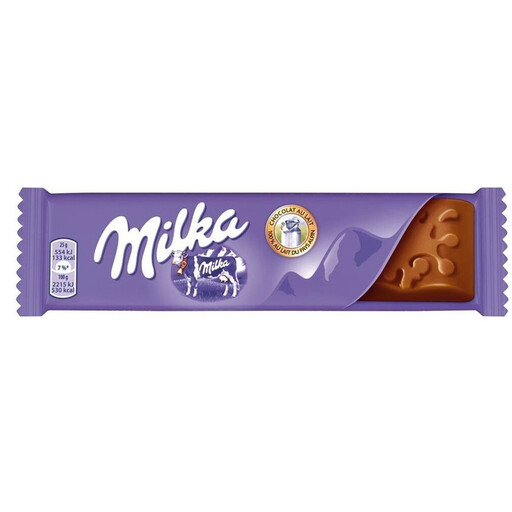 Image unavailable
A 25 g bar is a good choice if the chocolate is for one person and you don’t want to break up a larger bar. The product information lists milk, soya and hazelnuts, and says it may contain other nuts and wheat. Check the exact packaging before serving.
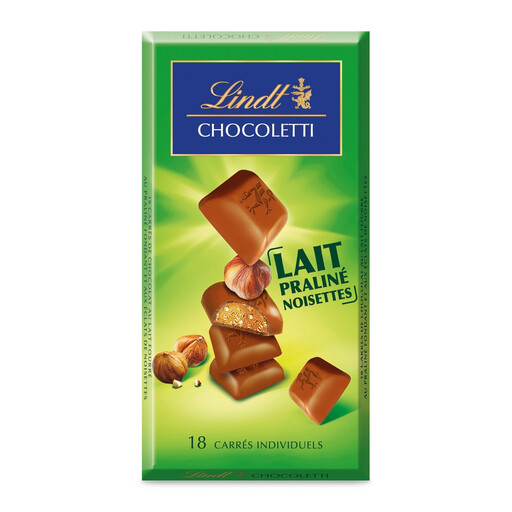 Image unavailable
This 100 g bar can be broken into squares for sharing with a small group, but it doesn’t come in individually wrapped portions. The information for this product lists hazelnuts, almonds, milk, soya and barley containing gluten, among other ingredients. Check the packaging before serving it to guests with these allergies.
 Image unavailable
The multipack contains three 100 g bars, so you can open more than one for sharing, but each bar needs to be broken up if you want to serve squares. The product information lists milk, hazelnuts and soya, and says it may contain other nuts and wheat. Check the exact packaging.
 Image unavailable
The multipack contains three separate 50 g bars, which you can share or break into pieces depending on how you plan to serve them. The allergen information for this product is inconsistent, particularly regarding milk and nuts, so check the exact label before buying or serving it.
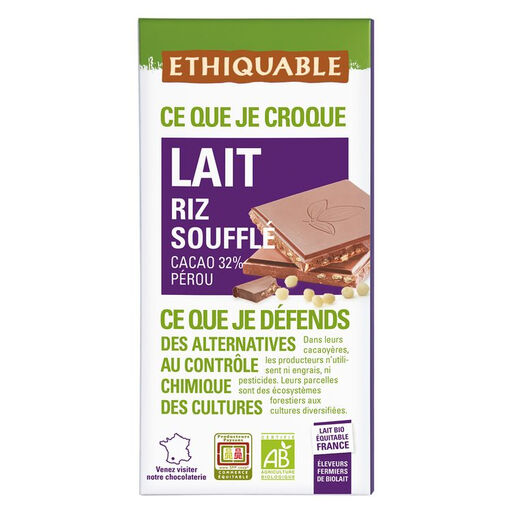 Image unavailable
This 100 g bar is better suited to serving in pieces than handing out pre-portioned servings. It contains milk and may contain traces of nuts and gluten. Check the exact packaging if these allergens are a concern for your guests.
No. The levy described by BOFiP-Impôts applies to non-alcoholic drinks, and a solid chocolate bar isn’t a drink. To compare chocolates, check the sugar content per 100 g instead.
No. According to Santé publique France, displaying it is voluntary. The DGCCRF, however, says that pre-packed foods must carry a nutrition declaration, which lets you check sugars and fat per 100 g, among other information.
Read the label for the exact product before serving it. The DGCCRF says allergenic ingredients must be highlighted. Depending on the recipe, also check any ‘may contain’ statements, particularly for nuts or wheat.
First, count the people you need to serve, then check how many items are in the pack. Carrefour France, for example, lists a Milka bag of eight mini bars weighing 200 g in total. A sharing bar is also suitable if you plan to serve squares.
You can break it into pieces, but it’s mainly intended for baking rather than for ready-to-serve portions. Its 170 g format is therefore best suited to making a birthday dessert.