For a ganache or cake, start by looking for milk chocolate bars labelled ‘dessert’ or ‘baking’. A plain bar intended for eating can work for a small recipe, but its smaller size alone doesn’t mean it’s right for your recipe. Add-ins such as hazelnuts or raisins will also affect the texture. Then check the weight, ingredients, allergens and nutritional information for the product you choose.
Who is this option for?
For baking a small quantity
You’re making dessert for one or two people and want to measure out the chocolate without opening a large bar. The weight you need depends on the amount specified in the recipe: Lindt, Carrefour and E.Leclerc offer 100 g bars, while E.Leclerc also lists a 170 g baking chocolate bar.
For a smooth-textured recipe
If your ganache or topping shouldn’t contain any pieces or filling, check the ingredients before choosing. Côte d’Or’s hazelnut and raisin bar shows why two milk chocolates aren’t interchangeable in the same recipe.
For comparing ingredients and allergens
Take into account the ingredients in your household or those specified in the recipe. Depending on the product, the ingredient lists we checked mention milk, soya, barley or nuts, among other things. Always read the packaging of the product you choose before using it.
What should you look for?
For a little home baking or a treat just for you, start with the recipe and the amount you need, then check the ingredients of the specific bar.
| Criteria |
What to check |
Who should consider it? |
| For baking |
Whether it’s labelled ‘dessert’ or ‘baking’, and whether it contains any add-ins. |
For a ganache or cake without unexpected pieces, choose a bar whose ingredients suit the recipe. Around 40% of consumers put this match with the recipe first. |
| Size |
The net weight, compared with the amount specified in the recipe. |
When cooking for one or two people, an oversized bar may leave you with leftover chocolate. Portion size and how much is left over are the main priorities for around 30% of consumers. |
| Ingredients and allergens |
The ingredients list, declared allergens and any ‘may contain’ warnings. |
If you need to avoid certain ingredients at home or in your baking, choose based on the exact product’s ingredients. Around 20% of consumers prioritise this compatibility first. |
| Nutritional information |
Sugars and fat per 100 g, and the Nutri-Score if shown. |
When comparing two bars for the same recipe, some people check the nutritional values before choosing. This is the main consideration for around 10% of consumers. |
Common mix-ups to avoid
-
Choosing a bar just because it’s small
A 100 g bar may be the right amount without being labelled as baking chocolate. Its name and ingredients also matter when you’re making a specific recipe.
Start with the recipe, then compare the ingredients and net weight of the bars you’re considering.
-
Overlooking add-ins and allergens
Hazelnuts, raisins or filling can change the result you’re after. Allergens also vary from one product to another.
Read the ingredients list and allergen information on the exact packaging, including any ‘may contain’ warnings.
-
Expecting every bar to have a Nutri-Score
According to Santé publique France, producers display the Nutri-Score on a voluntary basis. Its absence therefore doesn’t tell you anything conclusive about a product’s nutritional profile.
To compare products, check their nutritional information per 100 g. Use the Nutri-Score as an additional guide if it appears on the packaging.
Brands to know
Tablette d’Or (Marque Repère / E.Leclerc)
E.Leclerc lists a 170 g milk chocolate bar for desserts and baking, clearly intended for cooking.
- The product page gives access to the ingredients list and states that it’s made in France.
- The bar may be more than you need for a small recipe. Its product page lists 51 g of sugars per 100 g and a Nutri-Score of E.
Carrefour
Carrefour lists a 100 g Sélection bar and a 170 g Original ‘milk chocolate for desserts’ bar. Check which one suits your needs.
- The 100 g size may suit a recipe that calls for a small amount of chocolate.
- The 100 g Sélection bar states a minimum cocoa content of 32% and may contain traces of nuts and cereals containing gluten. Its size alone doesn’t make it a baking chocolate bar.
Lindt
Lindt offers 100 g milk chocolate bars, including L’Authentique Lait, for anyone looking for a smaller size.
- Lindt France states that L’Authentique Lait has a minimum cocoa content of 30%.
- The bars intended for eating mentioned here aren’t necessarily labelled as baking chocolate. Check the ingredients and allergens for each product.
Milka
A 200 g Milka milk chocolate bar is among the products reviewed. Compare this amount with what your recipe calls for.
- The product reviewed states a minimum cocoa content of 30%.
- Its ingredients include milk, hazelnuts and soya. The 200 g size may leave you with some chocolate after making a small recipe.
Côte d’Or
Côte d’Or’s 180 g bar with whole hazelnuts and raisins is for when you want a chocolate with add-ins, rather than a smooth base without pieces.
- The product listed by Joybuy contains 13% hazelnuts and 11% raisins. These ingredients may be a deliberate choice for a recipe that calls for them.
- It isn’t suitable as it is for a recipe where you want to avoid these add-ins or hazelnuts.
A plain 100 g bar on Joybuy
This 100 g milk chocolate bar is worth considering for a small recipe that calls for chocolate without specific add-ins. If your recipe calls for baking chocolate in particular, check the product’s description first.
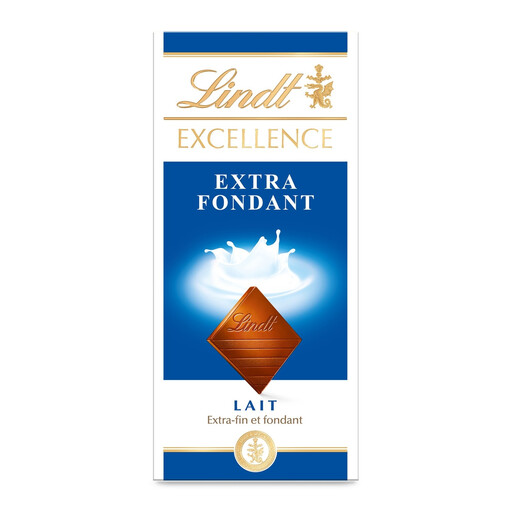 Image unavailable
LINDT Excellence Extra Creamy milk chocolate, 100 g
Compare the 100 g size with the amount you need for your small recipe. This bar isn’t labelled as dessert or baking chocolate, so check that its ingredients suit your recipe. The composition information for this product mentions milk, lactose, barley (gluten) and soya. Check the exact packaging if any of these ingredients are relevant to you.
View on Joybuy
Frequently asked questions
Does the soft drinks tax apply to milk chocolate bars in France?
No. The levy described by the Bulletin officiel des finances publiques applies to non-alcoholic drinks containing added sugars, subject to the conditions set out for those drinks. It doesn’t apply to chocolate bars. The sugar content is still worth checking on the product’s nutrition label.
Does a chocolate bar have to display a Nutri-Score?
No. Santé publique France explains that producers display it voluntarily. Whether or not there’s a logo, compare the nutritional values per 100 g of the bars you’re considering. Don’t assume a product is right for your recipe based on its score alone.
What should you check on the packaging before baking?
Check the product name, net weight, ingredients and allergens for the exact bar. If you’re comparing several products, look at their nutritional values too. The French consumer affairs ministry states that allergens must be highlighted and the proportion of cocoa must appear on the chocolate label.
Can you use a bar with hazelnuts or raisins in a ganache?
Choose one only if those add-ins are part of the result you’re after: it won’t have the same texture as a bar without pieces. The Côte d’Or product listed by Joybuy contains 13% hazelnuts and 11% raisins. Check its allergens before using it too.


