Adults baking with children
You’re looking for chocolate that you can break up and mix into a recipe. A bar labelled for baking is a more straightforward choice for this than an assortment intended as a gift.


If you’re melting chocolate or mixing it into a batter with children, start with a milk chocolate bar specifically intended for baking. Save the gift box for giving or sharing after your baking session. Before you buy, check the ingredients and allergens for the exact product, then compare the sugars per 100 g if that matters to you.
You’re looking for chocolate that you can break up and mix into a recipe. A bar labelled for baking is a more straightforward choice for this than an assortment intended as a gift.
Ingredients vary from one product to another. Before you start baking, check the milk content and, depending on the participants’ needs, look for soya, nuts and precautionary ‘may contain’ statements on each pack.
If the gift matters just as much as the recipe, choose separately between chocolate for baking and chocolate to present or share after your baking session.
| Criteria | What to check | Who is it for? |
|---|---|---|
| Allergens and ingredients | Read the ingredients list and any ‘may contain’ statements for the exact product, including those for inclusions. | If a child needs to avoid certain ingredients, the composition matters more than the flavour or presentation. Checking allergens is the top priority for around 34% of consumers with these requirements. |
| Suitable for baking | Look for a ‘dessert’ or ‘baking’ label, and check that the recipe works with the type of chocolate you’ve chosen. | For a cake where the chocolate needs to be melted or mixed in, I want to choose an ingredient designed for that purpose. Around 33% of consumers put how well a product suits the recipe at the heart of their choice. |
| Sugars and nutritional information | Compare the sugars and other nutritional values per 100 g, and check the ingredients list too. | If I’m choosing between several pre-packed products, using the same basis for comparison helps me compare their labels. This is the top priority for around 20% of consumers. |
| Recipe or gift | Decide whether the chocolate will mainly be mixed into the recipe or given as it is. | If I mainly want to present the chocolate after the baking session, the gift packaging matters more than how well it works in a batter. This is the main priority for around 13% of consumers. |
According to the DGCCRF, displaying the Nutri-Score is voluntary. Its absence alone isn’t enough to judge a chocolate’s nutritional profile.
Instead, compare the nutritional information per 100 g and the ingredients list. Use the Nutri-Score as an additional guide when it is displayed.
The products reviewed may also contain soya or nuts, or carry a precautionary statement about traces. A plain-looking bar isn’t enough to establish whether it’s suitable for the participants’ needs.
Ask about any dietary requirements before the baking session, and read the label on every product you’re considering.
The chocolates in an assortment may have different fillings and inclusions. Take their ingredients into account if your recipe calls for them to be melted.
For a recipe that needs milk chocolate to be mixed in, start with a bar intended for baking. Choose a separate gift box if you’d also like to give chocolate as a present.
Nestlé presents its DESSERT range as being for homemade desserts, including a Milk version.
Lindt distinguishes its DESSERT range for baking from its gift and tasting boxes.
Carrefour distinguishes its classic milk chocolate bars from Carrefour Original products labelled ‘Lait Dessert’.
The TABLETTE D’OR range includes a 170 g product called ‘Chocolat Dessert Pâtissier Au Lait’.
The family-sized milk chocolate bar reviewed is presented as a bar to eat as it is, rather than as baking chocolate.
The 200 g milk chocolate bar reviewed is intended for eating as it is, with no specific positioning as baking chocolate.
These two milk chocolate bars may suit recipes that work with a classic bar. If your recipe specifically calls for baking chocolate, check this requirement before choosing either one.
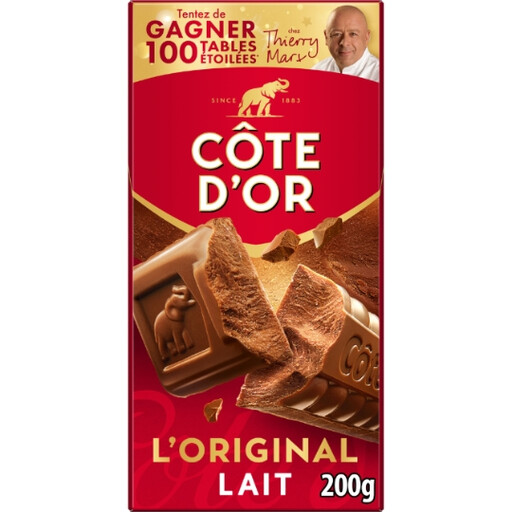 Image unavailable
Worth considering if your recipe works with a classic milk chocolate bar rather than one labelled for baking. This product contains milk and soya and may contain nuts; check the packaging before your baking session.
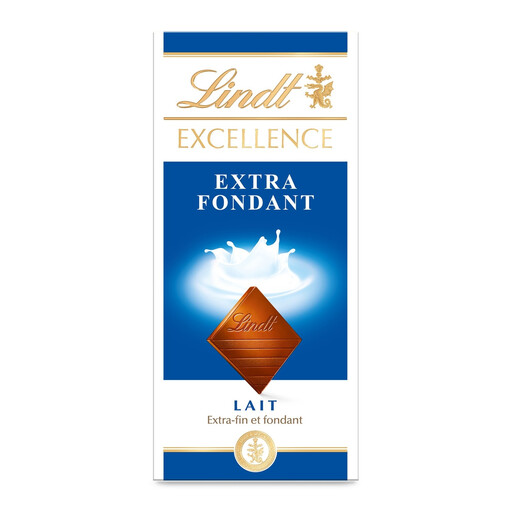 Image unavailable
Consider it for a recipe that works with a classic milk chocolate bar, and check that it’s suitable for your chosen recipe. This product contains milk, lactose, barley (gluten) and soya. Check the packaging for any precautionary statements about traces.
No. According to the DGCCRF, displaying the Nutri-Score is voluntary, while nutritional information is compulsory for most pre-packed foods. Even without a Nutri-Score, you can compare values such as sugars and fat per 100 g.
No, not to chocolate bars as such. Article 1613 ter of the French General Tax Code, published by Légifrance, applies to drinks and liquid preparations for drinks. To compare chocolates, check the declared sugars per 100 g instead.
No. Read the ingredients and any ‘may contain’ statements for the exact product. For example, the listing for the Côte d’Or family-sized bar reviewed says that it may contain nuts.
For a recipe that calls for melted chocolate, a bar specifically intended for baking is the most straightforward choice. If you’re considering a gift box, check the ingredients of its individual chocolates and make sure they suit both the recipe and the participants’ allergen requirements.