If you melt chocolate
For cookies, a cake, mousse or ganache, a bar labelled as baking chocolate gives you a clear starting point. Then check its weight and ingredients against the recipe.


If you need to weigh the milk chocolate before adding it to a cake, cookies or ganache, start with a bar specifically labelled for baking, such as Nestlé Dessert Lait or Tablette d’Or Dessert Pâtissier. A plain bar may also work if its ingredients suit the recipe. Save a gift box for giving, serving or decoration, and check the ingredients and usable quantity first.
For cookies, a cake, mousse or ganache, a bar labelled as baking chocolate gives you a clear starting point. Then check its weight and ingredients against the recipe.
A plain bar is easy to break up and weigh. If you choose one with biscuit or nuts instead, make sure the additions suit the recipe and everyone who’ll be eating it.
A box or selection is designed first and foremost for presentation or enjoying as it is. Some pieces may work as decoration, but their fillings and weight need to suit that specific use.
First decide whether the chocolate will be a key ingredient in your recipe or mainly for eating and presentation. The format, ingredients and any inclusions will help you narrow down your choice.
| What to consider | What to check | Who it matters to |
|---|---|---|
| Melting and measuring | Look for the words “for baking” or “dessert”, then check the net weight against the amount required by your recipe. | If I’m adding chocolate to a batter or ganache, I want to weigh it without having to sort through individual chocolates. Around 36% of consumers prioritise ease of melting and measuring. |
| Ingredients and allergens | Check the ingredients list and allergen information for the exact variety, including any “may contain” statements. | If someone eating it needs to avoid an ingredient, I need to know what’s in the chocolate before using it. Around 29% of consumers put ingredients and allergens first. |
| Taste and texture | Choose between a plain bar and one with inclusions. Only consider cocoa content when it’s stated for that specific product. | For cookies or decoration, I might deliberately choose extra pieces or added flavour, without introducing them into a smooth mixture. Taste and texture are the top priority for around 21% of consumers. |
| Presentation | Check what’s inside the gift box or selection, and how much chocolate can be used if some of it is intended for a recipe. | If the chocolate is mainly for giving or serving as it is, presentation matters more than how easily it can be mixed into a batter. Around 14% of consumers prioritise gift-giving. |
The contribution described by Légifrance applies to drinks and liquid preparations for drinks, not to the solid bars and gift boxes discussed here.
When choosing a bar, focus on its quantity, ingredients and suitability for your recipe.
Santé publique France says that displaying it is voluntary. Its absence alone isn’t enough to judge a product or whether it meets the relevant requirements.
If it appears on the packaging, read it alongside the nutritional information, ingredients list and allergen details, rather than using it as your only deciding factor.
Biscuit, nuts or a filling change what you’re adding to your mixture. The Côte d’Or Petit Beurre bar described by Auchan contains wheat, for example, so a bar with inclusions isn’t automatically a substitute for a plain one.
For a recipe that needs smooth chocolate without pieces, choose a product whose ingredients suit that use.
A selection may contain several different fillings, while your recipe calls for a specific amount of chocolate.
Check the contents and usable weight before you buy. If baking is your main reason for buying, a bar that you can weigh separately will be easier to measure.
The Dessert Lait bar is described as milk chocolate for baking.
E.Leclerc lists a 170 g Dessert Pâtissier Au Lait bar.
The range includes plain milk chocolate bars and varieties with inclusions.
Lindt France offers milk chocolate bars as well as boxes and gift sets for other occasions.
The classic 200 g milk chocolate bar can be broken up and weighed for a simple recipe.
The retailer offers Carrefour and Carrefour Sélection milk chocolate bars, including a pack of five 100 g bars under the Carrefour brand.
This combined ranking puts products explicitly described by Auchan and E.Leclerc as baking chocolate first, followed by two plain bars to consider according to their ingredients. The order reflects how suitable they are for the purpose of this guide, not an independent assessment of quality or melting performance.
| Rank | Product | Features | Why it’s included | Retailer |
|---|---|---|---|---|
| 1 | Nestlé Dessert Lait baking chocolate, pack of 2 × 170 g | Milk chocolate for baking; 39% cocoa and pure cocoa butter according to Auchan. | Auchan explicitly recommends this product for desserts. Its ranking reflects its stated purpose, not a measurement of how well it melts. | Auchan |
| 2 | Tablette d’Or Dessert Pâtissier Au Lait, 170 g | 170 g milk chocolate for desserts; ingredients are listed on the E.Leclerc product page. | E.Leclerc also identifies this product as baking chocolate. Check that its ingredients suit your recipe. | E.Leclerc |
| 3 | Milka milk chocolate, 200 g bar | 200 g milk chocolate bar. | Carrefour and Joybuy list this as a bar you can portion; it isn’t classified here as a dedicated baking chocolate. | Carrefour / Joybuy |
| 4 | Côte d’Or Lait Familial, 200 g bar | 200 g milk chocolate bar. | The Joybuy listing describes a plain bar that can be weighed. Before using it, check the ingredients and allergens for the variety you buy. | Joybuy |
These two milk chocolate bars can be portioned for a recipe, with some left over to enjoy as they are. If you specifically need a bar labelled for baking, check for that wording on the product you choose rather than assuming it based on the format.
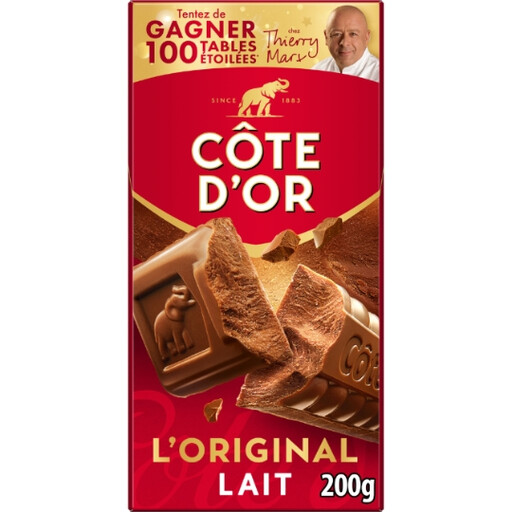 Image unavailable
A milk chocolate bar you can break up if you want to measure the amount you add to a recipe. It weighs 200 g. Check the allergens on the packaging, and don’t assume it will melt in a particular way.
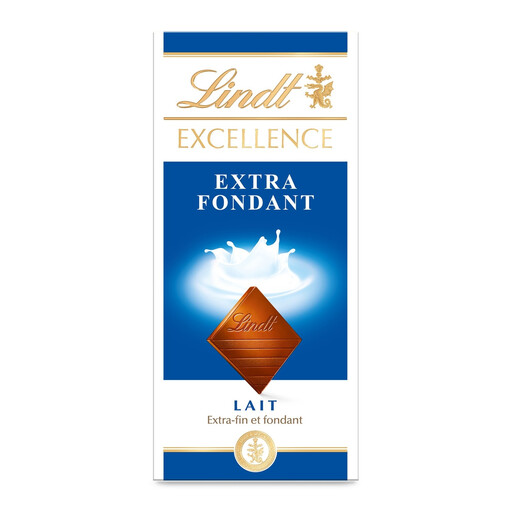 Image unavailable
A bar to consider if you want to use a small amount or save some for eating as it is. It weighs 100 g. Check the ingredients list and allergen information before using it in a recipe.
No. It doesn’t apply to a solid chocolate bar or gift box: the contribution described by Légifrance covers drinks and liquid preparations for drinks. For this choice, check the chocolate’s quantity and label instead.
No. According to Santé publique France, producers display it voluntarily. If it’s shown, you can read it alongside the other nutritional information, but don’t take it on its own as proof that the product is suitable for your recipe.
Check the net quantity, ingredients list and allergen information for the exact product, then compare them with what your recipe needs and who’ll be eating it. The EU labelling rules also cover nutrition declarations for the relevant pre-packed foods.
Only if the usable quantity and ingredients of the pieces suit your recipe. For a batter or ganache that needs chocolate without a filling, check each piece in the box. A baking chocolate or plain bar will be easier to weigh.