What should you check before buying?
First decide whether you want to portion the chocolate before setting off or share it while you’re there, then check the ingredients of the product you’ve chosen.
| Criterion |
What to check |
Who is this for? |
| Individual units |
The number of units and their weight, for example 3 × 100 g or 2 × 100 g. Don’t confuse this with the total weight. |
If I’m preparing several lunchboxes, I want to portion out the chocolate without opening the whole supply. Around 45% of consumers prioritise being able to portion it in advance. |
| Easy to share straight away |
Whether it comes in squares, bites or individual tubes, and how much there is to share in total. |
Just before boarding, I’d rather offer small pieces without breaking up a bar. This easy-to-share format comes first for around 33% of consumers. |
| Ingredients |
Sugars and fat per 100 g, followed by the ingredients and allergens for the specific product. |
When I’m sharing chocolate with other people, I need to know what’s in it before choosing a format. This is the top priority for around 22% of consumers. |
The DGCCRF says that nutrition information allows you to compare foods on a per-100 g basis. Then consider how much you plan to put in each lunchbox: the weight of a bar won’t necessarily be the same as a portion.
Milk chocolate formats available on Joybuy
These products suit two ways of enjoying a meal at the airport: preparing individual portions before you leave, or sharing chocolate while you’re there. The single bar featured at the end needs to be portioned out by hand.
 Image unavailable
Milka Alpine Milk 3 × 100 g
This pack of three bars lets you set aside one for each lunchbox or decide in advance how you’ll share them. Each bar weighs 100 g. Check the ingredients and allergens for the recipe before handing them out.
View on Joybuy
 Image unavailable
Toblerone Milk 3 × 50 g
The three bars give you individual 50 g portions to share out before your journey. If you’re sharing food with someone who has an allergy, check the pack for information about milk, almonds, soya and egg white in particular.
View on Joybuy
 Image unavailable
SMARTIES Hexatube milk chocolate, 6 × 34 g
The six tubes make it easy to hand out without breaking up a bar. They contain milk chocolate buttons with a sugary shell, not chocolate bars. Check the packaging for nutrition information and allergens before sharing.
View on Joybuy
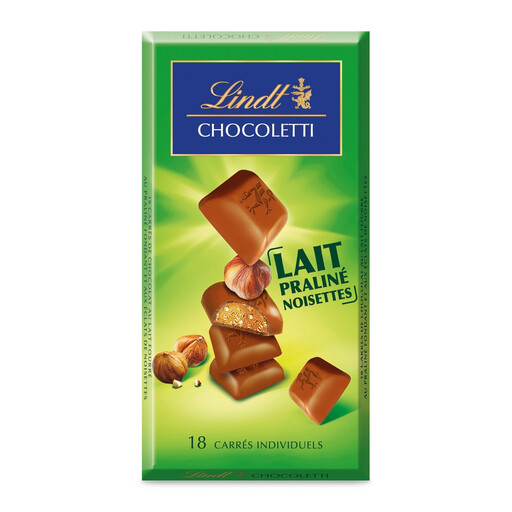 Image unavailable
Lindt Chocoletti milk chocolate and praline, 100 g
The squares are ideal for sharing there and then, with no need to cut them up. This is a single 100 g pack, not a multipack of bars for several lunchboxes. If you need to take allergens into account, check the ingredients for this praline recipe.
View on Joybuy
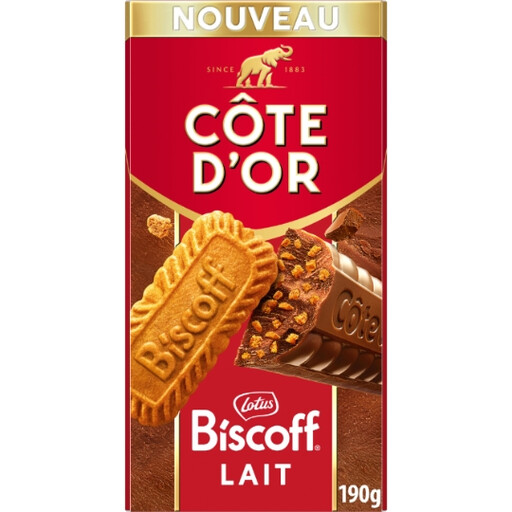 Image unavailable
CÔTE D’OR milk chocolate filled with Lotus Biscoff, 190 g
This single 190 g bar can be broken up to share straight away, but it doesn’t give you individual portions for several lunchboxes. The recipe includes wheat, milk and soya. Read the label before offering it to other people.
View on Joybuy
Frequently asked questions
Does the ‘soda tax’ apply to solid milk chocolate in France?
No. The tax scale from the French tax authorities mentioned here applies to non-alcoholic drinks, not solid chocolate. To choose between two chocolates, compare their sugar content per 100 g and how much you plan to share.
Does a pack of chocolate have to display Nutri-Score?
No. Displaying Nutri-Score is voluntary in France, according to the ministry responsible for the economy. Nutrition information is generally required for prepacked foods, so check the figures per 100 g even if Nutri-Score appears on the pack.
What should you check before taking chocolate in your hand luggage from a Paris airport?
Check your airline’s baggage rules and, for international travel, your destination’s rules on food. Paris Aéroport states that liquids in hand luggage are limited to 100 mL. This information alone doesn’t mean that all solid chocolate is permitted.
Which allergens should you check before sharing milk chocolate?
Read the allergen information on the specific pack rather than relying on the words ‘milk chocolate’. Depending on the products featured, ingredients or allergen information may include soya, nuts, barley, wheat or egg white.


