When choosing a mild chocolate powder to take to secondary school, first check the allergens in the exact recipe and in the drink you’ll add, as well as the school’s rules. If sugar is your priority, compare the nutritional information on a like-for-like basis: a powder labelled ‘less sugar’, a classic recipe and unsweetened cocoa are prepared differently and won’t necessarily taste the same.
Who is this option for?
Families managing an allergy or school rule
The powder’s recipe and any ‘may contain’ warnings, along with the drink used, need to suit the child and meet the school’s requirements. Ingredients vary between products: the Banania product information consulted lists wheat and barley, while other powders warn that they may contain milk or soya.
Families looking to manage sugar intake
Compare a powder labelled ‘less sugar’ using its nutritional information and preparation instructions. Unsweetened cocoa lets you decide separately whether to add sugar, but it needs to be prepared differently.
Secondary school pupils who prefer a mild taste
The cocoa percentage alone won’t tell you whether they’ll enjoy the drink. Before buying a large pack, make it using the drink and quantity you have in mind for school.
What should you check?
For a drink to take to secondary school, start with the school’s requirements and what can be prepared there. Then compare recipes based on what matters most to you.
| Consideration |
What to check |
Who is it for? |
| Allergens |
The ingredients and ‘may contain’ warnings on the exact product, followed by those for the drink you’ll add. |
If an allergy or school rule limits the ingredients, I need to choose a suitable recipe and drink. This would be the priority for around 29% of consumers. |
| Sugars |
The ‘of which sugars’ figure per 100 g of powder, then the amount used and the ingredients in the prepared drink. |
To manage the sugar in the drink, I want to compare recipes without confusing a mild taste with sugar content. Around 29% of consumers would put managing sugar first. |
| Taste |
The type of recipe, the recommended quantity and the taste when made with the drink you plan to use. |
I want a drink my secondary school pupil will enjoy, without assuming that the cocoa percentage predicts how mild it will taste. Taste would be the main consideration for around 24% of consumers. |
| Preparation |
Whether the drink can be made on site and, if it’s prepared in advance, how it should be stored. |
If I can’t keep a prepared drink under the required storage conditions, I need to be able to mix it later. Preparation and transport would come first for around 18% of consumers. |
Common pitfalls to avoid
-
Assuming ‘mild’ means ‘low in sugar’
A mild taste is a matter of personal preference. On its own, it doesn’t tell you how much sugar is in the prepared drink.
Compare the ‘of which sugars’ figure on a like-for-like basis, and take the amount of powder and any added ingredients into account.
-
Relying on the brand name to check allergens
Two recipes for hot chocolate can contain different ingredients and have different ‘may contain’ warnings. The Banania product information consulted lists cereals containing wheat and barley; other products warn that they may contain milk or soya.
Read the label on the pack you’re buying, and check the drink you’ll use separately.
-
Treating Nutri-Score as compulsory or as the whole answer
According to Santé publique France, displaying it is voluntary. The DGCCRF explains that, for most pre-packed foods, a nutrition declaration is required and includes values per 100 g or 100 ml.
If a Nutri-Score appears on the pack, check the product’s nutritional information, ingredients and allergens too.
-
Taking prepared milk-based drinks with you without planning how to store them
Dry powder and a drink that has already been mixed have different storage requirements. The Ministry of Agriculture points out that consumers also play a part in maintaining the cold chain when necessary.
Follow the storage instructions for the drink you’re using. If you can’t follow them during transport, consider making the drink just before it’s needed, provided you have what you need to prepare it on site.
Brands to know
Nesquik
The range includes a powder called ‘Less Sugar’, which is worth considering if you want to compare ready-flavoured chocolate drinks.
- For this product, the brand claims 35% less sugar per mug than the average children’s cocoa drink. The comparison is based on the stated preparation, not all Nesquik powders.
- The recipe consulted lists soya lecithin. Check the exact label and the drink you’ll add before choosing it.
Poulain
Grand Arôme is a classic chocolate powder. Carrefour’s product information states that it contains at least 32% cocoa.
- The stated cocoa percentage can be used to compare specific recipes.
- The product information says ‘may contain milk and soya’. The name Grand Arôme doesn’t tell you how mild the prepared drink will taste.
Banania
The 400 g recipe listed by Carrefour combines cocoa and cereals, so it isn’t a simple cocoa powder.
- The ingredients list helps you distinguish this recipe from unsweetened cocoa.
- It lists wheat and barley, among other ingredients, so don’t consider it a gluten-free option.
Carrefour Classic'
Carrefour offers own-brand chocolate powders in a range of pack sizes and recipes.
- The variety makes it easier to choose a pack size that suits your needs.
- Check the ingredients, allergens and nutritional values for the specific product rather than assuming them from the range name.
Auchan
The product information consulted for Auchan Intense powder states that it contains at least 32% cocoa.
- This figure describes the recipe in question and can be compared with other products whose ingredients are listed.
- The product information warns that it may contain traces of gluten, soya, nuts, milk and eggs. The cocoa percentage doesn’t guarantee a mild taste.
Marque Repère / E.Leclerc
The E.Leclerc catalogue features several chocolate powders, including Equador, a pure unsweetened cocoa product.
- With unsweetened cocoa, you can choose separately which ingredients to add when preparing the drink.
- Check the product information and packaging for the ingredients, allergens and preparation instructions for the product you choose.
A sachet option on Joybuy
This sachet-packed hot chocolate powder could be a handy way to carry the powder separately. Before choosing this format, check that you’ll be able to prepare it suitably at secondary school.
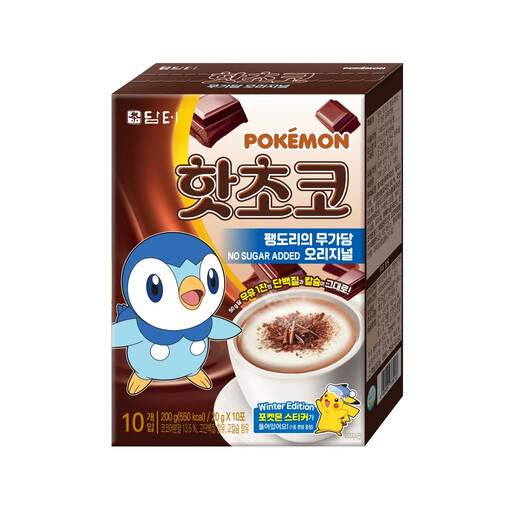 Image unavailable
DAMTUH Pokémon hot chocolate powder, 10 sachets of 20 g
The sachets let you carry the powder separately, provided a drink and something to mix it with are available at secondary school.
Before choosing this recipe for a child, check the ingredients, allergens, ‘of which sugars’ figure and recommended amount on the pack. The product name alone doesn’t tell you whether it will taste mild or what the prepared drink contains.
View on Joybuy
Frequently asked questions
Is Nutri-Score compulsory on chocolate powder in France?
No. According to Santé publique France, producers choose whether to display it. The DGCCRF explains that a nutrition declaration is required for most pre-packed foods, so the absence of Nutri-Score doesn’t remove the need to check the nutritional values and ingredients.
Does chocolate powder always contain milk?
No. Whether milk is included as an ingredient depends on the recipe, and this is different from a warning that traces may be present. Carrefour’s product information for Poulain Grand Arôme says ‘may contain milk and soya’. Also check the drink you’ll add to make the hot chocolate.
Can you make a hot chocolate with milk in the morning to take to secondary school?
Only if you can follow the storage instructions for the drink until it’s consumed. The Ministry of Agriculture stresses the importance of maintaining the cold chain when required. Otherwise, consider taking the dry powder and making the drink on site, if the necessary facilities are available.
How can you compare a value per 100 g of powder with a value per cup?
First compare the values per 100 g of powder, if both packs provide them. Then, to compare the prepared drinks, take into account the amount of powder and the ingredients included in each per-cup calculation. The DGCCRF explains that information per 100 g or 100 ml makes nutritional comparisons easier.


