Parents looking for a mild flavour
If your child prefers subtle flavours, plain varieties are a good place to start. Still, make sure you read the ingredients: plain fresh cheese and a garlic and herb variety won’t suit the same tastes.


If you’re looking for a mild flavour, start with plain varieties and check the ingredients. A small pot is handy for a portioned snack, while plain spreadable cheese is better suited to sandwiches and toast. On holiday, the storage instructions for the specific product matter just as much as its recipe: keep products chilled if required, and check the use-by date and any instructions for after opening.
If your child prefers subtle flavours, plain varieties are a good place to start. Still, make sure you read the ingredients: plain fresh cheese and a garlic and herb variety won’t suit the same tastes.
Whether you’re shopping, travelling or sitting down to eat, you need to be able to follow the storage instructions for each product. For chilled products, Anses recommends using an insulated bag and keeping the journey as short as possible.
You may be looking for something to spread on the children’s toast, as well as other ingredients for snacks or baking. Keeping these uses separate helps you avoid mistaking mascarpone or a seasoned variety for a small pot of plain fresh cheese.
First choose a recipe and format to suit how you plan to use it. Then make sure you can follow the storage instructions on the pack during your journey and after opening.
| What to consider | What to check | Who it matters to |
|---|---|---|
| Storage during the journey | Storage instructions, use-by date and whether chilled products can be transported in a cool bag. | If the cheese needs to wait between shopping and mealtime, I want to be able to follow the instructions on the pack. Around 40% of consumers would put this concern first. |
| Flavour and ingredients | Plain or seasoned recipe; ingredients and allergens, particularly milk. | If a child doesn’t like garlic or herbs, I first look for a mild flavour. Around 30% of consumers would consider this a priority. |
| Portions and leftovers | Number and size of pots; storage instructions after opening. | When children eat at different times, I prefer to open only the amount we need. Portion control would be a priority for around 20% of consumers. |
| Cooking and baking | Whether the product is for toast, a seasoned recipe or a dessert; nutritional information in the units shown. | If I’m making a particular recipe, I choose a texture and seasoning to suit the dish rather than looking for something to serve as it is. Around 10% of consumers would put this use first. |
Different formats aren’t automatically interchangeable: individual pots make portioning easier, plain spreadable cheese is for toast, while garlic and herb varieties or mascarpone are suited to other meals. Whatever the format, always follow the storage instructions on its own label.
The Boursin Garlic and Fine Herbs variety listed by Carrefour contains garlic, herbs, salt and pepper, among other ingredients. It may not suit someone looking for a neutral flavour.
For a mild flavour, start with a plain variety and compare the ingredients of the specific product.
A product that needs to be refrigerated must be kept in the conditions stated on the pack, including while you’re travelling. Anses advises buying chilled food towards the end of your shop, using an insulated bag and keeping the journey as short as possible.
Before heading out, check the pack instructions and only take a chilled product if you can keep it cool until it’s served.
The Galbani mascarpone listed by Carrefour is intended for recipes such as tiramisù, so it’s used differently from a small pot of plain fresh cheese served as a snack.
Choose mascarpone for recipes that call for it. For a snack or toast, look for products designed for that use instead.
The Carrefour listings describe different recipes for Carrefour Classic’ plain, Philadelphia Plain and Boursin Garlic and Fine Herbs. So the category shown on the shelf isn’t enough to tell you what’s in a product.
Check the label of the product you choose, including allergens, the type of milk if this matters for your child, the use-by date and instructions for after opening.
These examples describe specific products, not every product from each brand. The format and ingredients are still key to making the right choice.
Carrefour’s listing features plain fresh cheese with 3.8% fat, in twelve 60 g pots, as part of its range of portioned products.
The plain spreadable cheese listed by Carrefour comes in a 500 g tub for toast and cold dishes.
The Garlic and Fine Herbs variety listed by Carrefour is a seasoned spreadable cheese, intended in particular for snacks and cooking.
The mascarpone listed by Carrefour is an ingredient for desserts and cooking, particularly tiramisù.
E.Leclerc lists Les Croisés plain whipped cheese in a 150 g tub among its spreadable cheeses.
This product is a plain-flavoured snack for a child aged 6 months and over. It’s a fromage blanc dairy dessert in pots, not a traditional spreadable fresh cheese, so check that it’s right for the way you plan to use it.
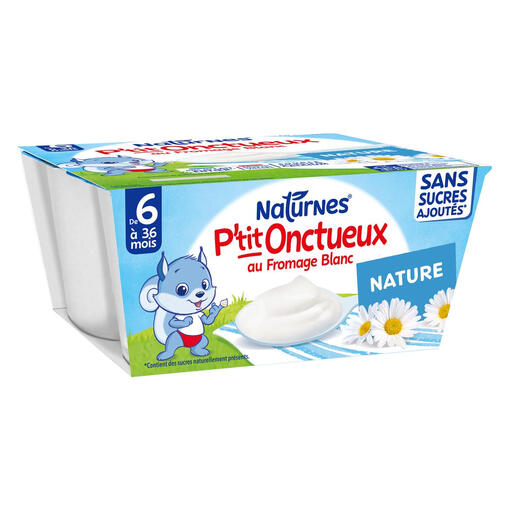 Image unavailable
For a portioned snack from 6 months, this plain fromage blanc dairy dessert comes in four 90 g pots. It isn’t a substitute for spreadable fresh cheese.
When travelling, follow the instructions for this specific product: its description says to store it at room temperature before opening, then refrigerate it and consume within 48 hours of opening. Check the date on the pack and make sure it contains milk if your child has an allergy.
Start with a plain variety and read the ingredients rather than relying on the aisle label alone. For example, Carrefour lists plain Carrefour Classic’ fresh cheese, while its Boursin Garlic and Fine Herbs variety contains seasonings to suit different tastes.
Buy it towards the end of your shop, carry it in an insulated bag and keep the journey short, following Anses advice for chilled food. Put it in the fridge as soon as possible, and follow its use-by date and instructions for after opening.
Check the label to see whether the product is made with raw or pasteurised milk: the term “fresh cheese” doesn’t tell you which. Anses highlights the microbiological risks of raw-milk dairy products and the potentially serious effects of some food-borne infections in young children.
Not for every use: plain spreadable cheese is suitable for toast, while small pots make serving portions easier. Compare the ingredients and nutritional information for the specific products too, as their recipes and formats may differ.