Parents looking for a neutral taste
If garlic, herbs or pepper would not suit the meal you have planned, plain fresh cheese is a better starting point than a flavoured recipe.


For a children’s dinner where a mild taste is the top priority, start by comparing unflavoured plain fresh cheeses. If you need a cheese to spread on toast, a plain spreadable cheese is better suited to the job; mozzarella is more appropriate for a dish where it will be sliced or melted. In every case, check the ingredients, allergens and storage instructions for the product you choose.
If garlic, herbs or pepper would not suit the meal you have planned, plain fresh cheese is a better starting point than a flavoured recipe.
For spreading on bread or a wrap, the texture of a plain spreadable cheese may matter more than whether it comes in a pot. Still, compare its ingredients and nutritional values with those of the fresh cheese you are considering.
If a child or guest needs to avoid milk or another allergen, the word ‘mild’ is not enough to guide your choice. Read the ingredients and allergen information on the packaging of the product you plan to serve.
First decide how you will serve the cheese: in a pot, on toast or in a dish. Then compare products suited to that use, without assuming that ‘plain’ tells you how much salt or fat they contain.
| What to consider | What to check | Who is it for? |
|---|---|---|
| Taste and flavouring | Look for the word ‘plain’ and check the ingredients list, particularly for garlic, herbs or pepper. | If I want a subtle flavour at dinner, I prefer to avoid seasoned recipes. Around 31% of the consumers concerned would put this first. |
| Texture and serving style | Check whether it comes in a pot, has a spreadable texture or is made to be sliced and melted. | For making sandwiches, I want something spreadable rather than mozzarella that needs slicing. This would be the priority for around 25% of the consumers concerned. |
| Nutritional information | Compare salt, fat and saturated fat per 100 g across products suited to the same use. | When several plain options would work for the meal, I want to compare their nutritional values rather than rely on the name alone. Around 19% of the consumers concerned would make this their first choice. |
| Allergens and storage | Check the ingredients and declared allergens, the use-by date and the storage instructions on the pack. | If a child needs to avoid an allergen, I check the specific product before serving it and make sure it has been stored correctly. This would be the top priority for around 25% of the consumers concerned. |
A subtle taste does not change the ingredients: the dairy products reviewed contain milk. The Boursin garlic and fine herbs recipe examined also warns that it may contain traces of nuts.
If an allergy is a concern at mealtimes, check the information on the pack you are serving. Anses advises that substances that can cause allergies or intolerances must be highlighted in the ingredients list.
‘Plain’ does not mean the texture or nutritional values will be the same. The Auchan product listing for Philadelphia Original gives 21 g of fat and 0.75 g of salt per 100 g. This spreadable cheese should not be chosen on the word ‘plain’ alone.
First shortlist products that suit the recipe, then compare their nutritional information per 100 g.
The Boursin recipe reviewed contains garlic, fine herbs and pepper, among other ingredients. It is suited to a craving for seasoned cheese, not to a search for an unflavoured option.
If a mild taste is your top priority, read the product name and ingredients before choosing a flavoured version.
An individual pot still needs to be stored correctly, and its use-by date matters when you serve it.
Follow the storage instructions on the packaging and do not serve the product after its use-by date.
These examples relate to specific products. Their ingredients, pack sizes and nutritional values do not necessarily apply to every recipe from each brand.
Plain fresh cheeses in pots, for serving at the table or using in a cold dish.
Carrefour Classic’ plain fresh cheese comes in a pack of twelve 60 g pots.
A plain cream cheese to consider when a spreadable texture is essential.
The garlic and fine herbs product reviewed is a seasoned spreadable cheese.
Maxi mozzarella is a different type of cheese, made for slicing or using in a dish.
The Nos Régions ont du Talent range includes faisselle, which can be served plain or used in a recipe.
This plain product in individual pots is better suited to a dairy dessert for a young child than to cheese for spreading on toast or using in a dinner dish. Whether it is right for you depends on the meal you are preparing.
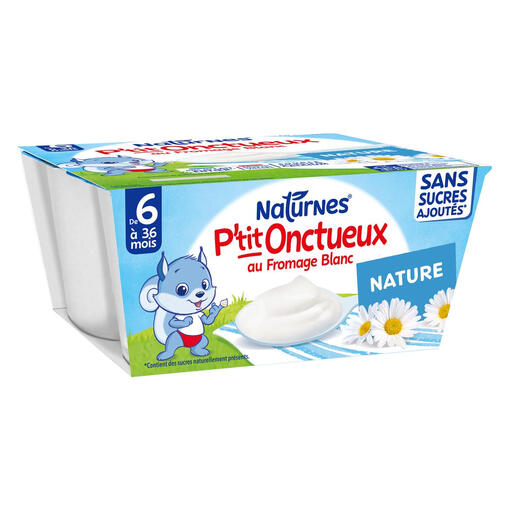 Image unavailable
Consider it as a plain dessert for a child aged 6 months and over, rather than as a spreadable cheese for dinner.
Four 90 g pots. Contains milk. Once opened, the product description says to keep it in the fridge and use within 48 hours.
No. A mild taste does not mean that a product is milk-free. The dairy products reviewed contain milk. Check the ingredients on the product you are actually serving and, if your child has a known allergy, follow the advice of the healthcare professional supporting them.
No: ‘plain’ does not determine how much fat or salt a product contains. The Auchan product listing for Philadelphia Original gives 21 g of fat and 0.75 g of salt per 100 g. When choosing between products suited to the same meal, compare their nutrition tables per 100 g.
Follow the temperature and storage instructions on each pack, and check its use-by date. Instructions can vary by product, so also check what to do after opening.
Faisselle can work in a bowl or in a recipe, but its wetter texture and the fact it may need draining set it apart from a spreadable cheese. If sandwiches are its main purpose, compare the textures of the products you are considering first.