Someone who reheats meals
You live in a studio flat or use a second home and mainly want to reheat a portion or defrost food without using lots of kitchenware. UFC-Que Choisir lists these uses among the factors to consider when choosing a microwave.


A solo microwave may be all you need to reheat portions and defrost food. Choose a model with a grill if you also want to brown dishes, or a combination microwave if you genuinely plan to cook meals using oven-style settings. UFC-Que Choisir distinguishes between these uses. Before you choose, check the external dimensions, the usable space for your dishes and the clearances required in the model’s manual.
You live in a studio flat or use a second home and mainly want to reheat a portion or defrost food without using lots of kitchenware. UFC-Que Choisir lists these uses among the factors to consider when choosing a microwave.
You also reheat dishes you’d like to brown on top, so having a grill matters more than the number of programmes.
You genuinely want to cook dishes as you would in an oven, and need to compare a combination microwave, mini oven or air fryer based on the meals you plan to make and the space available.
First decide which cooking modes you’ll use, then check that the appliance and your dishes will fit in the space you have in mind.
Choose this if: you reheat leftovers, defrost food or prepare microwave-friendly meals, and don’t need to brown your dishes.
Bear in mind: it doesn’t add a grill or fan-assisted cooking.
Choose this if: you also want to gratinate or brown dishes regularly.
Bear in mind: a grill doesn’t mean the appliance has an oven function; check the cooking modes available on each model.
Choose this if: you don’t have a usable oven and plan to cook dishes that need fan-assisted heat, as well as reheat food.
Bear in mind: modes and accessories vary by model. Check that the features suit the dishes you plan to make and the space available.
Choose this if: your meals mainly need hot-air cooking, browning or oven-style cooking.
Bear in mind: these appliances don’t offer a microwave function. Compare their usable capacity and footprint with your reheating and defrosting needs.
| What matters to you | What to check before buying | Who is this most relevant to? |
|---|---|---|
| Reheating and defrosting | Check the defrost function, controls and microwave output power; don’t confuse this with the appliance’s electrical input power. | If I mainly reheat portions and defrost food without needing to brown anything, a solo model may suit my needs. Around 31% of consumers prioritise reheating and defrosting. |
| Space you actually need | Measure the width, height and depth. Also check the turntable diameter or usable dimensions, the door opening and the clearances specified in the manual. | In a studio flat, I want to be able to fit the appliance and use my dishes without taking up unnecessary worktop space. Around 25% of consumers prioritise the space available. |
| Browning dishes | Check whether it has a grill and which modes are available; don’t assume that an appliance with a grill also has an oven function. | If I regularly make dishes that I want to gratinate or brown, a grill meets a different need from simply reheating food. Around 19% of consumers prioritise browning. |
| Oven-style cooking | Check that the model has the cooking mode you need, as well as enough usable space for your dishes and room for the appliance itself. | Without a usable oven, I need to make sure that the combination microwave or other cooking appliance I choose is suitable for the dishes I actually plan to make. Around 13% of consumers prioritise oven-style cooking. |
| Easy cleaning and less washing-up | Check how easy it is to access the cavity, the turntable and the care instructions. Also make sure your container is suitable for the cooking mode you use. | If I want to cut down on washing-up and clean up easily after meals, access to the cavity and the care instructions matter when I’m choosing. Around 12% of consumers put easy maintenance at the top of their list. |
The internal volume alone won’t tell you the turntable diameter, usable height or how much worktop space the appliance takes up.
Measure the space you have and check the dimensions of the dishes you usually use, as well as the clearances specified in the manual.
A grill is for browning, while fan-assisted heat is for a different kind of cooking. Extra features are only useful if they suit the meals you make.
Before choosing an extra cooking mode, make a list of the dishes you actually plan to cook and check the features of the model you’re considering.
Suitability depends on the instructions for the container and the food, including guidance on power and cooking time.
Read the instructions on the container and packaging. Don’t reuse single-use containers or use metal cookware that isn’t suitable for microwave use.
The MS23K3513AK/EF is an example of a 23 L solo microwave with a defrost function.
The freestanding MWP 253 B is an example of a microwave with a grill for browning dishes.
The MH6382NW and MJ3965ACS are examples of a model with a grill and a combination microwave advertised with an oven function, respectively.
The TO 2068 mini oven is another option for fan-assisted cooking when a microwave function isn’t a priority.
The Airfryer HD9200/60 is an example of a hot-air cooking option for meals best suited to this method.
This selection includes solo, grill and combination microwaves to help you compare useful features for reheating, defrosting and browning in a small home. Check each model’s dimensions and clearance requirements against the space you have available.
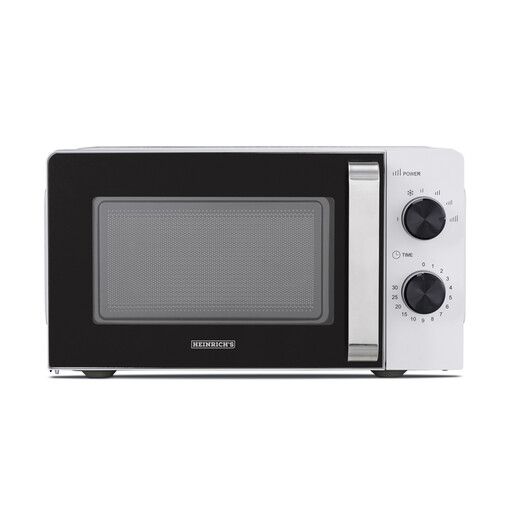 Image unavailable
Worth considering for reheating meals or defrosting food in a small home.
20 L capacity, 700 W power, six power levels and a 9.6-inch turntable. Stated external dimensions: 44,6 × 36,3 × 24,3 cm.
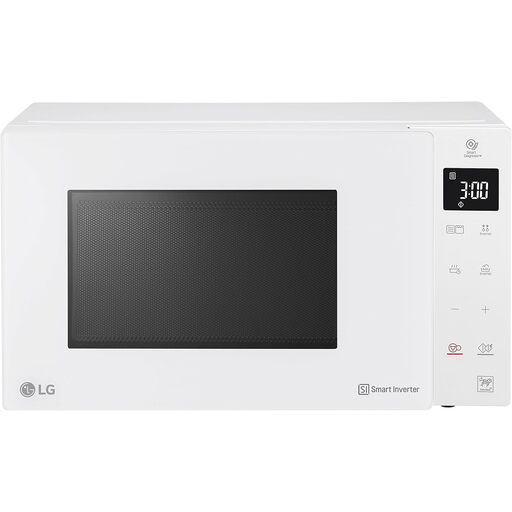 Image unavailable
Worth considering if you want to reheat and defrost food, with a grill for browning dishes.
25 L capacity, 1 000 W power and quartz grill. Stated dimensions: 38,8 × 47,6 × 27,2 cm.
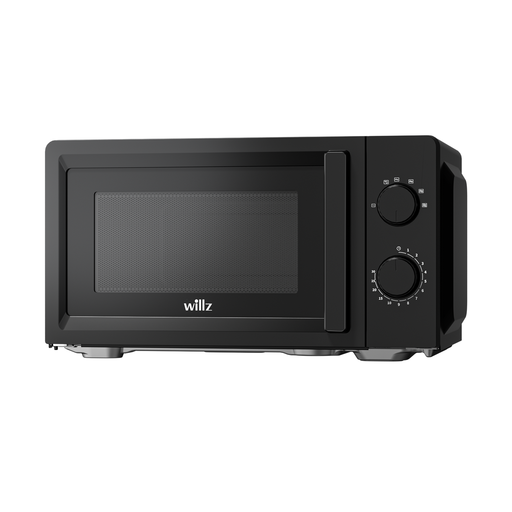 Image unavailable
Worth considering for reheating meals and drinks in a small space.
20 L capacity; the product title describes a compact design and simple controls.
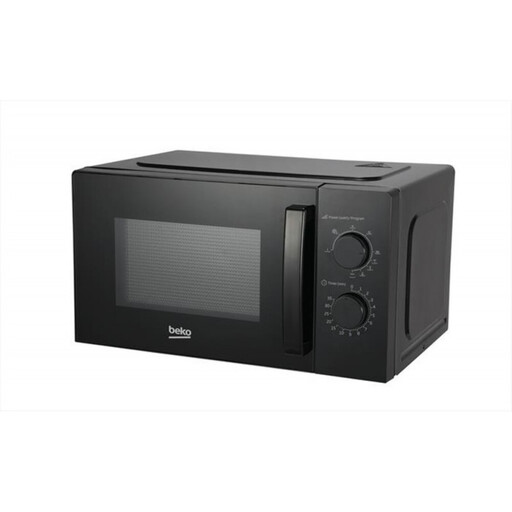 Image unavailable
Worth considering for reheating or defrosting food, with the added option of browning.
20 L capacity, 700 W power and a 245 mm turntable. The product description says to leave at least 10 cm of clear space at the sides and back for ventilation.
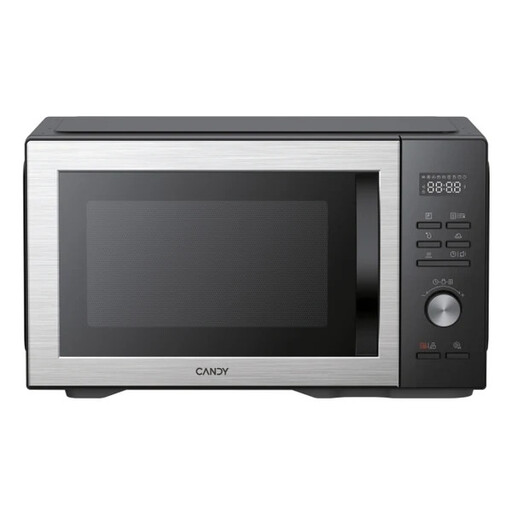 Image unavailable
Worth considering if you want to keep the microwave function and add other cooking modes.
29 L capacity, 1 000 W grill and steam function. Stated external dimensions: 52,3 × 44,9 × 30,0 cm.
No: capacity alone won’t tell you whether your dishes will fit inside. Also measure the appliance’s external dimensions and check the turntable diameter or the cavity’s usable dimensions, along with the clearances specified in the manual. Samsung gives 10 cm at the back and sides and 20 cm above as general guidance, while noting that requirements vary by model.
No: check the instructions for the container and food, especially those covering power and cooking time, and don’t reuse a single-use container. Anses says that reheating at too high a power can increase the migration of substances from some packaging. Being suitable for food contact doesn’t mean a container is suitable for every heating method.
Place it on a flat surface without blocking its ventilation openings, and follow the clearances specified in the manual. For cleaning the cavity and turntable, follow the instructions for your model. Whirlpool’s installation advice is the manufacturer’s guidance, not a universal clearance that applies to every appliance.
For goods bought by a private individual from a professional seller, the statutory legal guarantee of conformity is mandatory. The DGCCRF says you have two years from delivery of the goods to make a claim. Any commercial guarantee is in addition to the statutory guarantee and doesn’t replace it.
A used microwave must be disposed of through electrical and electronic equipment collection. The Ministry for the Ecological Transition states that retailers can take back an old appliance on a “one-for-one” basis when you buy a new one of the same type. If you want to return it without making a purchase, check the arrangements at your collection point.