For everyday reheating
You mainly prepare portions, reheat meals and defrost food. An appliance that is easy to install and operate matters more to you than extra cooking modes.


In a studio flat, a solo microwave is best suited to reheating and defrosting; choose a model with a grill if you regularly want to brown or crisp the top of a dish. A combination microwave with convection can handle some of the cooking you would usually do in an oven, provided its dimensions, the clearances specified in the manual and its power consumption are suitable for your home. Having these functions does not, by itself, guarantee even cooking.
You mainly prepare portions, reheat meals and defrost food. An appliance that is easy to install and operate matters more to you than extra cooking modes.
You use your microwave for everyday tasks, but would also like to brown the tops of gratins or toasties. A grill is ideal for this, but does not provide convection cooking.
You regularly make dishes that need a cooking method similar to an oven. A combination microwave may be worth considering, once you have checked the space it will actually take up, its ventilation requirements and its electrical needs.
UFC-Que Choisir distinguishes between solo microwaves, models with a grill and combination microwaves with convection. Start with the meals you prepare, then check that the appliance can be installed in your studio flat.
Best for: if you mainly reheat and defrost portions.
Trade-off: it does not offer the browning of a grill or convection cooking.
Best for: if you regularly brown or crisp dishes as well as reheat food.
Trade-off: a grill cannot replace convection for dishes that need it.
Best for: if you plan to regularly make pizzas, gratins or small cakes without a traditional oven.
Trade-off: check its size and power consumption, then look into the cooking results for the specific model.
| Your priority | What to check | Consumers concerned |
|---|---|---|
| Cooking without an oven | Whether it has a grill and convection; suitable temperatures and preheating for the dishes you plan to make. | If I often make dishes that need more than reheating, I want to be able to do some of the cooking I would usually do in an oven. Around 36% of consumers make this their top priority. |
| Installing the appliance | External dimensions, door clearance and the clearances specified in the manual for that model. | With a narrow worktop, I need to be able to position and ventilate the appliance without blocking access to it. This constraint comes before extra features for around 29% of consumers. |
| Reheating and defrosting | Test results for even reheating and defrosting; controls suited to the portions you prepare. | For everyday meals, I’m mainly looking for convenient reheating and easy-to-set defrosting. This is the top priority for around 21% of consumers. |
| Browning dishes | Whether it has a grill, compatible accessories and the model’s browning results. | I want to brown the tops of simple dishes without making convection cooking my main use. Around 14% of consumers prioritise this. |
The wattage delivered in microwave mode does not indicate the appliance’s maximum electricity consumption. Samsung, for example, states that its MC28M6035CK/EF delivers 900 W and has a maximum power consumption of 2,900 W.
Before installation, check the maximum power consumption and connection requirements for the model you have chosen.
The interior capacity does not tell you how much space the appliance will take up on your worktop. Whirlpool, for example, lists the MWSC833W as 54 cm deep and weighing 25.95 kg.
Measure your furniture and the door clearance, then allow for the ventilation clearances specified in the model’s manual.
According to UFC-Que Choisir, a grill is for browning dishes, while combination microwaves add convection cooking. These modes are for different needs from simple reheating.
Think about the meals you actually prepare: if oven-style cooking is rare, compare solo models and those with a grill first.
UFC-Que Choisir’s testing protocol assesses even reheating, browning, defrosting and ease of cleaning separately. So the presence of a particular mode is not enough to judge how well it performs.
If one of these criteria is essential to you, look for tests of the exact model you’re considering.
These models are examples of combination microwave set-ups; their features may not apply to other models from the same brands.
Samsung describes the MC28M6035CK/EF as a 28 L combination microwave with a grill and convection.
According to Whirlpool, the MWSC833W combines microwave, grill and forced-air cooking in a 33 L cavity.
Sharp Consumer describes the R-970W as a 40 L combination microwave with microwave, grill and convection functions.
These models suit anyone looking for a microwave with a grill for reheating and browning, or a convection combination microwave for some oven-style cooking when there is no oven. Compare their size and the instructions in their manuals with the space you have available.
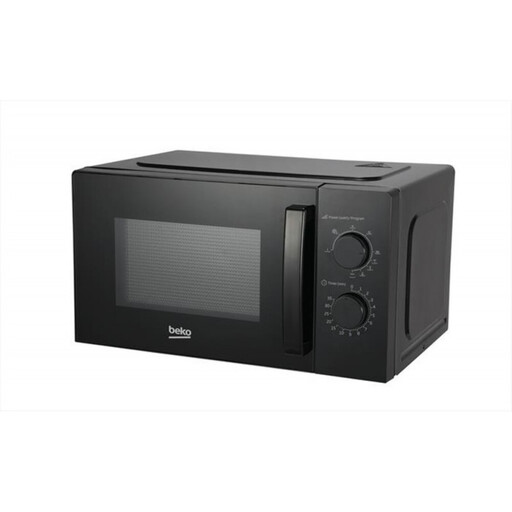 Image unavailable
Worth considering if you mainly reheat meals, but would also like to brown or crisp dishes from time to time.
Stated capacity: 20 L; stated power: 700 W. Check the clearances and electrical requirements in the manual before installation.
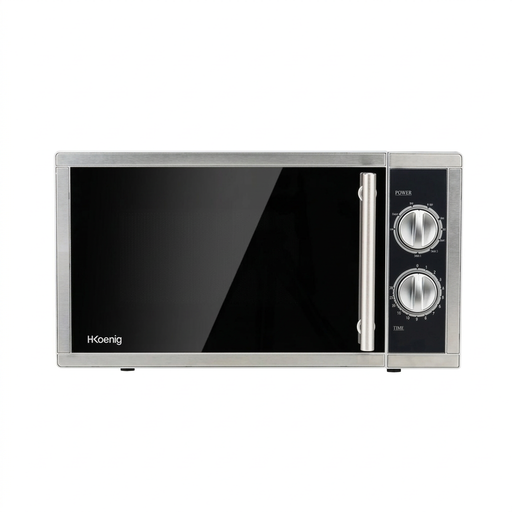 Image unavailable
Worth considering if you want to reheat and defrost, as well as use a grill for simple dishes.
Stated capacity: 23 L; stated power: 900 W. Check the manual for the space to leave around the appliance and its electrical requirements when using combination mode.
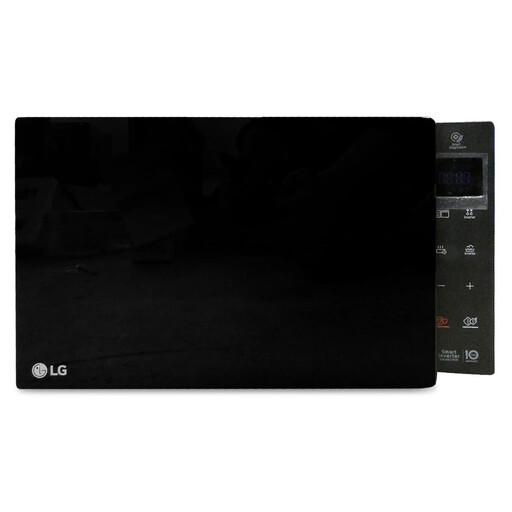 Image unavailable
This model with a grill is suited to reheating, defrosting and occasional browning.
Stated capacity: 25 L. If microwave power is important to your choice, confirm the exact figure; also check the ventilation and connection requirements for this model.
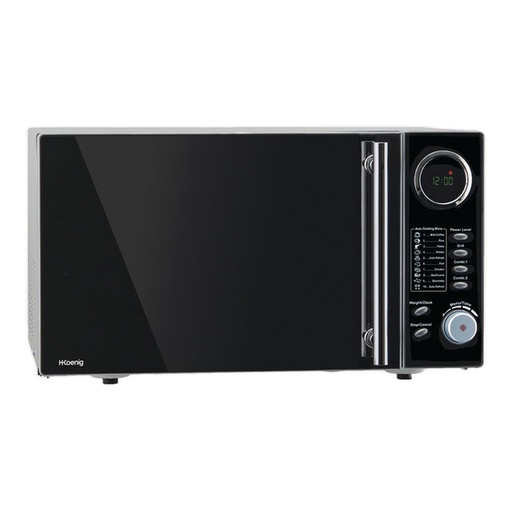 Image unavailable
Worth comparing if you’re looking for a microwave with a grill for everyday meals rather than convection cooking.
Stated capacity: 25 L. Microwave power is listed as 1,000 W in the product title and 900 W in its description, so confirm the figure for this model before buying.
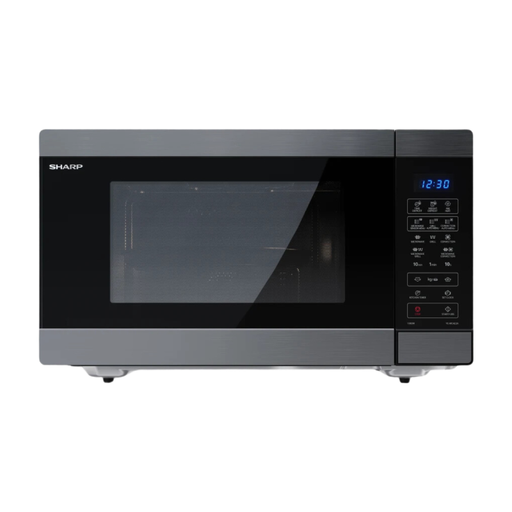 Image unavailable
Worth considering if you need cooking functions beyond reheating and browning, and have a suitable space for it.
Stated capacity: 42 L. Measure the available space and check the manual for clearance and connection requirements; cooking modes alone cannot predict how your dishes will turn out.
It can handle some oven-style cooking, including certain dishes cooked using convection and browning under the grill. UFC-Que Choisir assesses preheating, temperature accuracy, evenness and browning separately. If you plan to cook regularly using these modes, look at the test results for the model you’re considering.
Follow the clearance requirements in the manual for the model you’re installing. For example, for the SCMWN20SMW, Schneider Consumer recommends leaving 30 cm clear above the appliance and 20 cm between it and each wall. These measurements do not automatically apply to other models.
No: the power delivered in microwave mode and the electrical power consumed are two different figures. Samsung states that the MC28M6035CK/EF delivers 900 W and consumes up to 2,900 W. Check the figures and connection requirements for the model you choose.
Check how easy it is to reach the cavity and controls, then look for tests that specifically assess how easy the exact model is to clean. UFC-Que Choisir includes this in its testing protocol; a feature that a brand says makes cleaning easier is no substitute for an independent assessment.