For reheating and defrosting in student accommodation, a solo microwave is the most straightforward choice. Choose a grill model if you regularly brown dishes, or a combination microwave with convection if you also plan to cook often as you would in an oven. Whatever you choose, measure the space and allow for the clearances specified in the model’s instructions.
Which option is right for you?
A student with very little space
You mainly want to reheat and defrost, but the appliance still needs the clearances specified in its instructions. If you live in student accommodation, check what’s already provided too: Crous de Lyon says that the appliances supplied vary between residences.
Someone who likes to brown dishes
You want to brown the top of lasagne, toasted sandwiches or gratins. A model with a grill is worth comparing with a solo model, provided you’ll actually use the feature.
A student without access to an oven
You plan to cook meals regularly, rather than just reheat prepared food. Convection cooking may suit your needs, but check how much space you’ll need before choosing a combination model.
Which features should you prioritise?
Solo microwave
Choose this if: you mainly reheat and defrost, and don’t need to brown your dishes.
The trade-off: it doesn’t offer a grill or convection cooking.
Grill microwave
Choose this if: a browned finish is important for your meals on a regular basis.
The trade-off: a grill alone doesn’t offer the convection cooking found in a combination model.
Combination microwave with convection
Choose this if: you plan to cook regularly and don’t have access to an oven.
The trade-off: check the model’s size rather than relying on the word ‘combination’ alone.
| Feature | What to check | What consumers are looking for |
|---|
| Space and installation |
Measure the appliance, how far its door opens and the clearance required in its instructions, including above and behind it. |
When worktop space is limited, I need to be able to install the appliance with the required clearances; around 42% of consumers would put this first. |
| Reheating and defrosting |
Compare the capacity, turntable diameter and defrost functions with the dishes you use. |
For leftovers and frozen portions, I prioritise these everyday uses over extra modes; around 33% of consumers would put them first. |
| Dishes to brown |
Check that it has a grill and read the instructions for using its accessories and suitable containers. |
If I often make gratins, I want to be able to brown the top; around 17% of consumers would make this their main requirement. |
| Cooking without an oven |
Check that it has convection or fan-assisted cooking, then look at the model’s dimensions and settings. |
Without access to an oven, I want to regularly cook meals rather than just reheat prepared food; around 8% of consumers would put this need first. |
Mistakes to avoid
-
Measuring only the space the microwave takes up on the worktop
A freestanding microwave may fit on the surface but not have enough room for ventilation. The instructions for two 20 L models from Schneider Consumer specify different clearances.
Measure the available height, space at the sides and back, and the door’s opening arc. Then follow the instructions for the model you choose.
-
Choosing a combination model when you only need to reheat food
Convection cooking is useful for a wider range of cooking, but it isn’t necessary for simple leftovers. Whirlpool and Sharp, for example, list combination models with capacities of 33 L and 40 L.
Start by thinking about the meals you usually prepare before comparing a solo, grill or combination model.
-
Relying on capacity in litres alone
Capacity alone won’t tell you whether your usual dish will fit and turn inside the cavity.
Compare your containers with the turntable diameter and the internal dimensions. Electrolux, for example, lists a 27 cm turntable for the EMZ421MMK.
-
Heating food in its packaging without checking the instructions
Anses highlights that reheating conditions can affect the migration of substances from some food packaging.
Follow the food’s preparation instructions. If the packaging doesn’t give clear guidance, use a container explicitly marked as suitable for microwave use.
Brands to compare
Whirlpool
Freestanding models to consider in all three categories.
- Whirlpool lists the solo MWP201W, with a 20 L capacity and 700 W of power; the 20 L MWP203SB with grill; and the 33 L MWP338SB combination model with fan-assisted cooking.
- Compare each model’s features and dimensions individually. The presence of a cooking mode alone doesn’t show how well it will work with your dishes.
Samsung
A brand to consider, particularly for solo microwaves designed for reheating and defrosting.
- Samsung describes the MS23K3614AW and MS23K3555ES as 23 L, 800 W solo models with a defrost function.
- These specifications apply to these particular models, not every Samsung appliance.
Sharp
Models to compare if you’re deciding between a solo microwave and a larger combination model.
- Sharp lists the 20 L, 800 W R-209 W solo microwave with mechanical controls, as well as the 40 L R-93ST-A combination model with a grill and convection cooking.
- For the R-93ST-A, check that its dimensions and required clearances suit your space before choosing it for its capacity.
Electrolux
A brand to consider if you’re looking for a freestanding microwave with a grill.
- Electrolux’s product information for the EMZ421MMK lists microwave, grill and microwave-with-grill modes, and dimensions of 262 × 442 × 345 mm.
- These features and dimensions apply specifically to the EMZ421MMK. Check the clearances in its instructions too.
Microwaves for these needs
These models are suited to reheating and defrosting in student accommodation. One also has a grill for browning dishes.
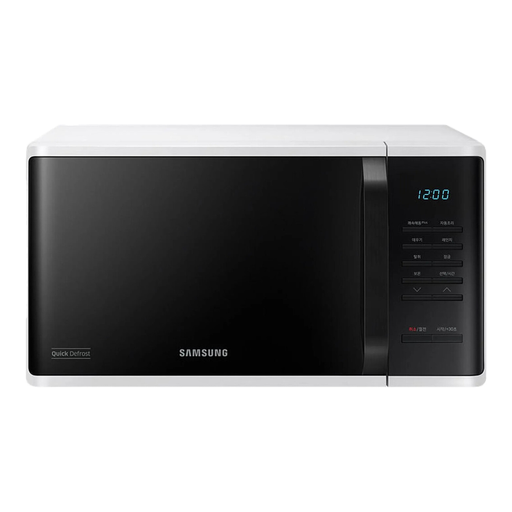 Image unavailable
Samsung MS23K3513 Quick Defrost, 23 L
For anyone who mainly wants to reheat and defrost, without a grill function.
A 23 L solo model with Quick Defrost. Before installing it, check the clearances specified in its instructions.
View on Joybuy
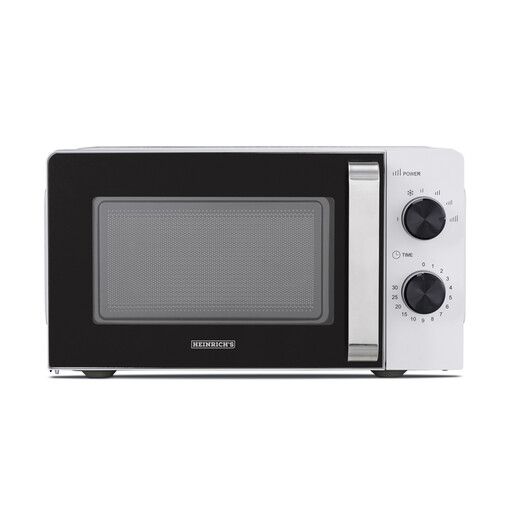 Image unavailable
Heinrich's 20 L solo microwave, 700 W
For reheating and defrosting where space needs to be measured carefully.
The product name indicates six power levels and a 30-minute timer. Check the instructions to see how much space to leave around the appliance.
View on Joybuy
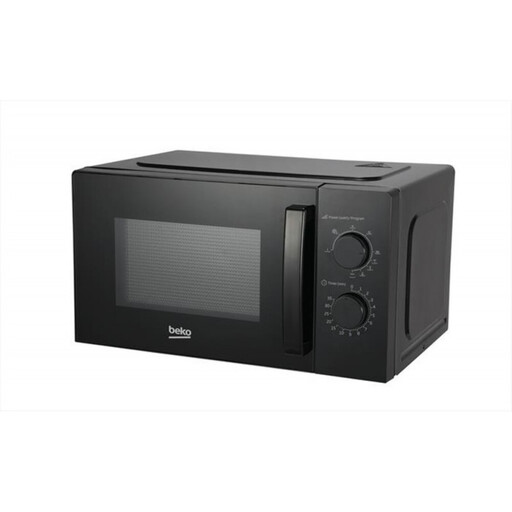 Image unavailable
Beko MGC20100B1 with grill, 20 L, 700 W
For reheating meals, with a grill for browning dishes if you do so regularly.
Check the instructions for the required clearances, as well as which accessories and containers can be used with the grill.
View on Joybuy
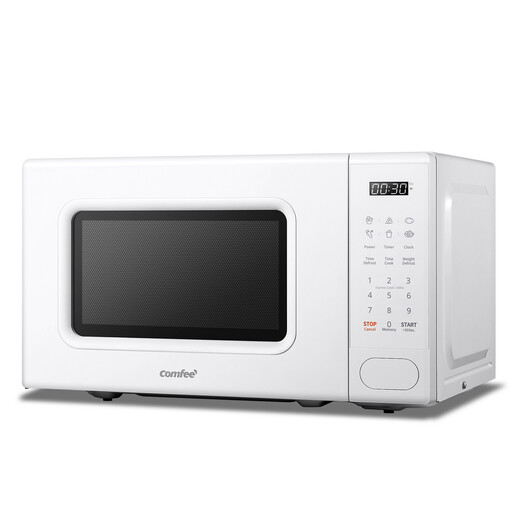 Image unavailable
COMFEE' CM-E202CC(WH), 20 L, 700 W
For straightforward reheating and defrosting with digital controls.
The product name indicates six pre-set programmes and 11 power levels. Check that your dishes fit on the turntable, and consult the instructions for the required installation clearances.
View on Joybuy
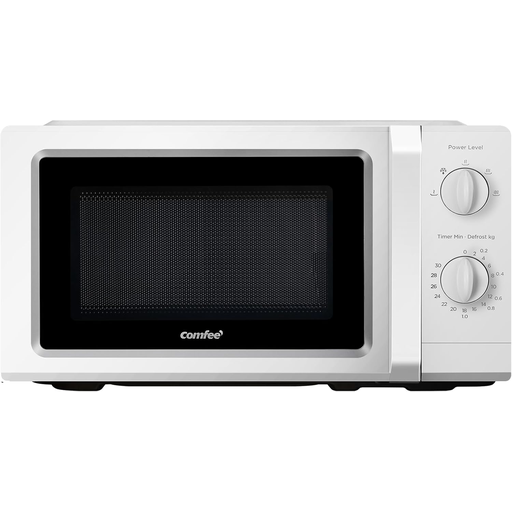 Image unavailable
COMFEE CMO‑MP012OC(WH), 19 L, 700 W
For reheating and defrosting with a solo microwave.
The product name indicates five power levels and a 245 mm turntable. Measure the space and check the external dimensions and installation clearances in the instructions before choosing this model.
View on Joybuy
Frequently asked questions
Can you put a freestanding microwave in a closed cupboard?
Only do so if the model’s instructions allow it and you can maintain the required clearances. The instructions for two 20 L models from Schneider Consumer specify different amounts of free space. A freestanding microwave shouldn’t be treated like a built-in appliance.
Can a grill microwave replace a combination microwave with convection?
No. A grill is for browning or gratinating food, while a combination model with convection adds an oven-style cooking mode. Check the features listed for the specific model, as the word ‘combination’ alone doesn’t tell you which functions it has.
Which containers should you use to reheat food?
Use a container labelled as suitable for this purpose and follow the food’s preparation instructions. Anses recommends following these instructions for microwaveable products, particularly because of concerns about reheating food in some types of packaging.
Should you buy a microwave for Crous accommodation?
First, check what’s already in your accommodation and the rules for your residence. Crous de Lyon says that the appliances supplied vary between residences, so don’t assume there’ll already be a microwave.


